Buying Guide
Buying Near a River or Drain: Flood and Building Checks
Assess legal restrictions and real flood vulnerability separately before buying a waterside or drain-adjacent property.
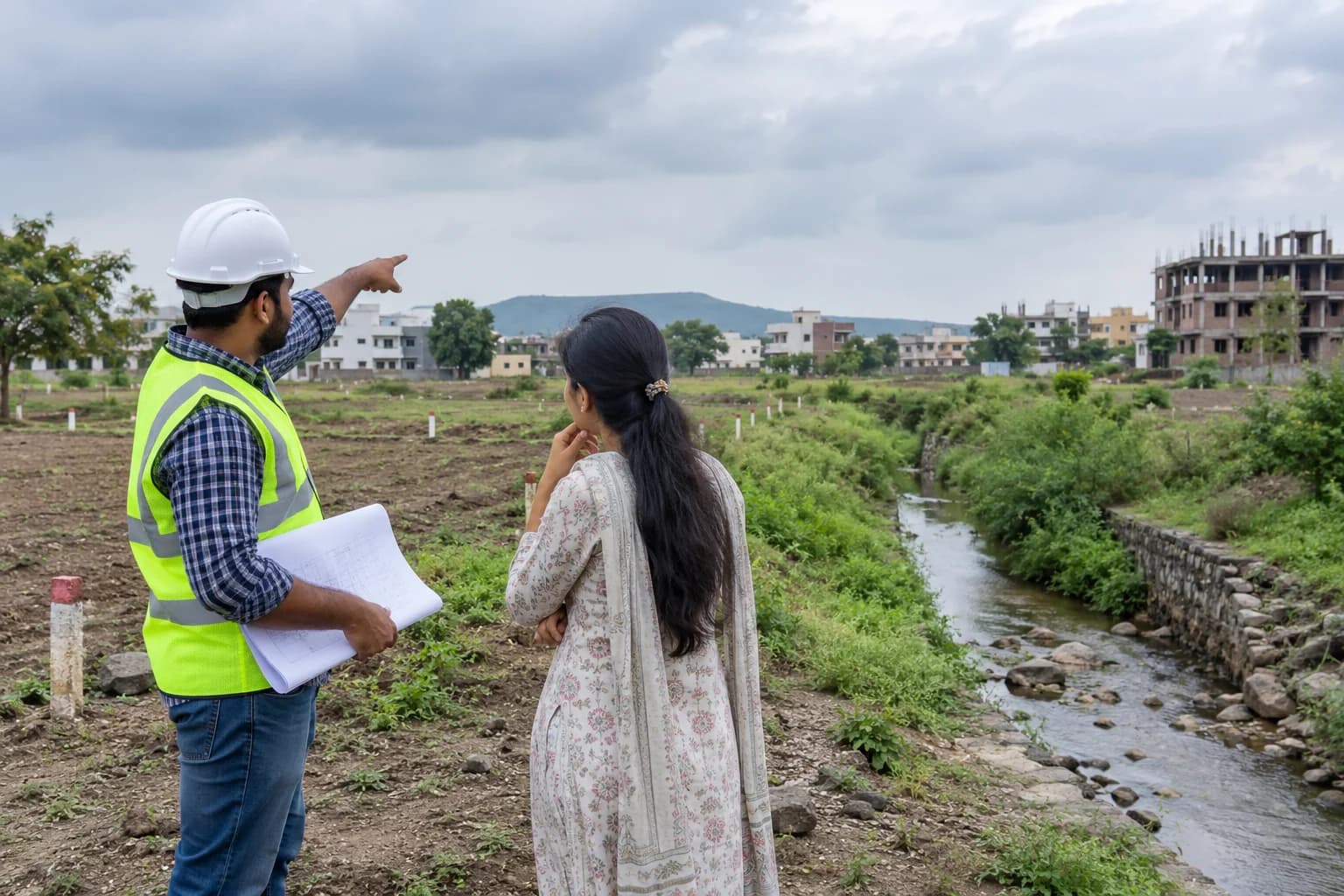
Table of contents
A water view can feel like an advantage during a winter visit. A dry channel can look harmless in summer. Neither visit tells you enough about what happens during heavy rain or what development restrictions apply beside the watercourse.
Check where the water can go, not only where it is today. Buying near a river, natural drain or major stormwater channel calls for both a legal planning check and a practical assessment of flooding, drainage and everyday living.
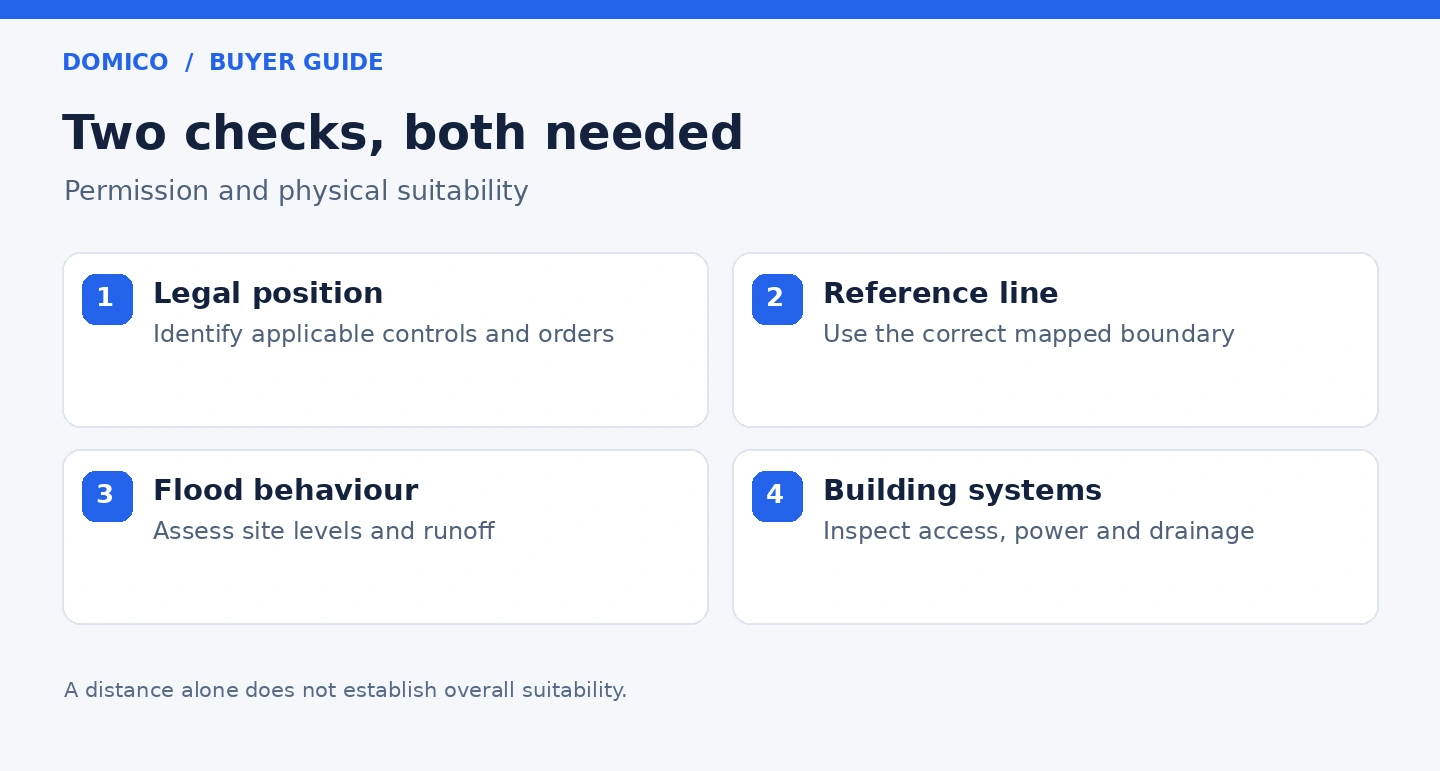
Separate flood risk from construction permission
A property can face physical flood risk even when a particular restriction is not immediately visible in the sales file. Conversely, land may be subject to a planning reservation, setback or specific order even if it has not flooded during a resident's memory.
Ask two questions: can the property be lawfully used and built on as intended, and is it physically suitable for that use? A permitted building is not a guarantee against every extreme event. A raised floor does not cure an unauthorised location.
The NDMA urban-flooding guidance is a useful official resource for understanding urban drainage and flood-risk assessment. Apply that understanding through a site-specific engineer's review rather than treating a general guide as a property clearance.
Identify the watercourse accurately
Find the river or drain on official land and planning records. Establish whether the feature beside the plot is a natural channel, municipal stormwater drain, sewage-carrying channel or another water body. A local nickname may not match the official classification.
Ask for the relevant revenue map, approved layout, watercourse boundary and any applicable flood-line or planning information. The current visible edge of water may be far inside the channel's wider seasonal or legally relevant extent.
For Indore, the district environment plan and official environment-plan implementation notices provide public context. They do not replace parcel-specific confirmation from the competent authorities.
| Question | Evidence to seek | Who can help interpret it |
|---|---|---|
| What is the feature? | Official map and authority classification | Planner or relevant authority |
| Where is its boundary? | Applicable survey and demarcation record | Surveyor and authority |
| What restrictions apply? | Operative controls, permissions and relevant orders | Architect and property lawyer |
| Where can water reach? | Available flood information and site-level assessment | Civil or drainage engineer |
| How is runoff discharged? | Drainage design and actual connections | Engineer and local service authority |
Do not borrow a setback number from another property
A seller may say the property is “beyond 30 metres,” or another buyer may repeat a number from a newspaper. The applicable rule can depend on the watercourse, authority, plan, court or tribunal direction and the reference line from which distance is measured.
A distance from the present water edge is not necessarily a distance from a mapped boundary or highest flood level. Ask which rule and reference line apply to this exact site. Obtain the source and professional measurement.
The National Green Tribunal publishes reports and case materials concerning watercourses in the Indore area. A report, allegation and operative judicial direction have different roles. Have a lawyer identify any order actually affecting the parcel rather than turning a general report into a blanket rule.
Inspect the property as part of a drainage system
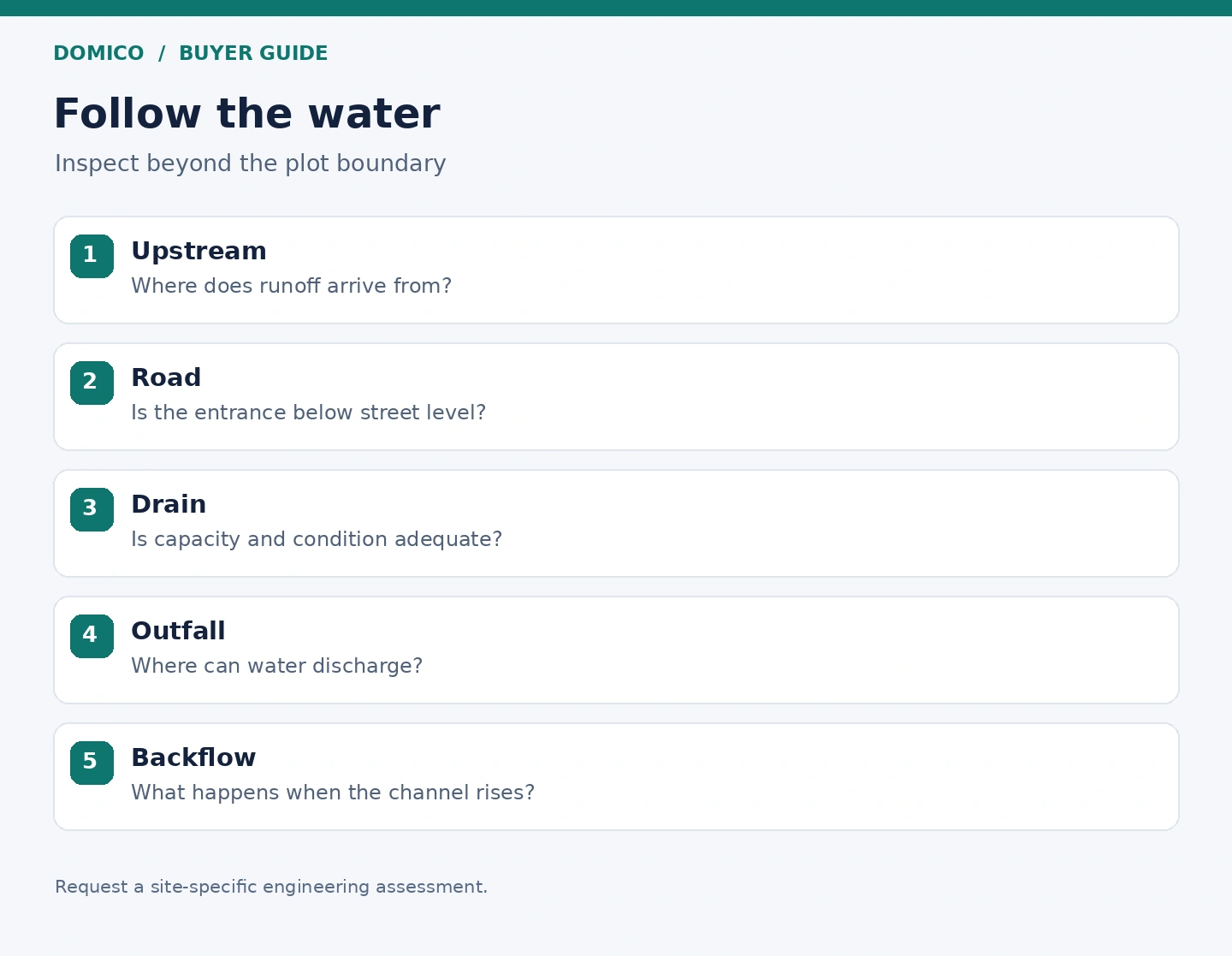
Water does not respect the boundary of the plot being sold. Look uphill, along the road and downstream. A property may receive runoff from a large paved area even if the nearest river is some distance away.
Ask an engineer about ground levels, road levels, drain capacity, outfall levels, backflow and safe discharge. A neat drain inside a colony is only useful if water has a lawful and practical place to go.
Check whether recent filling or raised roads have changed the relationship with adjoining land. A plot that appears elevated in one photograph may still sit below the street at its entrance. Filling land without an engineered plan can redirect water and create problems for neighbours.
What to examine at an existing building
Inspect lower walls, floor edges, basement areas and electrical installations for signs that need professional investigation. Fresh paint does not prove a past flood, but it may justify asking what work was done and why.
Ask for the seller's written account of water ingress, drainage repairs and insurance claims. Speak to residents and nearby shopkeepers about observed events, while treating recollections as evidence to investigate rather than definitive flood records.
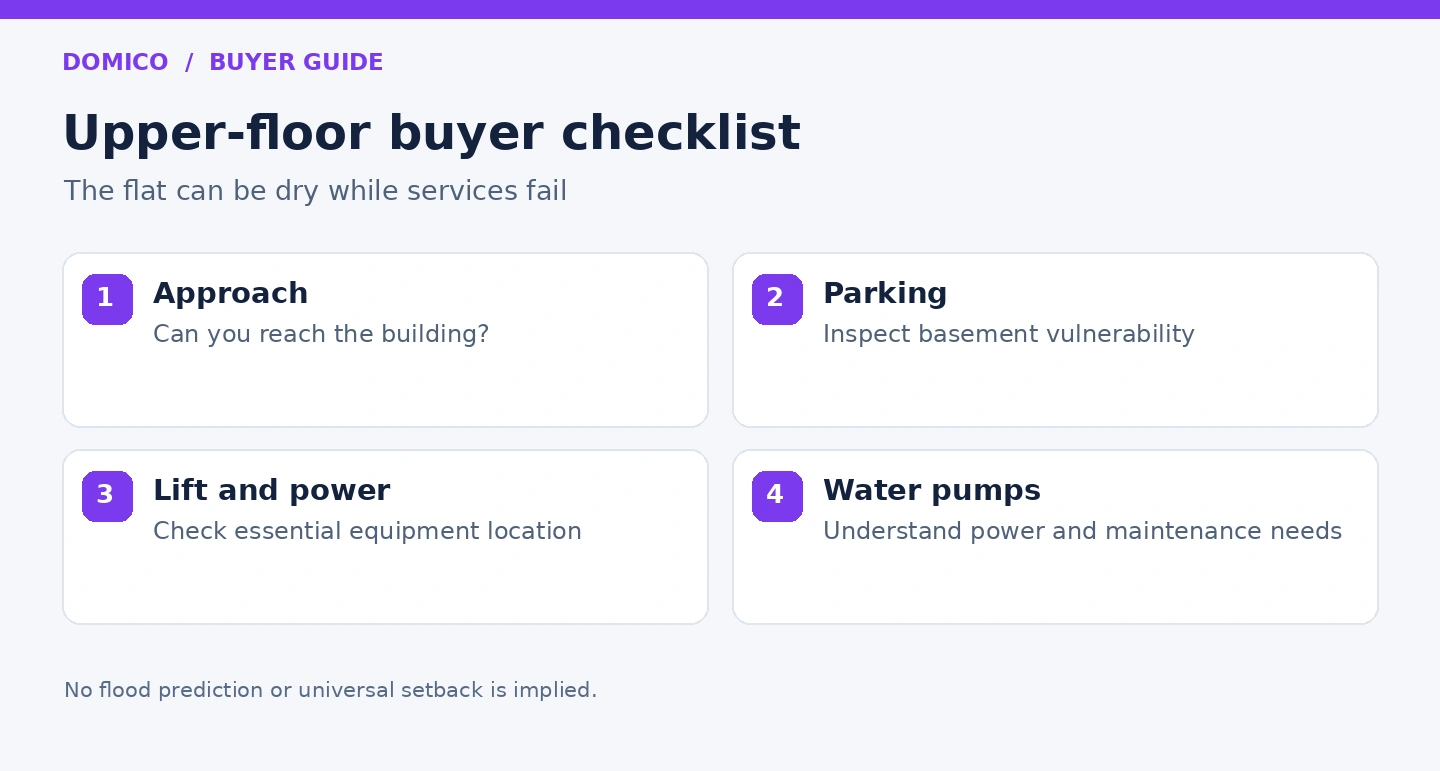
Look beyond the living room. Flooded access can isolate an otherwise dry upper-floor flat. Basement parking, lifts, pumps and electrical rooms can be important to the building's functioning and repair costs.
| Inspection area | Useful question | Why it affects the buyer |
|---|---|---|
| Ground-floor rooms | Has water entered, and from where? | Repairs and daily usability |
| Basement parking | What prevents ingress and how is it maintained? | Vehicle risk and pumping dependence |
| Electrical room and lift | What protection and contingency exist? | Building operation and safety |
| Approach road | Does it remain passable in heavy rain? | Access to work, school and assistance |
| Drain outfall | Can water discharge when the receiving channel rises? | Backflow and prolonged waterlogging |
Worked example: a dry flat with a flooded approach
Imagine two illustrative flats priced at ₹55 lakh each. Flat A is on a higher floor near a channel and looks dry inside. Its only approach includes a low crossing that residents say becomes impassable after intense rain. Flat B has less attractive views but an independently verified, more reliable route.
The buyer should not conclude that Flat A is safe simply because the living area is above ground. Ask an engineer to assess building systems and access, obtain relevant planning and flood information, and investigate residents' accounts.
Suppose a household would need temporary accommodation for five nights during an interruption at a sample ₹3,000 per night. That is ₹15,000 of illustrative disruption cost, but it is not a complete risk valuation. Work travel, vehicle exposure, lift outages and uncertainty may matter more than the hotel arithmetic.
This example shows why a property-level decision needs the surrounding access and services. It does not predict flooding frequency or place a price on personal safety.
Questions about drainage improvements and riverfront promises
A proposed drain upgrade or riverfront scheme may improve conditions, but investigate its actual scope and stage. A cleaning drive is different from a redesigned stormwater network. A landscaped edge does not, by itself, establish a building's flood resilience or legal status.
Ask who is responsible for construction and maintenance, what work has been completed and whether the property still works if improvements are delayed. Avoid using a future scheme as the sole answer to an existing defect.
Similarly, a seller's promise to add a pump should be assessed as an engineering proposal. Pumps depend on capacity, power, maintenance and an effective discharge arrangement. They should not be treated as a universal solution to a poorly understood site.
Decide with a written assessment
Ask your architect, engineer and lawyer to distinguish established facts from missing information. Record applicable restrictions, relevant boundaries, physical vulnerabilities, recommended work and practical limitations.
Get realistic quotations for any necessary improvements, then reassess the total cost and maintenance burden. Some concerns can be addressed; others may make the property unsuitable for your intended use.
Do not commission filling, culverts or retaining walls before checking permissions and engineering implications. Work near a watercourse can affect drainage, public land and neighbouring property. The goal is a lawful, usable purchase rather than a quick physical workaround.
Printable buyer worksheet
Download the topic-specific review checklist. Use it to record evidence, unanswered questions and follow-up actions for the exact property.
Frequently asked questions
Is a dry drain safe to build beside?
A dry-season appearance is insufficient. Establish its official classification, relevant boundary, applicable restrictions and likely water behaviour in rain. Obtain the site-specific engineering and planning assessment before relying on its present condition.
Is there one universal safe distance from every river?
No single figure should be assumed for every property. Identify the applicable rule or order and the reference line used for measurement. Physical flood risk also needs assessment even where a particular minimum distance is met.
Does an upper-floor flat remove flood concerns?
It can reduce direct exposure of the living space, but access, parking, lifts, power and water systems may still be affected. Examine the building and surrounding route rather than the apartment floor alone.
Can raising the plot solve the problem?
It may be part of an engineered solution in some cases, but it does not settle legal restrictions, drainage discharge or wider flood behaviour. Get professional advice and required permissions before treating filling as a remedy.
What if neighbours say the area has never flooded?
That is useful local information, but memories have limits and drainage conditions can change. Compare accounts with available official material, site levels and an engineer's assessment. A purchase should not rely on one person's recollection alone.
A pleasant view is valuable only when the property behind it is suitable, usable and understood in every season.
Related buyer guides
Best Areas to Buy Property in Indore: Buyer Guide
Property Site Visit Checklist Before Shortlisting
Flat Possession Checklist: Inspection and Handover
Sources and further checks
- buyer-guide-100
- homebuyers
- river-drain-property
- indore
Planning to buy or rent in Indore? Browse verified properties in Indore or read more Indore guides.



