Buying Guide
Property Site Visit Checklist Before Shortlisting
Use a practical site visit sheet for plots and flats, covering access, measurements, services, surroundings and follow-up questions.

Table of contents
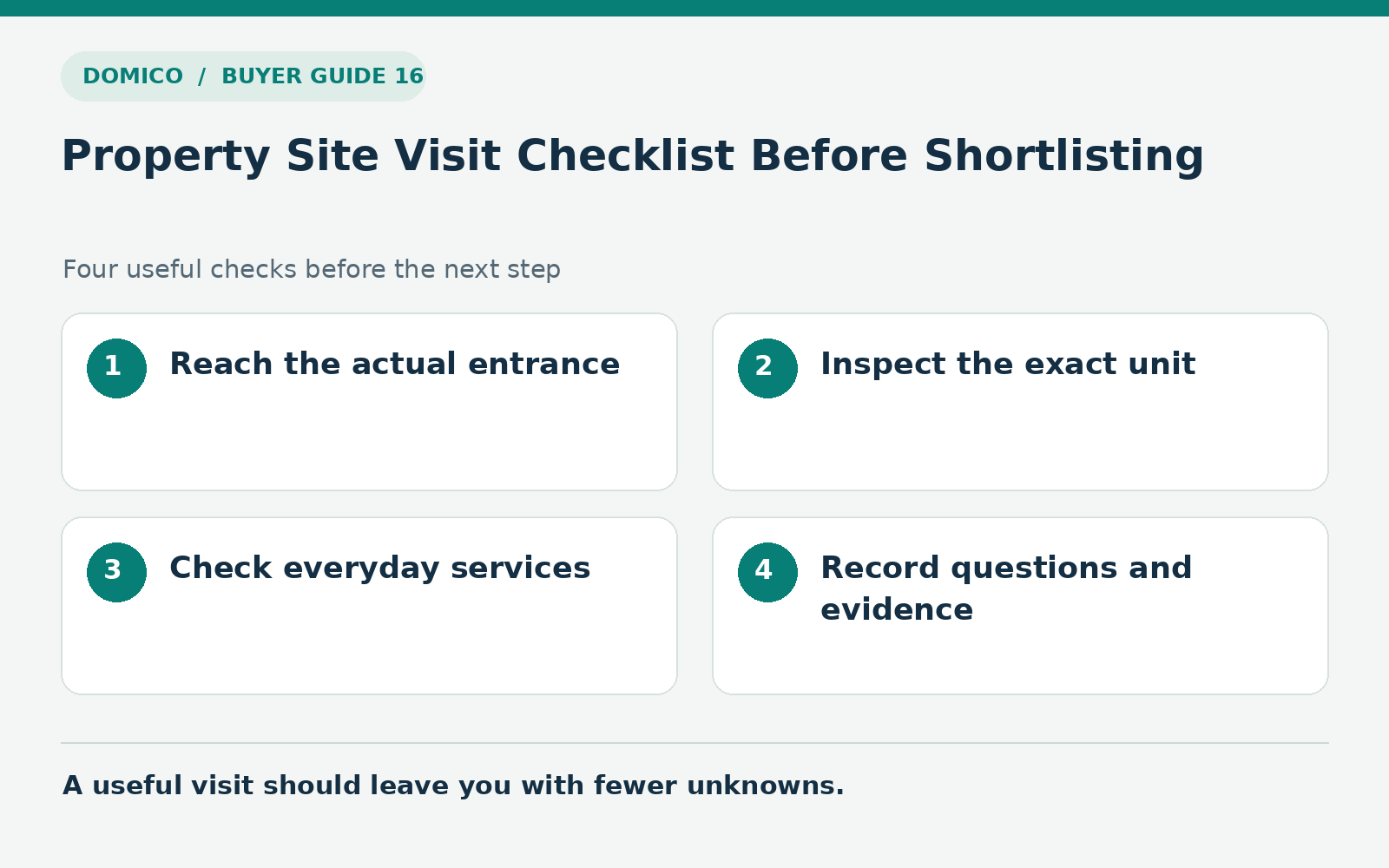
A useful visit should leave you with fewer unknowns.
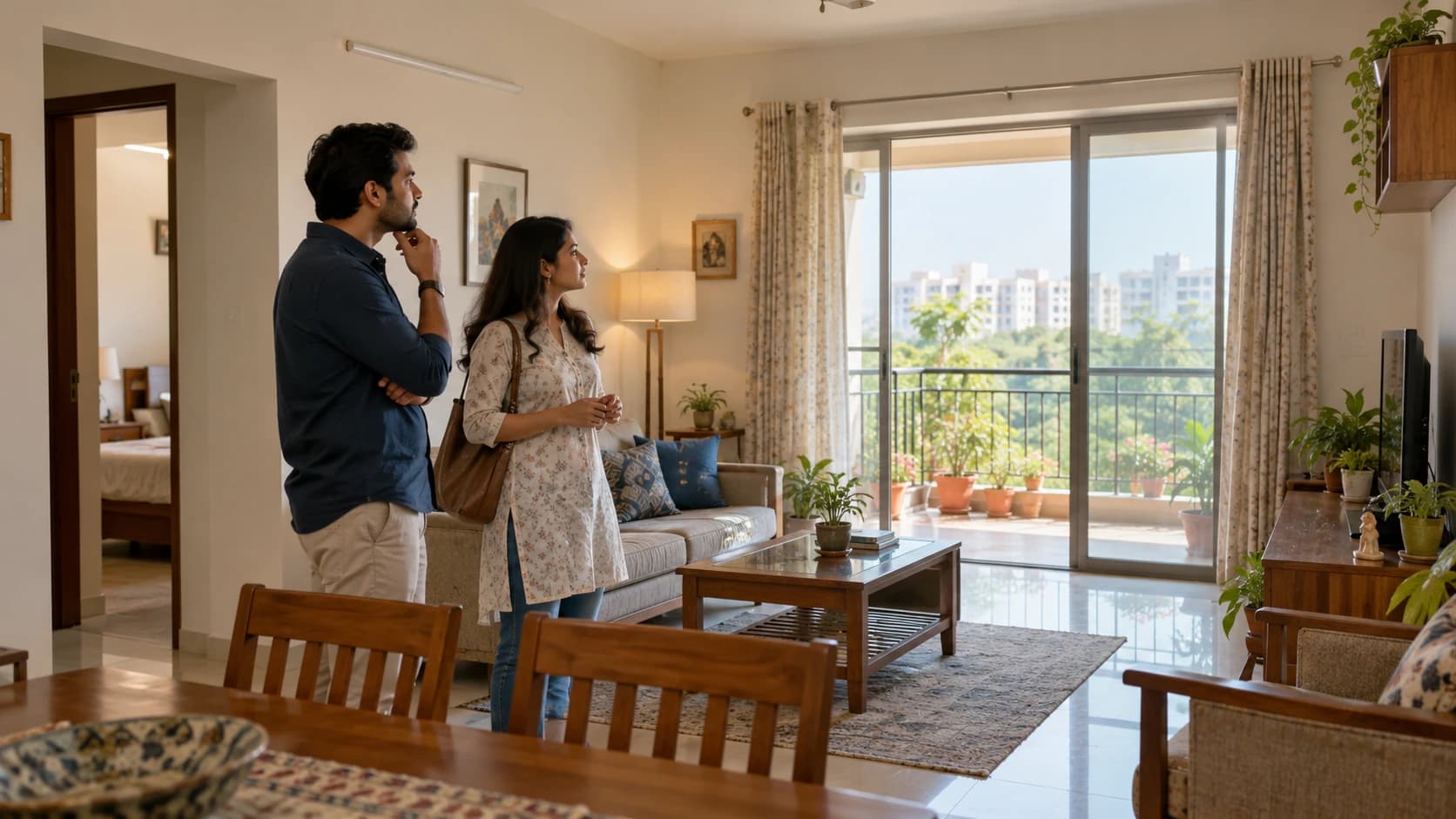
A property site visit checklist helps you notice the details that are easy to miss during a guided tour. The aim is to inspect the exact home or plot, test how it fits daily life and record questions that need documents or professional answers. A good visit supports your decision; it does not replace legal or technical due diligence.
This guide covers preparation, the approach route, apartment checks, plot checks and a simple follow-up method. Use it for shortlisted properties in Indore or adapt it to another city. Obtain permission for photographs and measurements, stay in permitted areas and use qualified professionals for tests that require specialist knowledge.
Prepare before leaving home
Confirm that you will see the actual unit or plot being offered. Ask for the precise address, unit or plot number, tower or phase and the current quotation. If only a sample home is available, understand that limitation and record which features remain unverified.
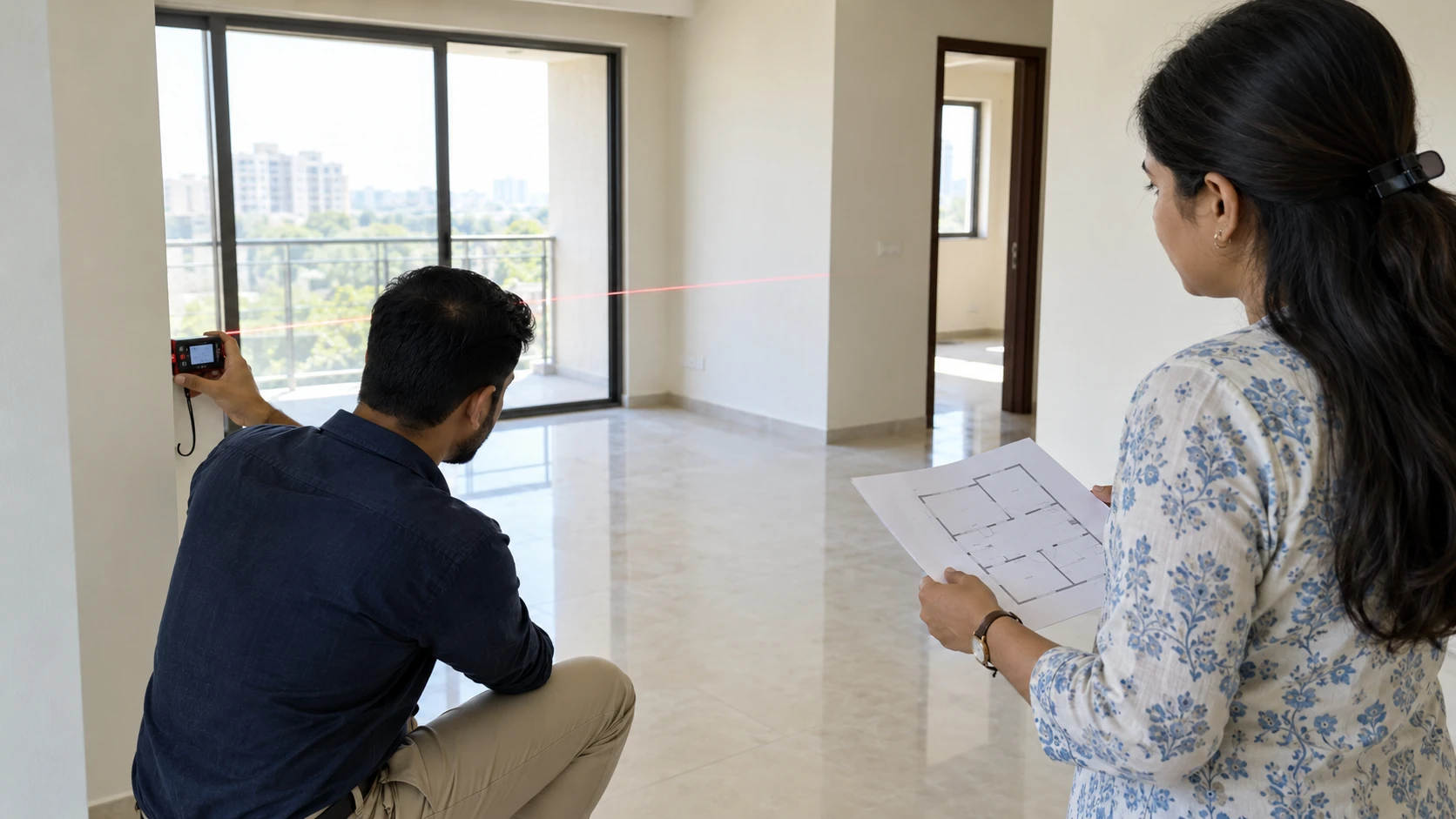
Carry a phone with sufficient charge, a notebook, the relevant plan and dimensions of essential furniture. A simple measuring tape can help assess usability where permission is given. Avoid bringing tools for electrical or invasive tests that should be handled by professionals.
Write down your non-negotiable needs before the visit. These might include accessible movement, a quiet work area, suitable ventilation or manageable parking access. A checklist is most useful when it reflects the people who will actually live there.
| Before the visit | What to confirm | What to carry or note |
|---|---|---|
| Exact property | Unit or plot, phase and entrance | Identification and location details |
| Current offer | Price basis, inclusions and possession position | Written quotation and open questions |
| Household needs | Essential layout and access conditions | Short list of non-negotiables |
| Practical checks | Permission for viewing, photos and measurements | Plan and essential furniture dimensions |
| Professional support | Any known technical concern | Arrange suitable expert help when necessary |
Begin at the actual entrance
Travel to the gate you would use after purchase, not merely the main-road landmark. Observe the final approach, turns, road condition and practical access. A large project or plotted layout may have several entrances with different relevance to the offered property.
Test an important route at a time that resembles your normal routine. Record the date and approximate time rather than treating one journey as a permanent travel guarantee. Traffic, weather and road works can change the experience.
If household members depend on walking, public transport or assisted travel, examine their complete route too. The home should work when the main vehicle is unavailable. Safe and convenient access is an everyday need that a room tour can easily overlook.
Observe the surroundings without making assumptions
Look at immediate neighbouring uses, visible construction activity, noise and the route to essential services. Note what you actually observe and what someone has merely described. “A shop will open soon” is different from a working shop you can use today.
Ask about water and drainage arrangements and the responsible provider or management body. If a recurring issue is mentioned, seek supporting information and professional advice where relevant. A single comment should prompt investigation rather than become a conclusion about an entire area.
Visit at another relevant time when the first visit leaves important questions. Afternoon light, evening activity or weekday traffic can differ from a quiet weekend appointment. Each additional visit should answer a specific uncertainty rather than simply repeat the tour.
Inspect the apartment room by room
Walk through the exact unit slowly. Check the usable layout, movement between rooms, door positions, windows and natural light. Imagine ordinary furniture rather than relying on staging, which can use smaller pieces or omit items your household needs.
Look for visible damp patches, staining, cracks or uneven finishes and photograph them with permission. Do not diagnose structural safety from appearance alone. A concerning crack or water issue should be assessed by an appropriate qualified professional.
Open and close doors and windows where permitted. Check whether fittings operate normally and whether planned wardrobes or appliances will block movement. Make notes by room so that the discussion after the visit refers to a clear location.
| Space or feature | Practical observation | Follow-up if a concern appears |
|---|---|---|
| Living and bedrooms | Furniture fit, light, ventilation and circulation | Compare a measured plan with your requirements |
| Kitchen | Work surface, storage and appliance provision | Confirm included fixtures and permitted work |
| Bathrooms | Visible leakage signs, drainage and ordinary water flow | Obtain a plumbing or waterproofing review if needed |
| Doors and windows | Operation, alignment and visible sealing | Record defects and proposed repairs |
| Balcony and access | Physical condition and intended use | Verify rights, restrictions and approved configuration |
Check services safely
Ask the authorised representative to demonstrate ordinary water, power and relevant equipment functions. Observe whether the facilities promised for the unit are present. For electrical safety, earthing, concealed wiring or system testing, use a qualified electrician rather than attempting tests yourself.
Ask which services are individually metered, which are shared and what recurring charges apply. Confirm water supply and backup arrangements, the scope of power backup and any restrictions. A general statement that backup exists does not show which circuits or services it covers.
For an unfinished home, record what is installed and what remains a specification promise. Ask for the written schedule and the expected handover condition. Do not confuse a temporary construction connection with the final operating arrangement for residents.
Inspect the building journey
Walk from the permitted parking area to the unit. Check the practical route, lift access, stairs and movement for the intended occupants. Ask about the documented parking arrangement and avoid assuming an empty space is automatically included in the sale.
Observe accessible common areas and ask who maintains them. Ask about lift servicing, common electricity, cleaning, security and waste arrangements. Understand what the quoted maintenance covers and which charges are separate.
For safety and regulatory matters, request the relevant documents and use professional advice. A buyer's visual walk cannot certify fire compliance or structural safety. Keep emergency routes unobstructed during the visit and do not enter plant rooms, roofs or active construction zones without proper authorisation and supervision.
Add specific checks for a plot
Locate the exact parcel using the relevant identification and approved layout. Compare the physical boundaries, dimensions and access with the documents. Boundary markers and a salesperson's pointing gesture are not substitutes for an appropriate survey or legal review.
Observe levels, visible drainage conditions, nearby uses and the route to the plot. Ask what work would be needed for the intended construction and obtain professional advice on feasibility under applicable rules. A large plot can still have constraints affecting the building plan.
Ask about lawful access and the actual availability of services at the boundary. Distinguish a public road, a documented private access arrangement and a proposed route. Clarify who is responsible for remaining development work and where that obligation is recorded.
Ask for documents that answer the visit questions
If the unit looks different from the plan, request the relevant approved drawing and explanation. If an amenity is promised, ask whether it belongs to your phase and appears in the contractual scope. If a service is not working, ask for the actual provision and completion commitment.
For relevant projects, compare the exact project and phase with MP RERA disclosures. Use an independent lawyer for title, authority, land use and other applicable legal checks. The site visit should generate precise questions for that review.
Keep the record honest. Write “not tested,” “not accessible” or “document requested” where appropriate. A blank checklist field should not later be mistaken for a successful inspection. Clear uncertainty is better than an unsupported tick.
Talk to occupants respectfully
Where appropriate, ask residents or neighbouring users concise questions about their own experience. Useful topics include service reliability, maintenance communication and how defects were addressed. Respect privacy and do not request personal records unnecessarily.
Treat these conversations as one source of information. An individual's experience may differ by unit, floor or time period. Verify material concerns through relevant records, management responses or professional assessment before drawing a conclusion.
If different people give different accounts, note the specific point of disagreement. Ask what evidence would resolve it. Repeating a broad rumour is less useful than identifying whether the actual unit has the problem you are concerned about.
Turn observations into a follow-up sheet
After the visit, group notes into practical fit, visible condition, documentation and cost. Identify the next action and who will provide it. A concern about furniture fit needs a different answer from an unexplained property identifier or a suspected technical defect.
| Observation | Evidence needed | Next decision |
|---|---|---|
| Bedroom may not fit furniture | Measurements and a usable layout plan | Keep or reject based on essential needs |
| Damp mark near a window | Appropriate technical assessment and repair scope | Reprice or resolve before commitment |
| Unclear maintenance charge | Written component list and applicable records | Update monthly budget |
| Plot boundary uncertainty | Relevant records and professional survey advice | Resolve identity before paying more |
| Sales claim differs from document | Complete current document and written explanation | Do not rely on the claim until clarified |
Share a concise question list with the authorised representative. Ask for answers and documents in a form you can retain. Keep photographs labelled by property, date and room so that they remain useful when comparing several visits.
Compare properties while the details are fresh
Complete the same checklist immediately after each visit. Record strengths, compromises and unresolved issues separately. Do not let a warm sales interaction or a newly decorated room erase a condition you previously identified as essential.
If a property remains attractive, plan the next stage around the open questions. That might be a second visit, a legal review, a technical inspection or a firm quotation for work. Each step should reduce uncertainty before a larger commitment.
There is no need to decide at the site simply because an offer is described as temporary. A suitable property should still fit the budget and the evidence after the visit. Your written notes help maintain that discipline.
Leave with a next-action list
Before ending the appointment, identify the three most important unanswered questions and ask who will supply each answer. That might be a drawing, a service-charge statement, a second access opportunity or a professional assessment. Record the proposed follow-up date without treating an informal estimate as a guaranteed completion.
If a representative promises that an observed defect will be repaired, ask for the scope and how you can verify it afterwards. Keep the issue open until the relevant evidence or reinspection answers it. A visit becomes valuable when observations lead to clear follow-up, rather than remaining as a collection of photographs on your phone.
Frequently asked questions
Is one site visit enough?
One visit may answer some questions, but another relevant time or a professional inspection may be needed. Focus on unresolved material issues. A single guided tour should not be treated as complete legal or technical verification.
Should I measure the rooms myself?
With permission, simple measurements help assess furniture and movement. They do not automatically certify the official area. Use a qualified professional for a material measurement discrepancy or a formal area assessment.
Can I test electrical fittings during the visit?
Ask the authorised representative to demonstrate ordinary functions. Leave specialist electrical testing to a qualified electrician. Do not open panels, touch exposed wiring or attempt improvised safety checks.
What if I can only see a sample flat?
Record that the actual unit remains uninspected. Obtain the exact plan and written specification, identify excluded sample features and arrange an appropriate actual-unit inspection when possible before relying on its condition.
What should I do after noticing a defect?
Record its location and visible condition without making an unsupported diagnosis. Ask for an appropriate assessment and written repair scope. Include the cost or required resolution in the decision before proceeding.
Make every visit count
Shortlist Indore properties using your needs, then visit with a consistent checklist. The best outcome is a clear understanding of what works, what needs evidence and what must be resolved before you pay more.
Resources and scope
- MP RERA — relevant project disclosures and records.
- MP IGR and MP Bhulekh — relevant registration and land-record starting points.
- Indore Municipal Corporation — relevant local authority services and information.
Prepared on 18 October 2026. This is a general observation checklist, not a building survey, safety certification or legal opinion. Use qualified professionals for technical and transaction-specific issues. Images illustrate the topic.
Continue reading
- homebuyers
- buying-guide
- property-site-visit
- indore
Planning to buy or rent in Indore? Browse verified properties in Indore or read more Indore guides.