Buying Guide
Buying a Flat Above Shops: Mixed-Use Building Checks
Assess commercial noise, access, exhaust, parking, shared bills and approvals before buying a flat above shops or in a mixed-use building.
Updated 8 min read
Buying Guide
Assess commercial noise, access, exhaust, parking, shared bills and approvals before buying a flat above shops or in a mixed-use building.
Convenience downstairs is valuable only when the home upstairs still works.
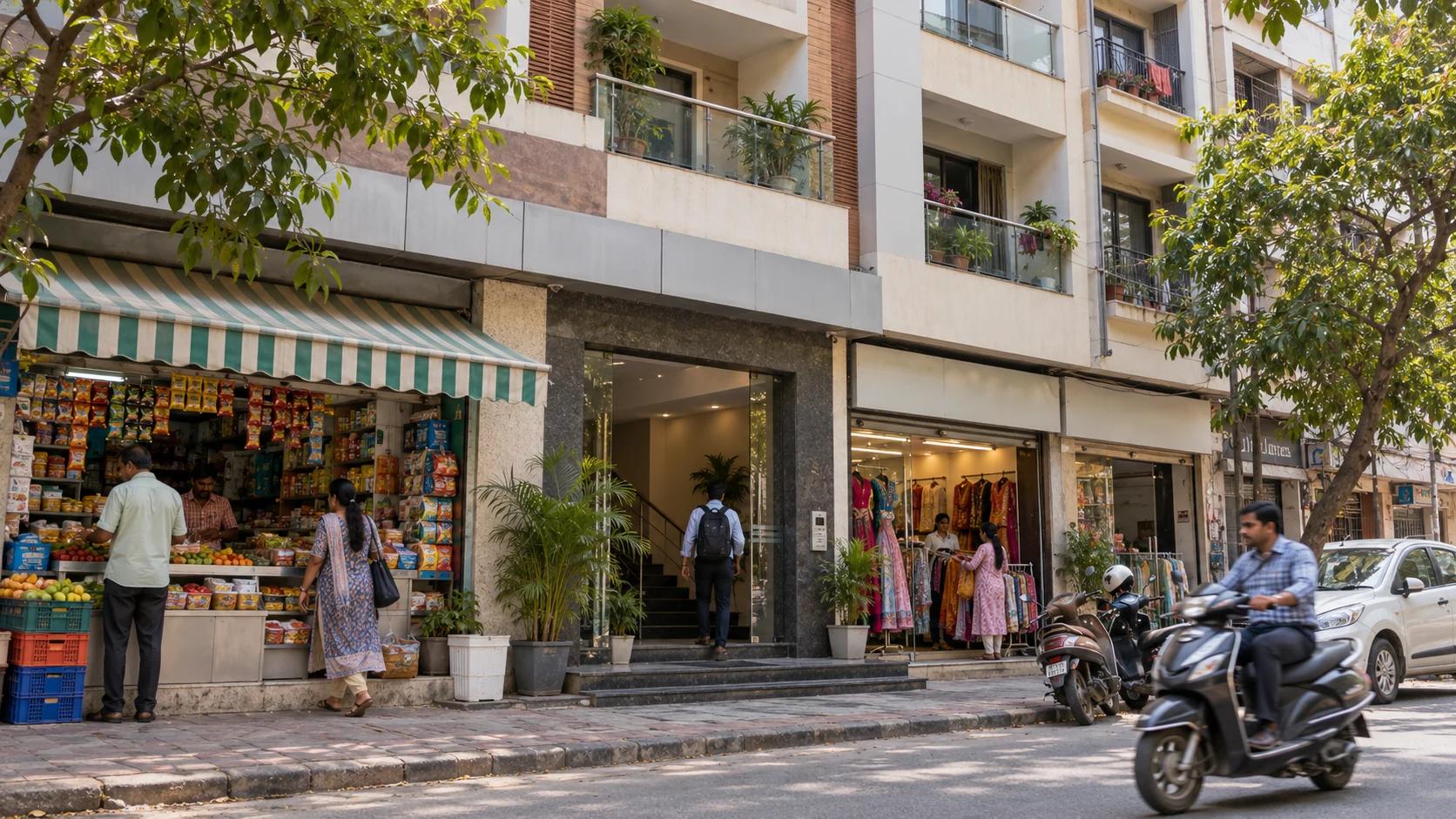
Buying a flat above shops can make everyday life easier. Groceries, a pharmacy or a café may be within the same building. The same arrangement can bring delivery traffic, kitchen exhaust, customer parking and late closing hours. The question is not whether mixed-use buildings are good or bad. It is whether the approved uses, physical design and management arrangements suit the way you want to live.
Inspect the exact unit, the businesses below it and the shared services. Two apartments in one building may have very different exposure because one faces a loading area while another opens towards an internal court. A visit during a quiet weekday cannot answer what happens during the busiest trading period.
Ask for the sanctioned building plan and the occupancy-related permissions applicable to the building. Identify which floors and units are residential, retail, office, storage or another use. A shop functioning on the ground floor does not, by itself, establish that every activity conducted there is authorised.
Ask an independent professional to compare the current arrangement with the approved use. This becomes particularly important if a shop has become a restaurant, a basement is used for storage, or a residential entrance has been absorbed into commercial space. Different activities can place very different demands on ventilation, power, access and fire safety.
The Bureau of Indian Standards' National Building Code overview identifies fire safety, building services, acoustics, plumbing and facility management as relevant technical subjects. Applicable local regulations and approvals must be checked for the actual property. A buyer should not treat a general code reference as proof that this building complies.
Prepare a simple observation schedule. Visit during delivery hours, the main customer period and closing time where practical. Check whether the residential lobby remains clear and whether vehicles block the route from the road to the lift. Look at noise and odour inside the flat with windows both open and closed.
Write down the source and duration of each disturbance. A short daily delivery is different from a compressor running beside the bedroom throughout the night. Where noise is important, use a competent acoustic assessment rather than assuming a phone app establishes compliance.
| Activity below | What to inspect | Apartment exposure |
|---|---|---|
| Restaurant or food outlet | Exhaust route, waste handling and deliveries | Odour, heat, pests and evening activity |
| Grocery or retail shop | Loading, shutters and customer parking | Early or late noise and blocked access |
| Office or clinic | Visitor flow, lift use and waiting areas | Shared lobby pressure and privacy |
| Workshop or service business | Equipment, vibration and stored materials | Mechanical disturbance and safety questions |
Do not assume the current tenant will remain forever. Ask what uses can lawfully replace it and what approval or society process controls a change. A quiet showroom today could present a different living experience if its permitted use changes later.
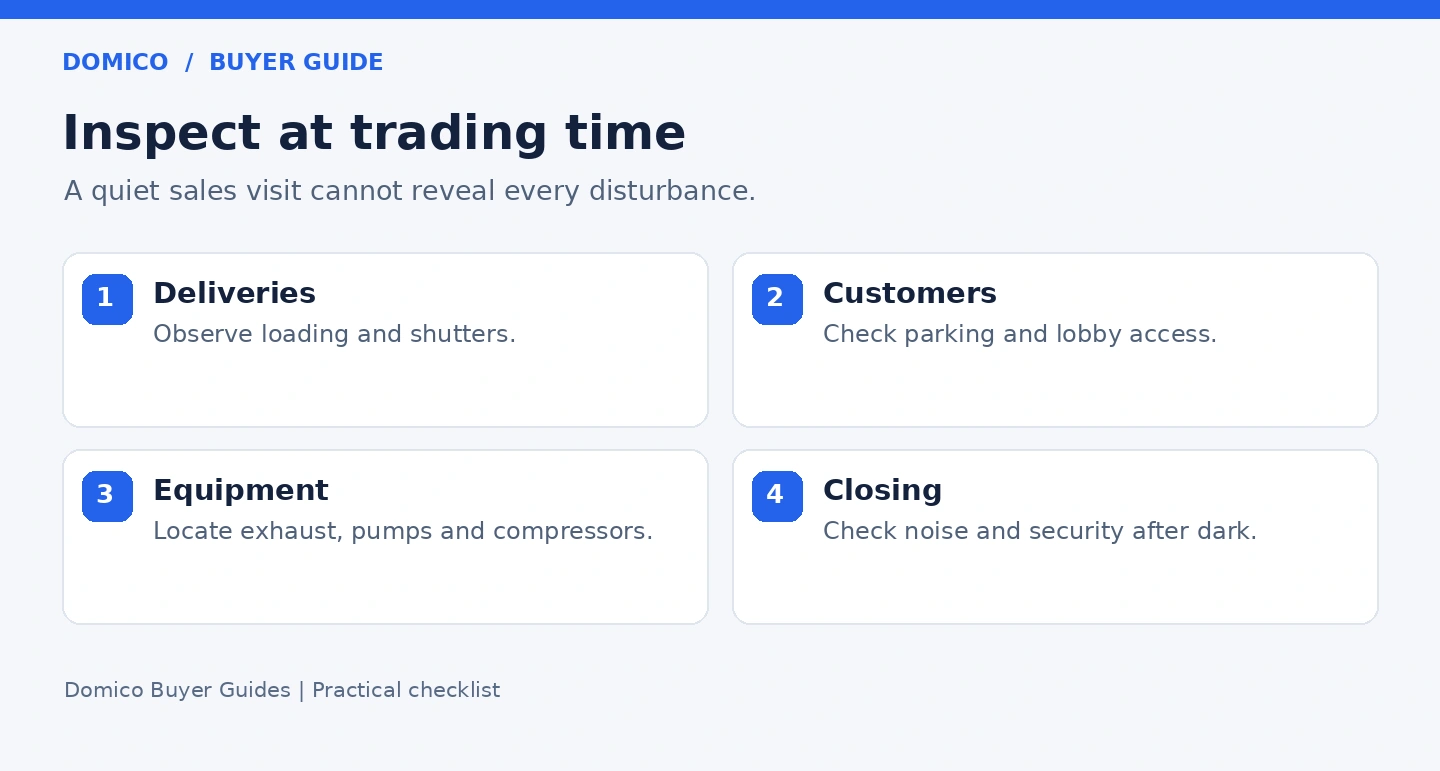
A separate gate on a drawing is useful only if residents can actually use it. Check the gate, lobby, lift and stairs during trading hours. Do customers wander into the residential corridor? Are delivery riders directed to an organised collection point or to individual apartment doors without control?
Ask how visitors are recorded and who holds keys or access cards. Inspect whether shops use the same staircase for storage or service access. Shared stairs must remain usable for their approved purpose; concerns about blocked exits or unsafe storage should be assessed promptly by the responsible professionals and authorities.
Privacy is another practical issue. A bedroom balcony directly above a shop sign, queue or smoking area may be uncomfortable even if it looks attractive in a listing. Stand in the room and look outward from the position where the bed and desk would be placed.
Do not stop at asking whether the building has ventilation. Find out where commercial exhaust terminates relative to windows, balconies and air-conditioning intakes. Examine accessible areas for grease staining, persistent odour or vibration. Ask who services the equipment and who can require repairs.
Food waste, packaging and commercial wastewater need clear arrangements. Check collection times, storage areas and pest-control responsibilities. A common waste area beneath your balcony may affect daily use more than a small difference in carpet area.
If a technical concern is unresolved, request drawings and an inspection by a suitable engineer. Avoid accepting “we will move the duct later” without a permitted solution, an agreed scope, a responsible party and a completion date.
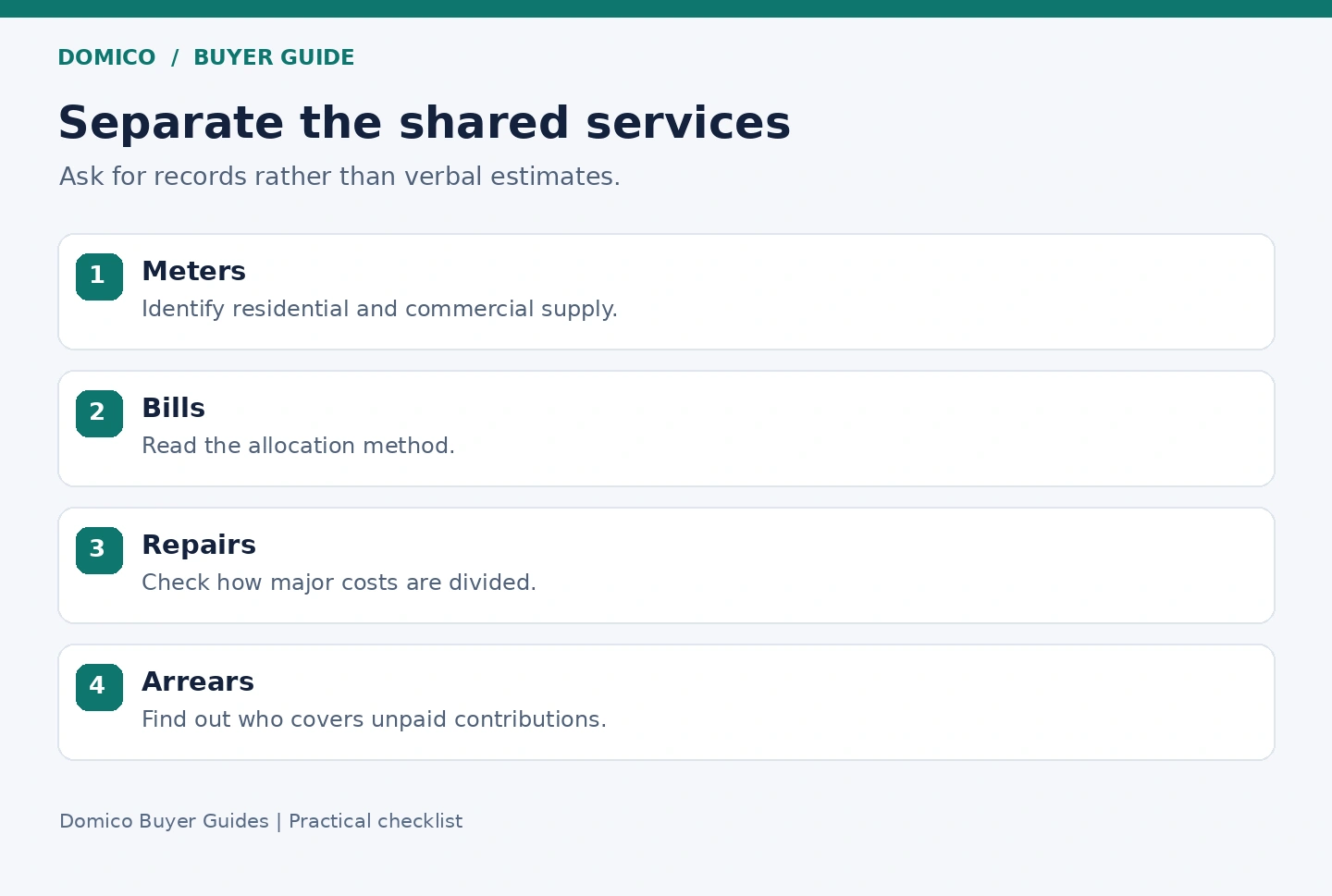
Residential and commercial occupants may use lifts, pumps, generators, security and parking differently. Ask for the maintenance rules, current budgets and recent bills. Identify whether each use has separate metering and whether commercial consumption is charged through a transparent allocation.
A low quoted maintenance figure may exclude future repairs or rely on an informal contribution from the current shop tenant. Confirm what happens if that shop is vacant, changes hands or disputes its bill. Review arrears and pending capital work, not just the latest monthly invoice.
| Shared service | Evidence to request | Question for management |
|---|---|---|
| Electricity and backup | Meters, bills and allocation policy | Who pays for commercial equipment? |
| Water and pumps | Supply arrangements and usage basis | How are higher-use businesses charged? |
| Security and cleaning | Scope and operating hours | Who covers additional commercial activity? |
| Major repairs | Fund position and approved budgets | How are roof, lift and façade costs divided? |
| Parking | Approved layout and allocation records | Are residential spaces protected from customers? |
The combination of uses matters. Ask about the building's approved fire and life-safety arrangements, applicable permissions and inspection or service records. Commercial storage, cooking or equipment should not be dismissed as someone else's issue simply because your purchase is residential.
Look for obvious concerns such as blocked stairs, locked exits or unsafe-looking electrical work, but do not attempt to certify the building yourself. Obtain a qualified assessment where needed. Ask who is responsible for maintaining systems and correcting problems after the purchase.
Compare the evacuation route from the actual flat with the approved arrangements. A lift lobby that looks secure during a sales visit should also function when businesses are closed and shutters are down. Emergency access and everyday access need separate attention.
Suppose a mixed-use flat costs Rs 55 lakh while a comparable residential-only flat costs Rs 58 lakh. The initial price difference is Rs 3 lakh. Assume, only for illustration, that the mixed-use flat requires Rs 1 lakh of professionally specified noise and window work and has Rs 1,500 more monthly maintenance.
The additional maintenance is Rs 18,000 per year and Rs 90,000 over five years before increases. The identified five-year cost difference is therefore Rs 1.9 lakh, leaving Rs 1.1 lakh of the original price advantage before financing and other differences. This calculation does not price inconvenience or predict resale value.
Now ask whether the proposed noise work is feasible and sufficient. If the main problem is an external loading bay or an unlawful activity, spending on the flat may not solve it. A discount should follow a clear understanding of the issue, rather than becoming a reason to ignore it.
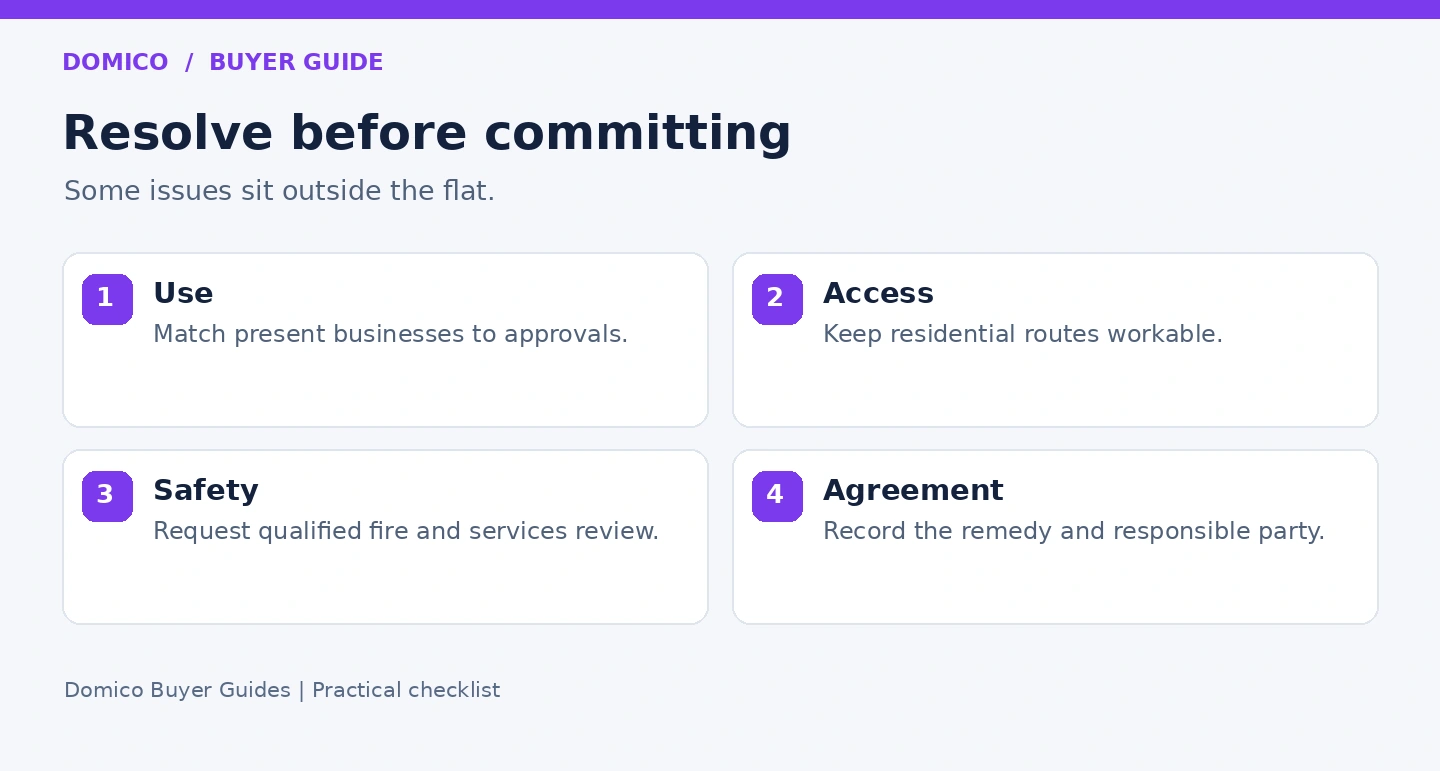
Use a written issue log before committing further money. Separate matters you can change inside the flat from matters controlled by the society, the commercial owner or the authority. Price the former; seek documented resolution or advice on the latter.
| Finding | Buyer response | What counts as progress |
|---|---|---|
| Shop use differs from records | Obtain professional and authority review | Written clarification and required approvals |
| Customer parking blocks entrance | Review enforceable access arrangements | A workable management plan in operation |
| Duct affects bedroom window | Request technical design and permission checks | Approved remedy with assigned responsibility |
| Shared bills are unclear | Inspect accounts and allocation documents | Transparent, documented charging basis |
Keep these records with the sale documents. Promises about future business hours, parking or exhaust arrangements are difficult to evaluate later if nobody recorded precisely what was agreed.
Download the topic-specific review checklist. Use it to record evidence, unanswered questions and follow-up actions for the exact property.
No. It can suit buyers who value nearby services. Inspect the actual use, approved layout, access and management. The quality of separation and operation matters more than the label “mixed use”.
They may help with some airborne noise, but performance depends on design, installation and the source. They do not automatically address vibration, noise entering through other paths or the need to keep windows open. Get a suitable assessment before budgeting for a remedy.
Ask what is installed, what local requirements apply and how costs are allocated. Separate metering can improve clarity, but it does not resolve every shared-service expense. Review bills and management rules with the relevant professionals.
Check the permitted use and the approvals or consent needed for a change. Ask management how such requests are handled. Do not rely solely on an assurance from the current shop operator, who may leave.
Visit the flat while the businesses operate at their busiest normal time. Combine that with a quieter visit to inspect the building and records. If your likely sleeping hours differ from trading hours, check that period specifically.
Choose the flat after understanding how the whole building works. The benefit of downstairs convenience should remain a benefit after you move in.
Planning to buy or rent in Indore? Browse verified properties in Indore or read more Indore guides.
Check who owes the lender, how builder-paid interest works, when support ends and whether you can carry the loan if payments stop.



