Buying Guide
Rental Vacancy Risk: Checks Before Buying an Investment Flat
Assess tenant demand, comparable rents, competing supply and empty-month costs before buying a rental property.
Updated 8 min read
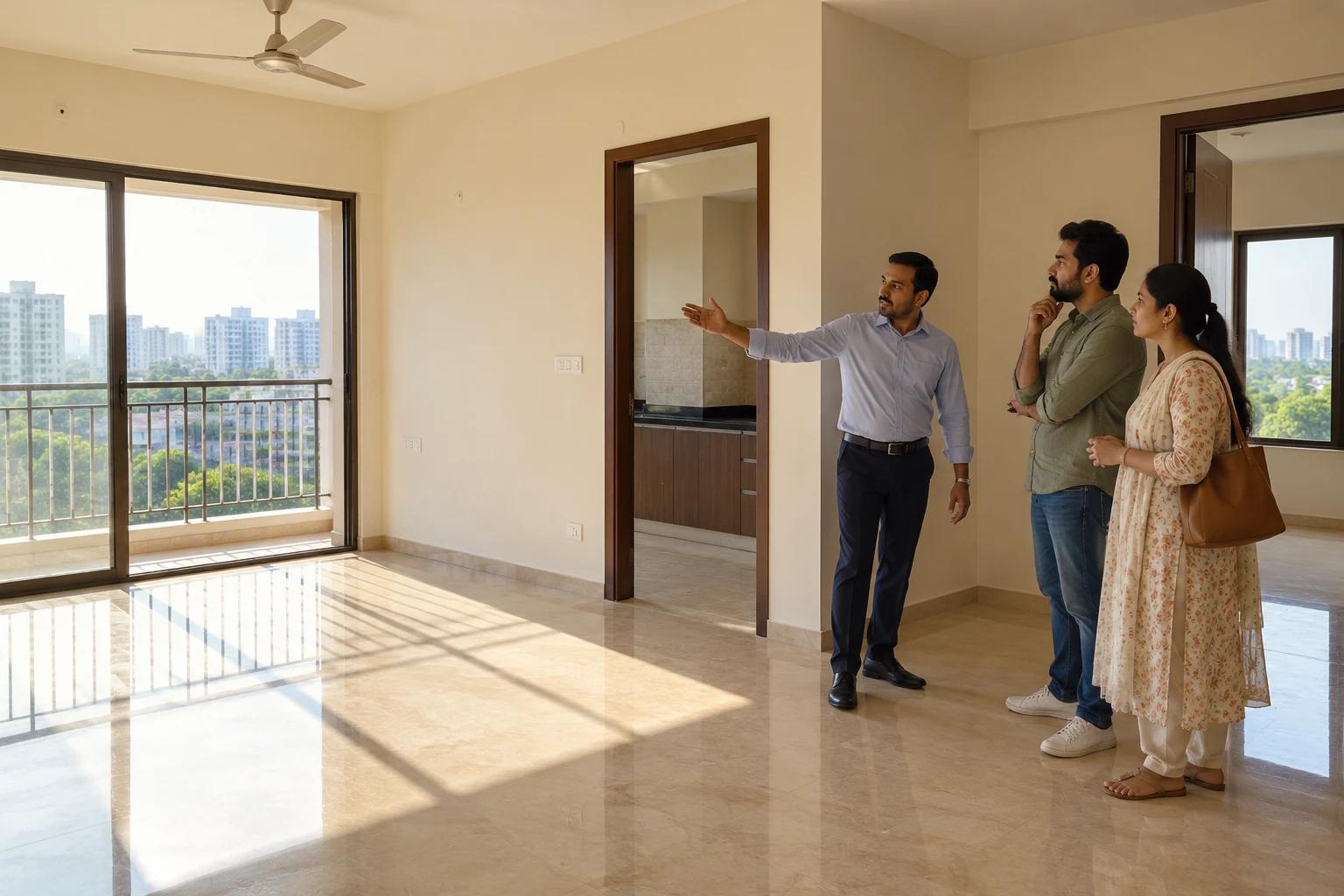
Buying Guide
Assess tenant demand, comparable rents, competing supply and empty-month costs before buying a rental property.
An empty month can change the rental story more than a higher asking rent.
A rental investment depends on finding a suitable tenant, keeping the home usable and collecting rent. Vacancy risk is the chance that the property sits empty between or during tenancies. You cannot remove that uncertainty, but you can investigate it before purchase instead of assuming twelve paid months every year.
The useful question is specific: who would rent this exact home, at what total monthly cost, and what competing choices would they have? A statement that an area is “in demand” is too broad to answer that. This guide builds a practical evidence file for a prospective rental purchase without inventing occupancy benchmarks.
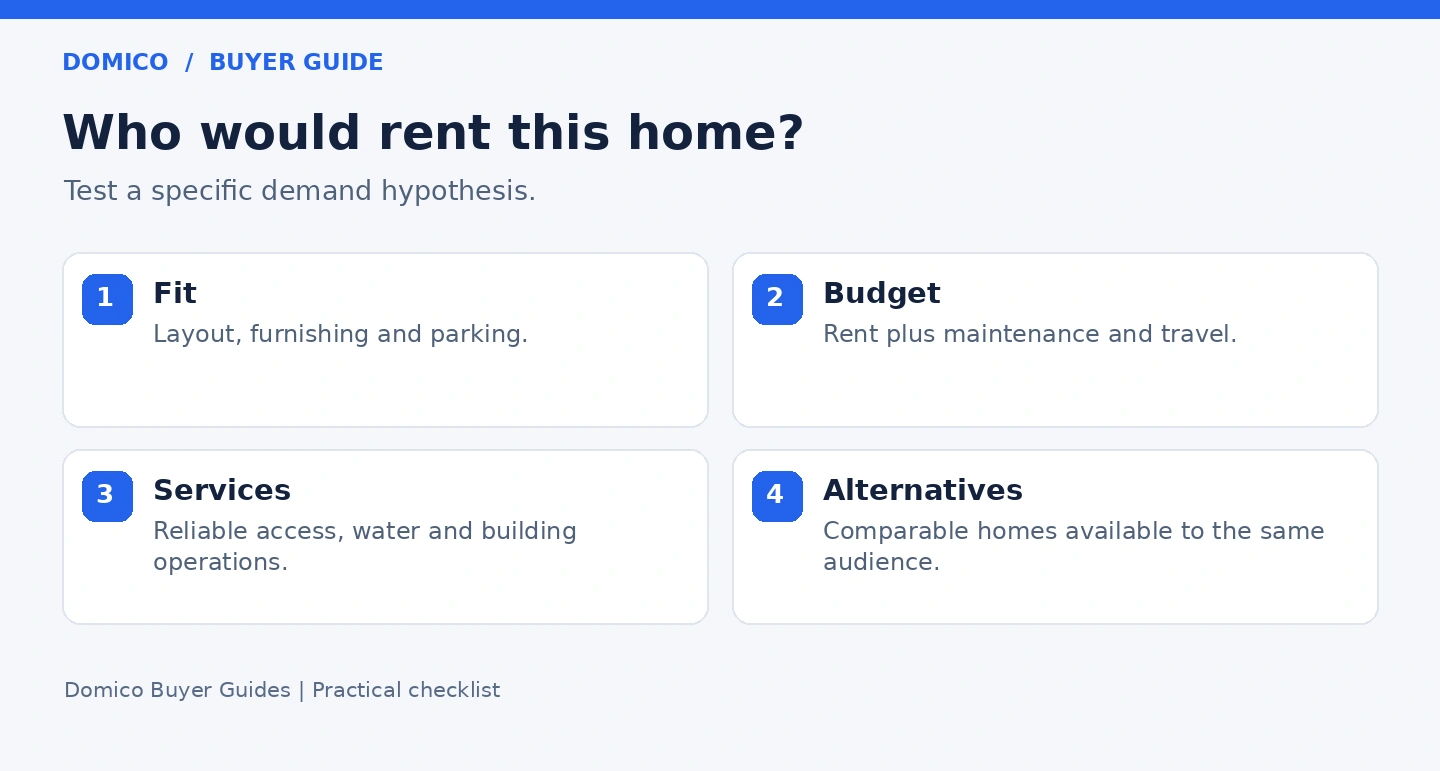
Start with the home's practical fit. Consider the layout, building rules, commute, furnishing, parking, water supply and access. A small furnished apartment near workplaces may appeal to a different audience from a larger family home near schools. Neither audience should be assumed from the locality name alone.
Avoid profiling people through sensitive personal characteristics. Use lawful, relevant tenancy criteria and seek advice on applicable rental requirements. Your research can focus on the household size the layout supports, the needed services and the total budget, without collecting private tenant information.
Write a one-sentence demand hypothesis. For example: “This unfurnished two-bedroom home may suit households needing a manageable weekday commute and reliable parking.” Then look for evidence that the location, price and building actually meet that need.
Tenants evaluate rent alongside maintenance, commute, utilities, parking and upfront move-in costs. A flat with slightly lower rent can be more expensive to occupy if it needs costly transport or has a high maintenance bill.
Make a comparison sheet for genuinely similar available homes. Record the date, source and what the advertised amount includes. Keep estimates separate from confirmed terms. Do not publish personal contact details or present a scraped advertisement as a completed tenancy.
| Comparison field | Why it matters | How to verify |
|---|---|---|
| Rent plus maintenance | Determines recurring housing cost | Ask for an itemised written quote |
| Furnishing and appliances | Changes tenant fit and owner expense | Inspect the included items |
| Parking and access | Can determine whether a household can use the home | Check actual allocation and route |
| Commute | Affects everyday affordability and time | Test likely travel periods |
| Building services | Interruptions can affect retention | Review records and speak with management |
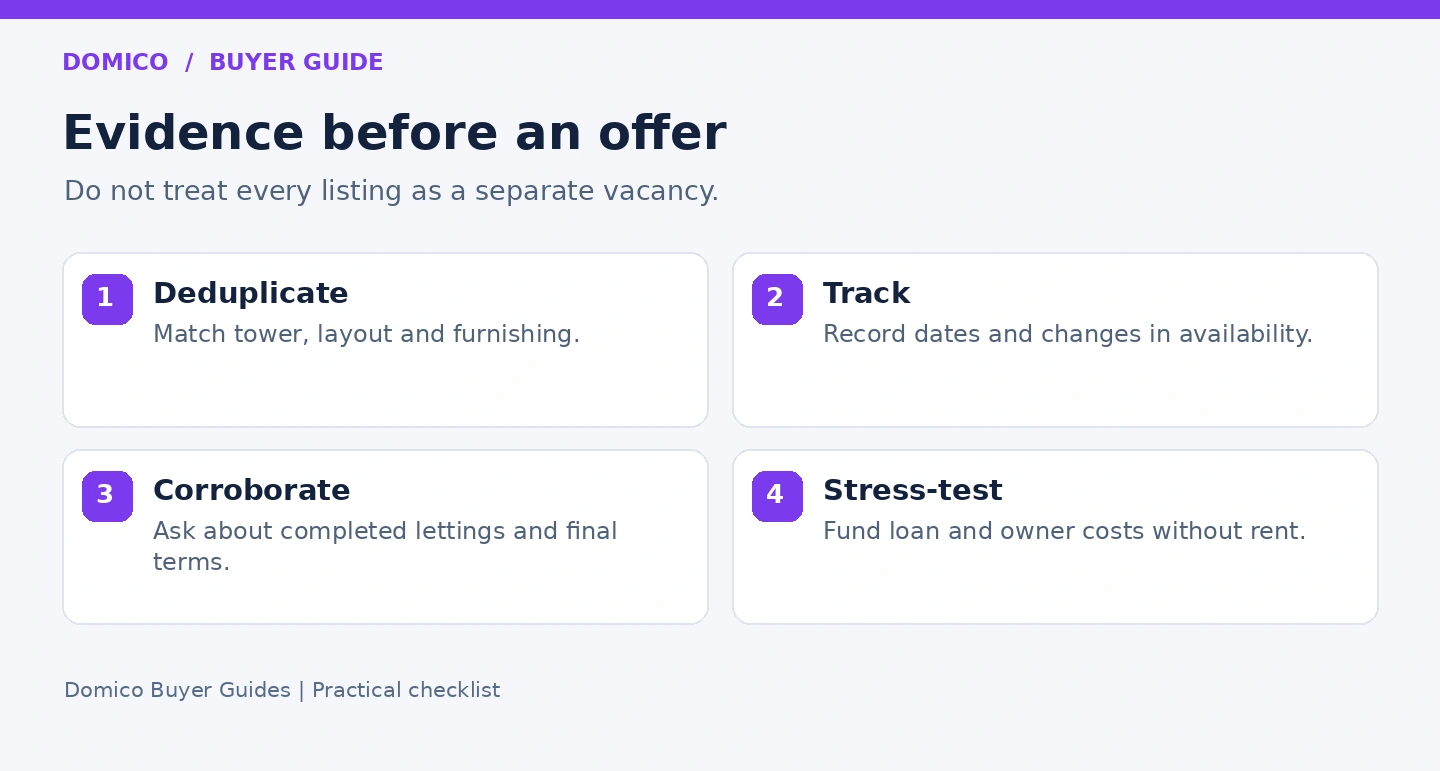
The same flat may appear under several brokers with different photographs or prices. Counting every advertisement as a separate vacant home exaggerates supply. Conversely, a listing that disappears may have expired or been withdrawn rather than rented.
Track a small sample of comparable listings over several weeks where time permits. Note identifiers such as tower, floor, layout and furnishing, while avoiding unnecessary personal data. Mark suspected duplicates and record whether a source confirms a letting, withdrawal or continued availability.
Ask brokers how long recent comparable homes took to let, whether the final rent differed from the asking amount and what features limited interest. Seek more than one source because a person selling the property has an incentive to present demand positively.
Turnover can arise from changes outside the property, such as employment moves. It can also reveal avoidable problems: unresolved repairs, water shortages, difficult access, noise or unclear charges. Investigate the building's operating history rather than assuming every vacancy is caused by the market.
For an already rented home, review the tenancy documents and payment history with appropriate consent and personal information protected. Ask about notice periods, expected departure and the owner's obligations. A current tenant is not a guarantee that income will continue unchanged after sale.
Speak with residents or management about building-level conditions, but treat comments as leads to verify. You need not know a neighbour's private affairs to establish that a lift has frequent recorded outages or that maintenance charges recently changed.
A locality can have strong employment growth and still experience rental pressure if many similar homes become available together. Look at completed, usable competing stock and credible near-term delivery, rather than relying only on the number of construction cranes.
Match supply to the same audience. Premium furnished units may not compete directly with basic unfurnished homes. A new building may offer better services but higher maintenance. Record the differences instead of treating every apartment within a radius as interchangeable.
Review official project records where applicable to understand phases and completion claims. The RERA Act provides the framework for project disclosure, but registration alone does not measure local rental demand. Leasing assumptions still need independent evidence.
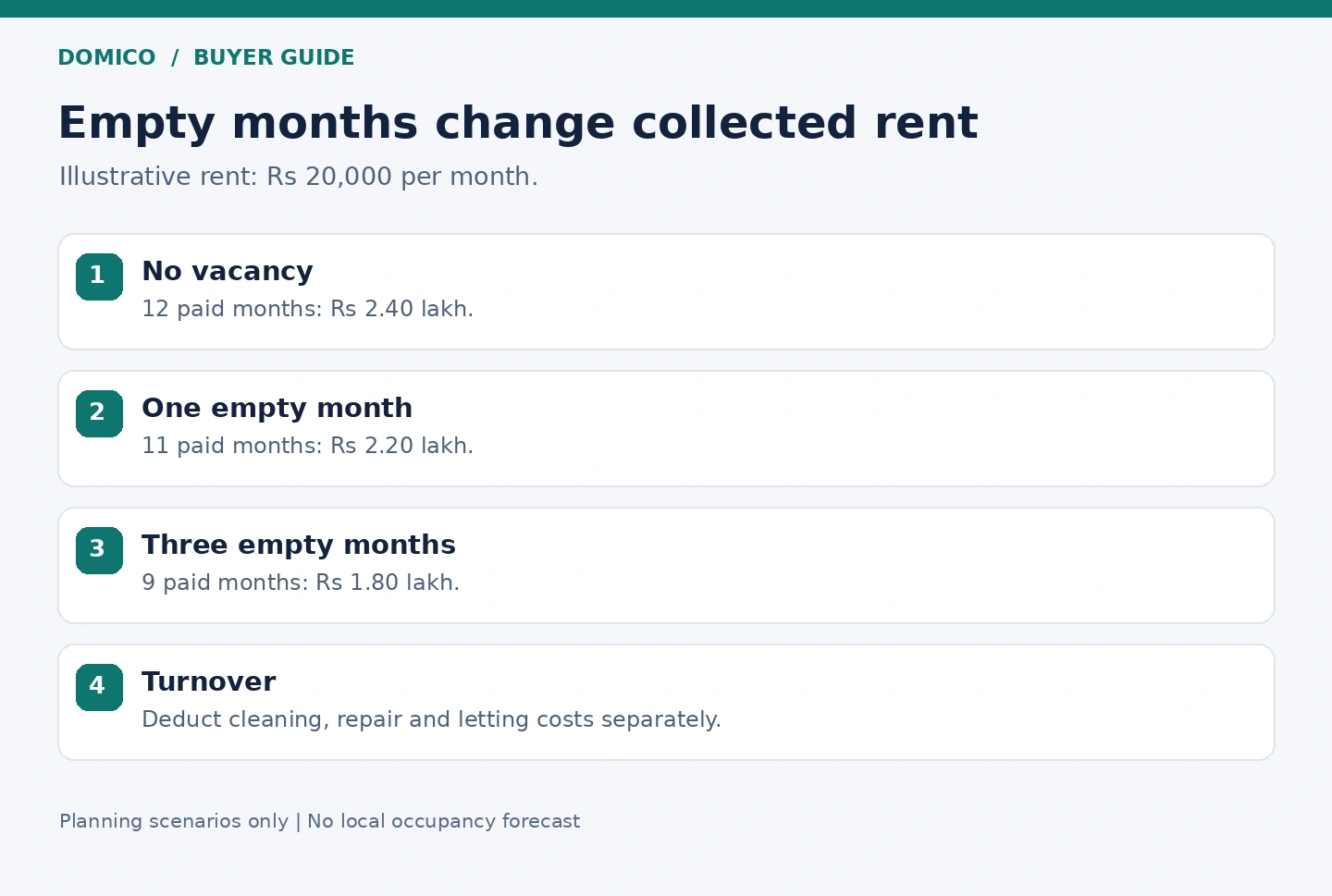
Assume a potential rent of Rs 20,000 per month. The following cases hold the monthly rent constant and vary only the empty period. They are planning scenarios, not predicted occupancy for Indore or a particular building.
| Empty months in a year | Paid months | Collected rent | Vacancy loss against twelve months |
|---|---|---|---|
| 0 | 12 | Rs 2,40,000 | Rs 0 |
| 1 | 11 | Rs 2,20,000 | Rs 20,000 |
| 3 | 9 | Rs 1,80,000 | Rs 60,000 |
Now suppose a tenant turnover costs Rs 15,000 in cleaning, small repairs and letting expenses. With three vacant months and one such turnover, the rental receipts remaining before other owner expenses are Rs 1,65,000. This is Rs 75,000 below the perfect-occupancy headline of Rs 2.4 lakh.
That is why an extra Rs 1,000 of advertised monthly rent is not automatically better. If a realistic pricing adjustment shortens a vacancy, annual collected income may improve. Evaluate the evidence and actual enquiries; do not assume the relationship is guaranteed.
Vacancy does not stop the loan, society bill or urgent repair obligation. Work out how long the household can carry those expenses without rent. The reserve should reflect your own income stability, other commitments and the property's likely repair needs, rather than a universal number of months.
RBI's financial awareness guidance encourages budgeting and retaining accessible savings. Apply that principle by keeping the rental's known obligations visible in the household plan.
Before purchase, test whether the deposit, acquisition costs and initial furnishing would consume the reserve you expect to use during vacancy. Money committed to the property cannot simultaneously serve as readily available emergency funding.
Use confidence levels rather than pretending uncertain inputs are exact. A written tenancy with verified payments supports a different conclusion from an owner's verbal estimate. A comparison based on three duplicated advertisements deserves more investigation.
| Evidence area | Stronger basis | Unresolved warning |
|---|---|---|
| Achievable rent | Comparable completed lettings with clear inclusions | Only optimistic asking prices |
| Letting period | Dated, corroborated local examples | “Always rents immediately” without records |
| Property fit | Layout and services match a plausible audience | Major access or building problem |
| Owner funding | Weak-case costs fit available cash | Loan depends on uninterrupted rent |
If a key assumption remains weak, adjust the offer, retain a larger allowance or investigate another property. A lower purchase price is useful only if the home can still attract and retain suitable tenants.
It may provide background, but it cannot establish the performance of your unit. Tenant audience, pricing, condition, building rules and nearby supply matter. Use matched local evidence and label any broader data carefully.
No. Review the actual tenancy, notice terms, payment record and expected continuation. The tenant may leave, and future demand can change. Avoid paying a premium based on rent that has not been verified.
Only if the likely tenant audience values it enough to justify the cost and upkeep. Compare furnished and unfurnished completed lettings where possible. Furniture can narrow or broaden demand depending on the market; it is not a universal solution.
Use several sources, track comparable listings, inspect buildings and ask factual questions about completed lettings. State the limitations. An evidence-supported range is more honest and useful than an exact percentage derived from incomplete information.
Consider stepping back when the unit's tenant fit is unclear, important services are unresolved or the household cannot carry a plausible vacancy. The decision should rest on the complete investment and funding plan, not only a headline rent.
An investment property should have a believable tenant story and a household budget that can tolerate an empty month. Investigate both before buying.
Download the topic-specific review checklist. Use it to record evidence, unanswered questions and follow-up actions for the exact property.
Planning to buy or rent in Indore? Browse verified properties in Indore or read more Indore guides.
Check who owes the lender, how builder-paid interest works, when support ends and whether you can carry the loan if payments stop.



