Buying Guide
Home Loan Sanction vs Disbursement: What Changes?
Understand sanction conditions, property checks, own contribution and payment readiness so your approved home loan can fund the actual purchase.

Table of contents
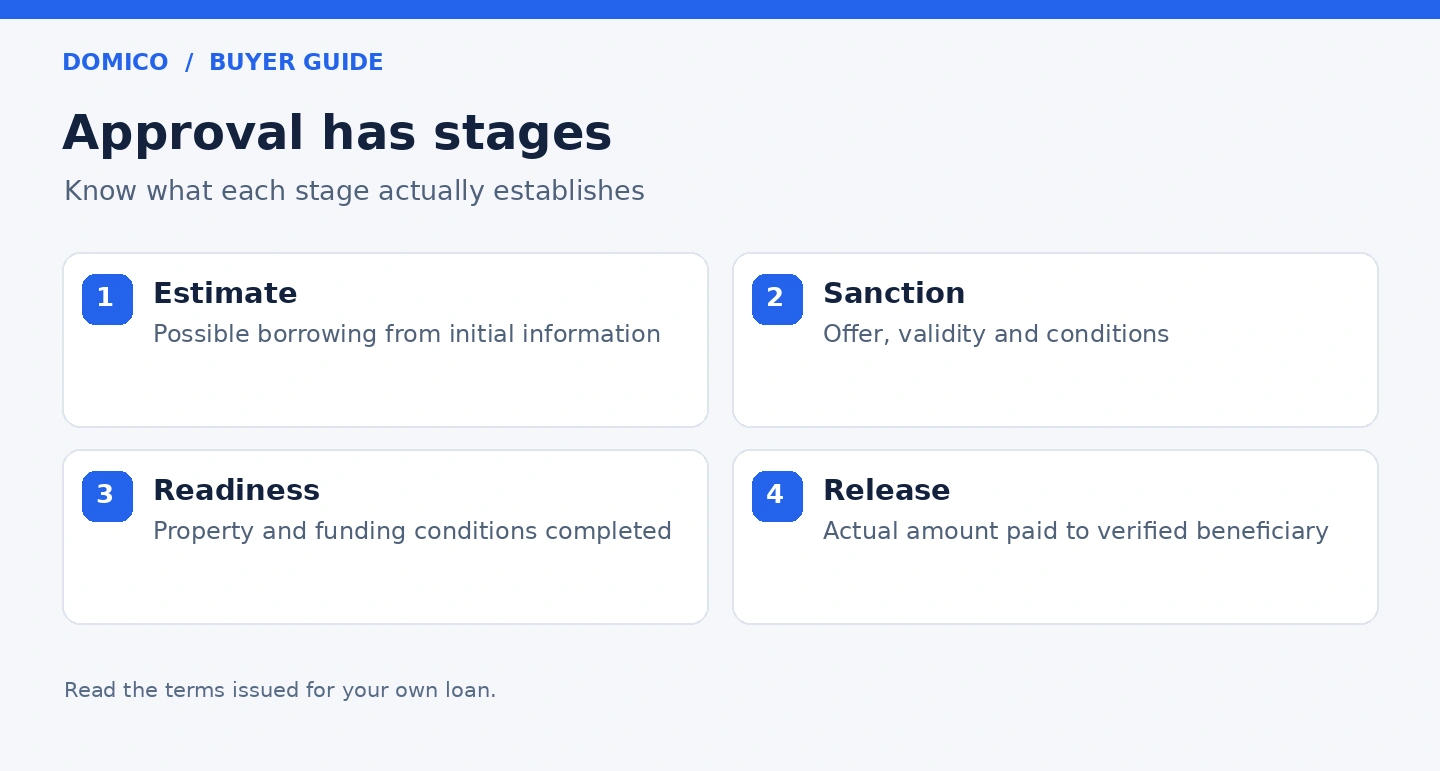
A sanction letter is an offer with conditions. Disbursement is the release of money after the required checks.
A homebuyer receives a loan sanction and tells the seller that funding is ready. A week later, the bank asks for another title document, a construction-stage confirmation or proof of the buyer's own contribution. The seller's payment deadline is approaching, but the loan money has not moved.
The confusion comes from treating sanction and disbursement as the same event. They are connected stages, but each has a different purpose. Understanding that distinction helps you negotiate realistic payment dates and avoid a non-refundable commitment based on incomplete funding.
This guide explains the practical sequence for new and resale purchases without promising one processing timeline for every lender.
What a sanction letter establishes
A sanction letter generally records the lender's approved offer, including amount, tenure, rate or pricing basis, repayment terms, validity and conditions. Read the exact wording: a preliminary eligibility estimate, in-principle approval and final sanction may have different status.
HDFC Bank's home-loan information describes sanction as the stage where the approved terms and special conditions are issued, followed by a separate disbursement process involving property documents. The documents for your loan govern the actual obligations.
Check whether the sanction is tied to an identified property or primarily reflects the applicant's financial assessment. If the property has not been reviewed, make that limitation explicit in your purchase planning.
What disbursement establishes
Disbursement is the actual release of loan funds in accordance with the lender's process and agreed conditions. It may occur in one amount for an eligible completed purchase or in stages for construction-related funding.
A sanctioned limit is not a bank balance you can spend freely. The lender may require executed loan documents, acceptable title and technical review, mortgage-related steps, evidence of own contribution and verified payment instructions before release.
| Stage | Typical question | What buyers should avoid assuming |
|---|---|---|
| Eligibility estimate | What loan might my profile support? | That a binding offer already exists |
| Sanction | What terms and conditions has the lender offered? | That all property and release checks are complete |
| Disbursement readiness | Have the applicable conditions been fulfilled? | That a verbal assurance replaces evidence |
| Disbursement | What money was released, when and to whom? | That the entire sanctioned limit must be released at once |
Read every sanction condition
Mark the conditions as separate tasks. Identify who must provide each item, where it will come from and when it can realistically be completed. An unclear condition should become a question to the bank before you promise a payment date.
Check the validity period and circumstances requiring reappraisal. A long gap, changed employment, new debt or a different property can affect the lender's review. Do not assume an old offer remains usable without confirmation.
Also read fees, charges, the interest-rate mechanism, security requirements and documents needed for acceptance. A low advertised rate is less useful than understanding the actual offer made to you.
Keep borrower review and property review separate
Your financial position can be acceptable while the property is not. Missing title links, unclear access, unauthorised construction, unresolved lender security or a valuation shortfall may prevent the anticipated release.
Conversely, a bank-approved project does not guarantee that every buyer in it qualifies. Applicant income, age, credit and current obligations remain relevant.
HDFC Bank's published process describes legal and technical assessment of the property. Use your lender's actual document request to understand what remains, rather than treating another owner's loan as proof that your transaction is ready.
Confirm the loan amount against the actual valuation
The bank's finance calculation may use an assessed property value and product limits rather than simply fund a fixed share of the seller's asking price. Ask for the actual basis and exclusions.
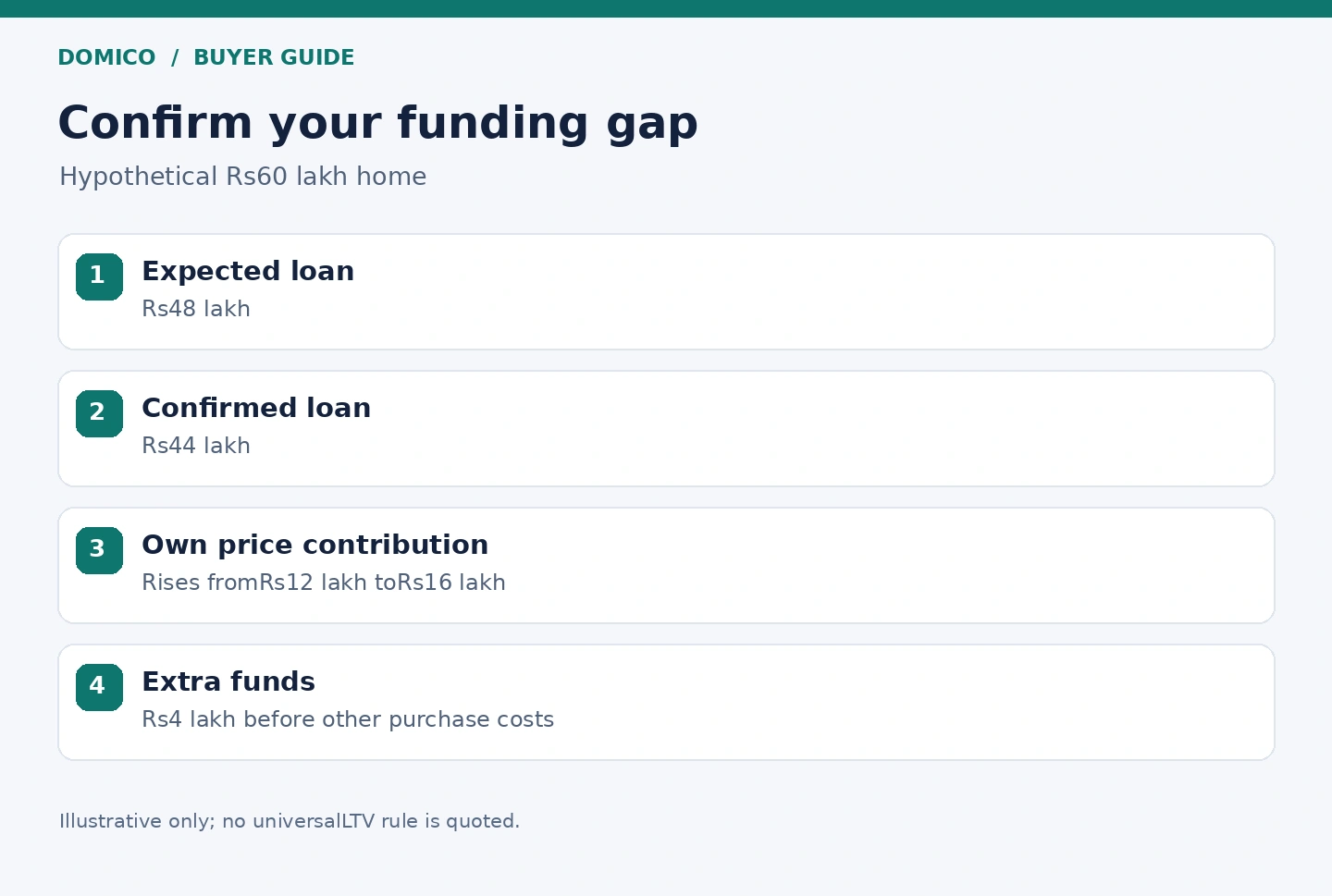
Suppose a hypothetical property costs Rs 60 lakh. You expected a Rs 48 lakh loan, but after its review the bank confirms Rs 44 lakh. Your own contribution to the price rises from Rs 12 lakh to Rs 16 lakh, before registration and other costs.
| Hypothetical funding comparison | Expected | Confirmed after review |
|---|---|---|
| Property price | Rs 60 lakh | Rs 60 lakh |
| Bank finance | Rs 48 lakh | Rs 44 lakh |
| Buyer funds for price | Rs 12 lakh | Rs 16 lakh |
| Extra own funds needed | — | Rs 4 lakh |
The example does not quote a universal loan-to-value rule. It shows why you should reconcile confirmed finance before committing the full purchase price.
Prepare evidence of your own contribution
Ask the bank what proof it needs that you have paid or can pay the required margin. Keep traceable receipts and bank references for the token, advance and other buyer-funded consideration.
Do not use an unexplained borrowed deposit to create the appearance of savings. If family funds, an asset sale or another legitimate source supports the purchase, document the nature and timing appropriately.
Remember that stamp duty, registration, furnishing and emergency savings may need separate funds. A sanctioned loan can be fully correct while your total household purchase budget remains incomplete.
For construction, ask how each release is triggered
An under-construction home can involve staged demands. The lender may require a demand letter, technical assessment of progress, contribution evidence and other documents before each release.
Do not assume the builder's invoice automatically compels the bank to pay immediately. Understand whether the lender accepts the demand stage and what inspection or processing is required.
Keep a buffer between receiving a demand and its contractual due date where possible. If a builder wants a fixed payment schedule that does not match the loan's disbursement structure, resolve the mismatch before signing rather than financing every gap under pressure.
For resale, coordinate registration and original papers
A completed resale transaction may involve the seller's existing lender, originals held as security and a payment at or around registration. Ask both banks how money and documents will move.
Verify beneficiary details directly. If funds will close the seller's mortgage, record their adjustment against the purchase price and the release process. Do not let a last-minute email change the account without independent confirmation.
Agree on original-document delivery and acknowledgements. The goal is a sequence in which the lender can release funds and the buyer can complete the purchase on the conditions already understood.
Negotiate seller deadlines from the actual process
Before promising a final payment date, ask the bank what is still pending and what must happen first. Processing estimates should include dependencies outside the bank, such as authority documents or the seller's lender release.
Have your lawyer frame the purchase agreement so that funding conditions, responsibilities and consequences of delay are clear. A blanket statement that the buyer is responsible for every delay can be costly when the seller has not supplied required papers.
Do not assume the bank will compensate you for a token forfeiture simply because a loan was sanctioned. Your contract, lender communications and facts need their own assessment.
| Disbursement-readiness item | Useful evidence |
|---|---|
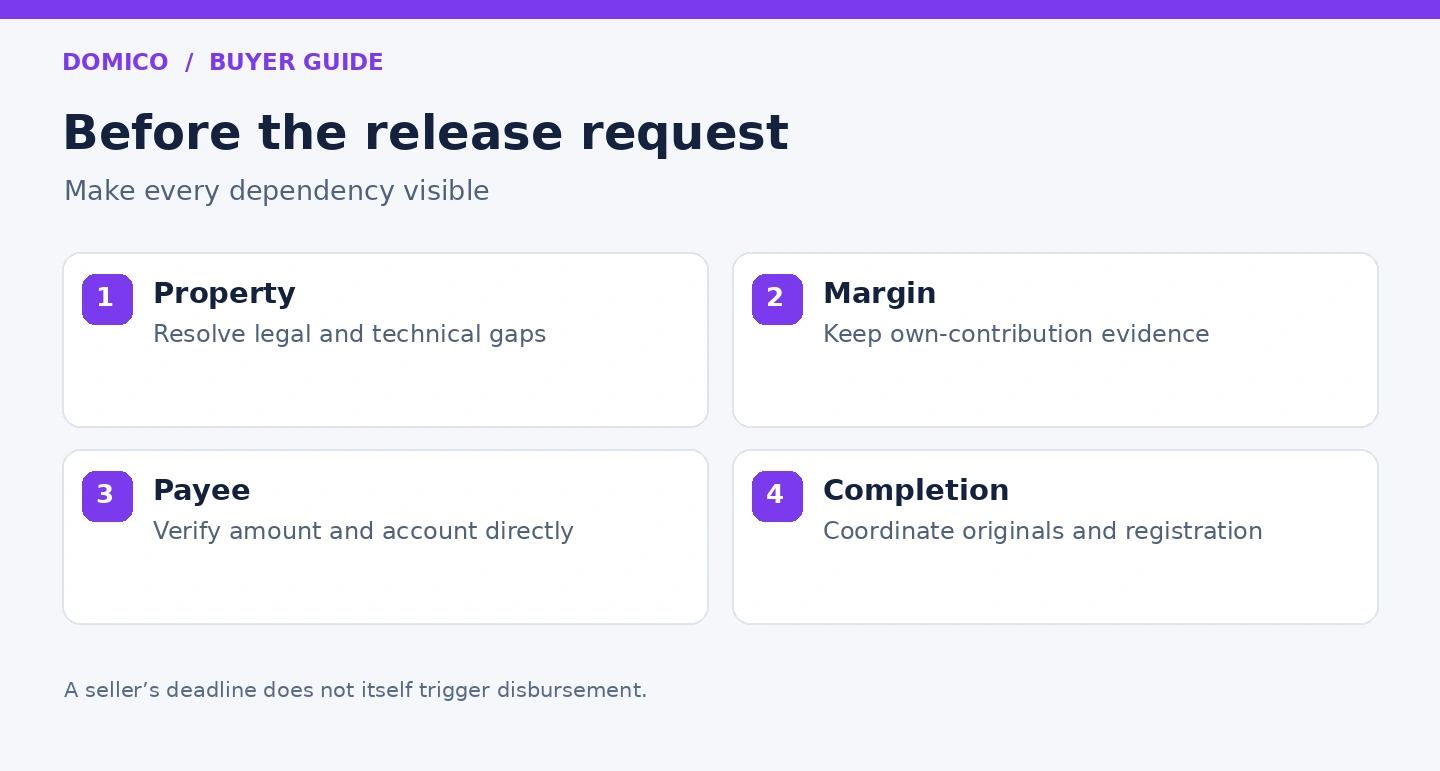
| Current sanction | Accepted offer and validity confirmed |
| Applicant conditions fulfilled | Required updated documents supplied |
| Legal and technical review | Specific pending issues resolved |
| Own contribution established | Verified receipts and funding trail |
| Release instruction correct | Payee, amount, stage and account independently checked |
| Completion coordinated | Registration, originals and possession sequence agreed |
Check the first statement after release
Confirm the amount and date disbursed, beneficiary and loan-account treatment. Check when interest starts, whether a pre-EMI arrangement applies and when regular instalments will be collected under the terms.
If only part of the sanction was released, record the balance and future conditions. An unused sanctioned amount is not necessarily available indefinitely or for unrelated expenses.
Keep the sanction, loan agreement, disbursement request, receipts and repayment instructions together. These records make later questions about interest, stage payments or cancellation much easier to resolve.
Printable buyer worksheet
Download the topic-specific review checklist. Use it to record evidence, unanswered questions and follow-up actions for the exact property.
Frequently asked questions
Does sanction mean the bank has checked every property document?
Not necessarily. Read the conditions and ask which legal and technical checks are complete or pending for the identified property.
Can the final disbursement be lower than the sanctioned amount?
The amount released depends on applicable conditions, the eligible funding basis, amounts required and the transaction structure. Obtain a confirmed calculation rather than assuming the entire limit must be used.
When does EMI start?
It depends on the loan's terms and disbursement arrangement. Ask how interest, pre-EMI and regular EMI are triggered for your specific account.
Can I change the property after sanction?
Ask the lender about reappraisal, fresh property review, validity and fees. Do not assume approval automatically carries over to a different asset.
Should I pay a non-refundable token after receiving sanction?
First understand remaining conditions and have the purchase terms reviewed. A sanction alone may not establish that the loan can fund that property by the seller's deadline.
Ask the bank one practical question
Instead of asking only “Is my loan approved?”, ask: “What exactly remains before this payment can be released to this beneficiary on this date?” That question connects the sanction letter to the transaction you need to complete.
Primary sources and related reading
- buyer-guide-100
- homebuyers
- loan-sanction-disbursement
- indore
Planning to buy or rent in Indore? Browse verified properties in Indore or read more Indore guides.



