Buying Guide
Under-Construction Resale Flat: Transfer Checks
Buying an allotted flat before completion? Check developer recognition, payment history, premium, lender security and assignment documents.
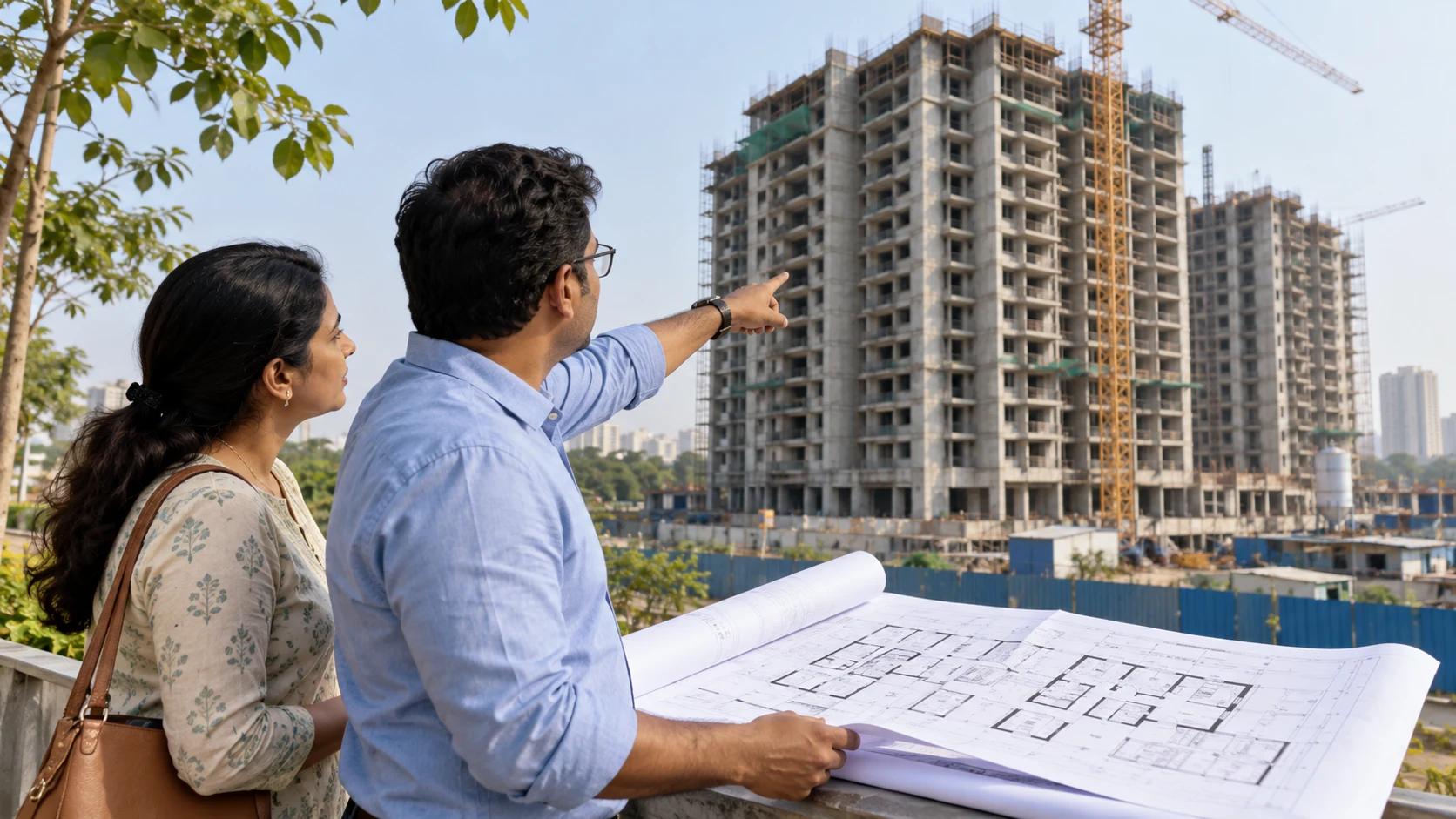
Table of contents
You are buying the first buyer's position in an unfinished transaction. Understand that position completely.
An under-construction flat offered for resale can look like a shortcut into a project that has no fresh inventory in your preferred tower. The first allottee may have booked early, paid several instalments and now want to exit. You may receive their contractual rights and assume future obligations, rather than simply receive a completed home through an ordinary resale deed.
That difference changes the checks. You need to understand the project, the first buyer's documents, what has already been paid, what remains payable and how the developer and lenders recognise the transfer.
An attractive premium is meaningful only after the entire transaction is reconciled. Start with the file, not the advertised discount.
Establish what the seller actually holds
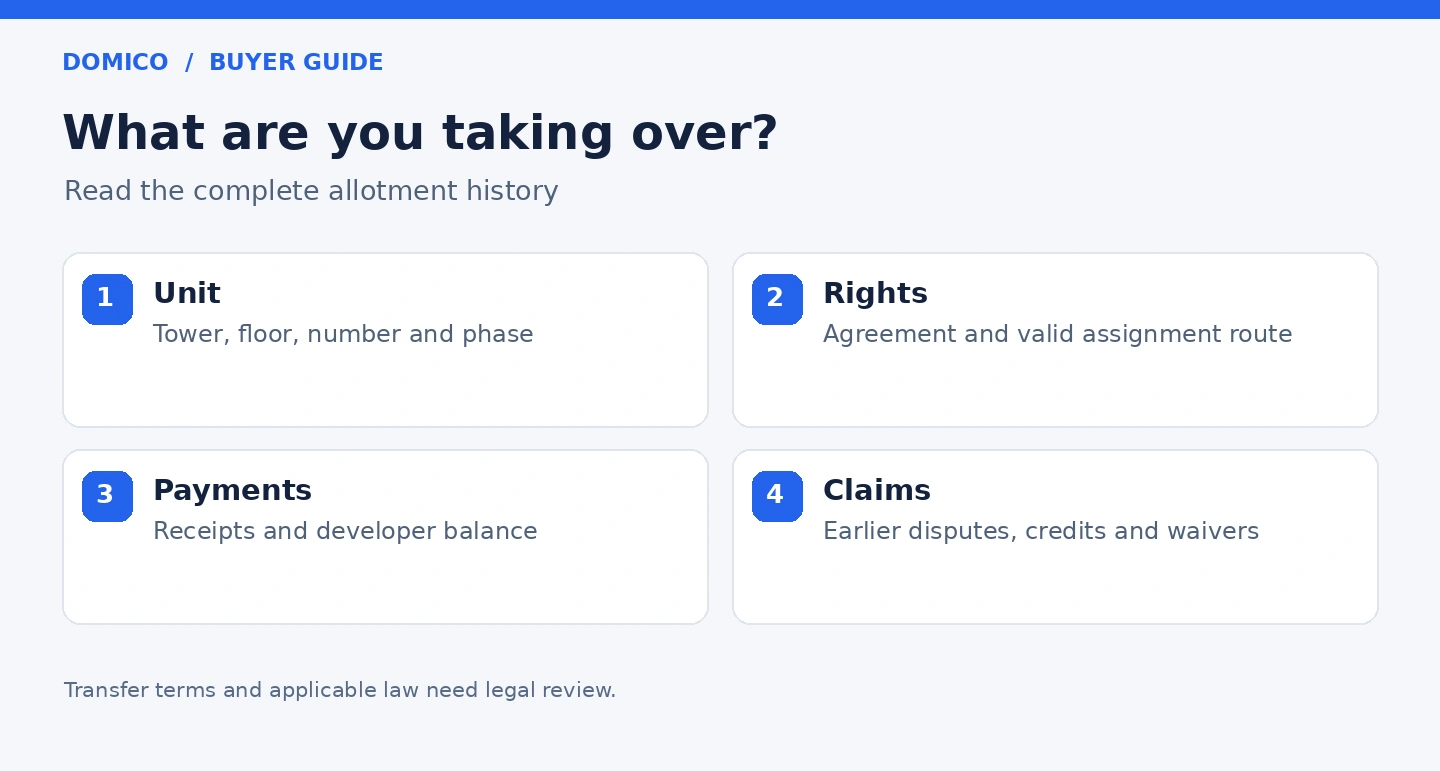
Ask for the original allotment letter, agreement for sale, payment schedule, receipts, account statement and all amendments. Identify whether the first buyer has an allotment, an executed agreement, a registered instrument or another documented interest.
Match the tower, floor, unit number, carpet area, parking arrangements and project phase across the papers. Marketing names and internal unit references can change. Ask the developer to explain changes in writing and provide the current approved description.
The RERA Act's definition of allottee includes a person who subsequently acquires the allotment through sale, transfer or otherwise. The valid transfer instrument and transaction structure still require legal review. A promise that “RERA covers everything” does not complete an assignment.
Read the transfer clause before discussing the premium
The agreement may specify when a transfer is permitted, which approvals or documents are required, and how the incoming buyer is recorded. Ask the developer for its current written requirements and itemised calculation of any claimed transfer charge.
Have your lawyer examine the enforceability and applicability of these requirements. Do not assume every fee demanded is automatically payable, or that a transfer restriction can be ignored because another buyer completed a similar sale.
Find out whether the seller has already assigned, pledged or otherwise dealt with the allotment. A fresh account statement and developer confirmation help establish the current position, but neither replaces the complete legal review.
| Document or confirmation | Question it should answer |
|---|---|
| Original allotment and agreement | What rights did the first buyer acquire? |
| Developer account statement | What is paid, pending or disputed? |
| Transfer requirements | How will the new allottee be recognised? |
| Lender confirmation, if financed | How will the existing security be released? |
| Draft transfer instrument | Which rights, claims and obligations move to you? |
Reconcile the money in separate buckets
Ask for an itemised breakdown. The amount paid to the outgoing allottee is not necessarily the total cost of taking over the flat. You may also owe the developer future instalments, taxes, interest, lawful transfer-related charges and other contracted items.
Keep the seller's original acquisition cost, documented payments, requested premium and remaining developer balance separate. The word “all-inclusive” should be supported by a schedule identifying what it includes and excludes.
Also check whether the seller has unpaid delayed-payment interest. If it is disputed, record who will resolve it and whether the developer will process the transfer while it remains open. Otherwise your file can stall after the seller receives an advance.
A realistic reconciliation example
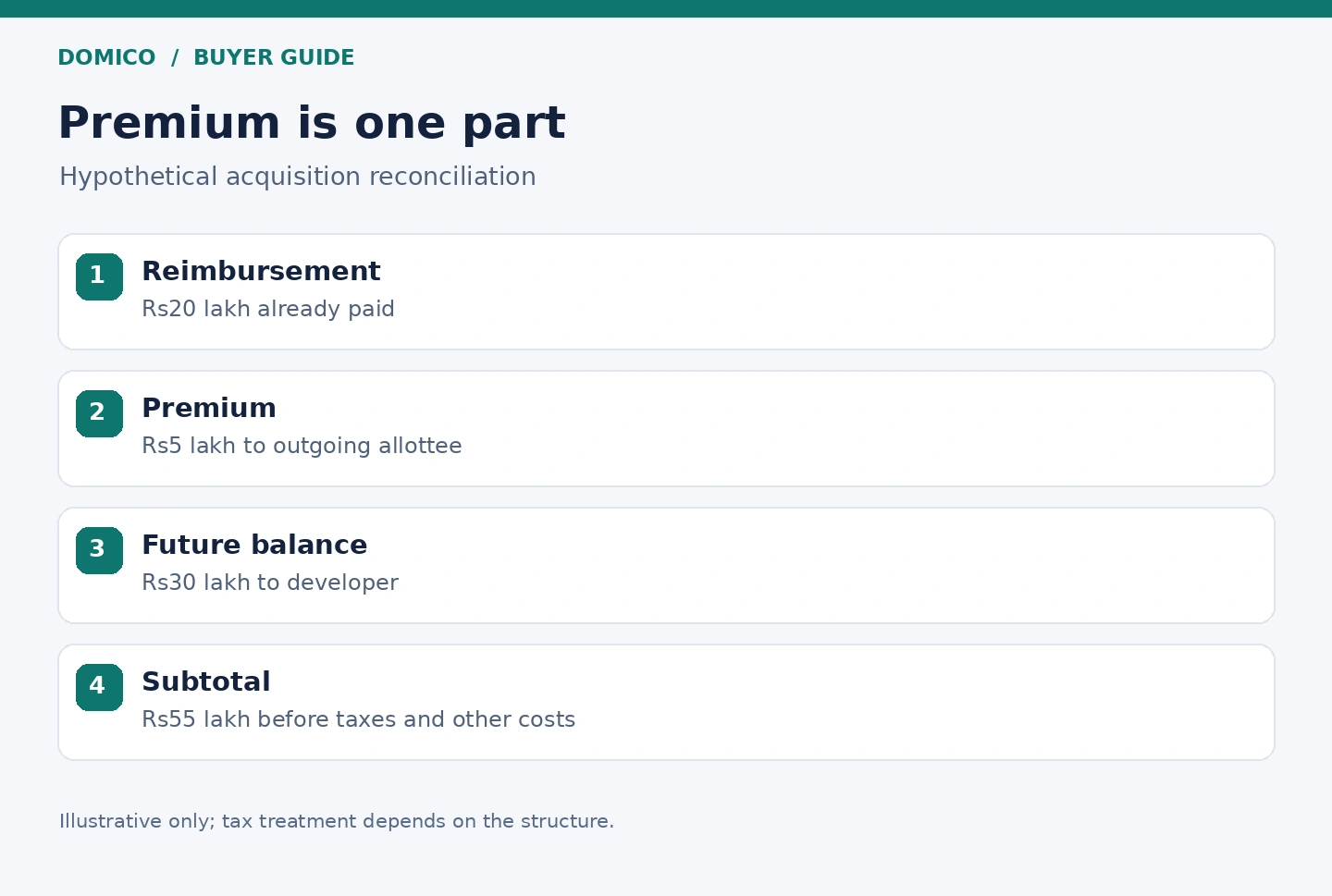
Assume an illustrative original agreement price of Rs 50 lakh. The first buyer has paid Rs 20 lakh to the developer. They ask you to reimburse that amount and pay a Rs 5 lakh premium. The developer's confirmed remaining basic-price balance is Rs 30 lakh.
| Illustrative component | Amount |
|---|---|
| Reimbursement of first buyer's documented payments | Rs 20 lakh |
| Premium to first buyer | Rs 5 lakh |
| Remaining basic-price payments to developer | Rs 30 lakh |
| Basic acquisition position before other costs | Rs 55 lakh |
This example excludes applicable taxes, transfer-related charges, stamp duty, registration, finance and any other documented extras. Your tax adviser should determine the relevant tax and withholding treatment for the actual structure. Do not add an assumed universal GST percentage to every assignment transaction.
If you compare this flat with a new developer offer, use the same area basis, parking entitlement, payment timing and cost inclusions. A lower headline price with an earlier large payment may carry a different financing burden.
Review project risk as if you were the original buyer
A resale allotment does not remove construction or possession risk. Verify the exact phase on MP RERA, review current disclosures, approvals and applicable extensions, and inspect actual progress.
Compare the promised possession date in the original agreement with later communications. Identify delay notices, force-majeure claims, disputes and revised timelines. Ask whether any settlement or waiver has already been signed by the first buyer.
If your plan depends on moving by a specific month, work from the current documented position and construction assessment. Do not rely solely on the seller's statement that possession is “almost ready.” Domico's ready versus under-construction guide explains how timing affects household cash flow.
Clarify the treatment of past claims
The first buyer may have a potential delay claim, a promised discount, a refund credit or a dispute about area. Ask whether these rights pass to you, remain with the seller or require separate treatment in the transfer documents.
Have your lawyer read any developer endorsement or undertaking carefully. A document described as a routine name-change form may contain wider acknowledgements or waivers. Understand those provisions before signing.
Record representations about past payments, notices, litigation and third-party commitments. A useful transfer file lets the new buyer understand the entire history without depending on the outgoing buyer's future cooperation.
Coordinate the lenders early
If the first buyer borrowed against the allotment, the lender may hold the agreement and have security over the contractual rights. Obtain a property-specific closure and release plan. Do not pay the seller as though the original papers are freely available.
Your own lender will assess your income, the project, the assignment documents and disbursement structure. Ask what it will pay to the outgoing buyer, existing lender and developer, and which documents must exist first.
HDFC Bank's published process distinguishes sanction from legal-document review and disbursement. A pre-approved borrowing amount should not be treated as confirmation that this resale-allotment structure is accepted.
Build a completion sequence everyone can follow
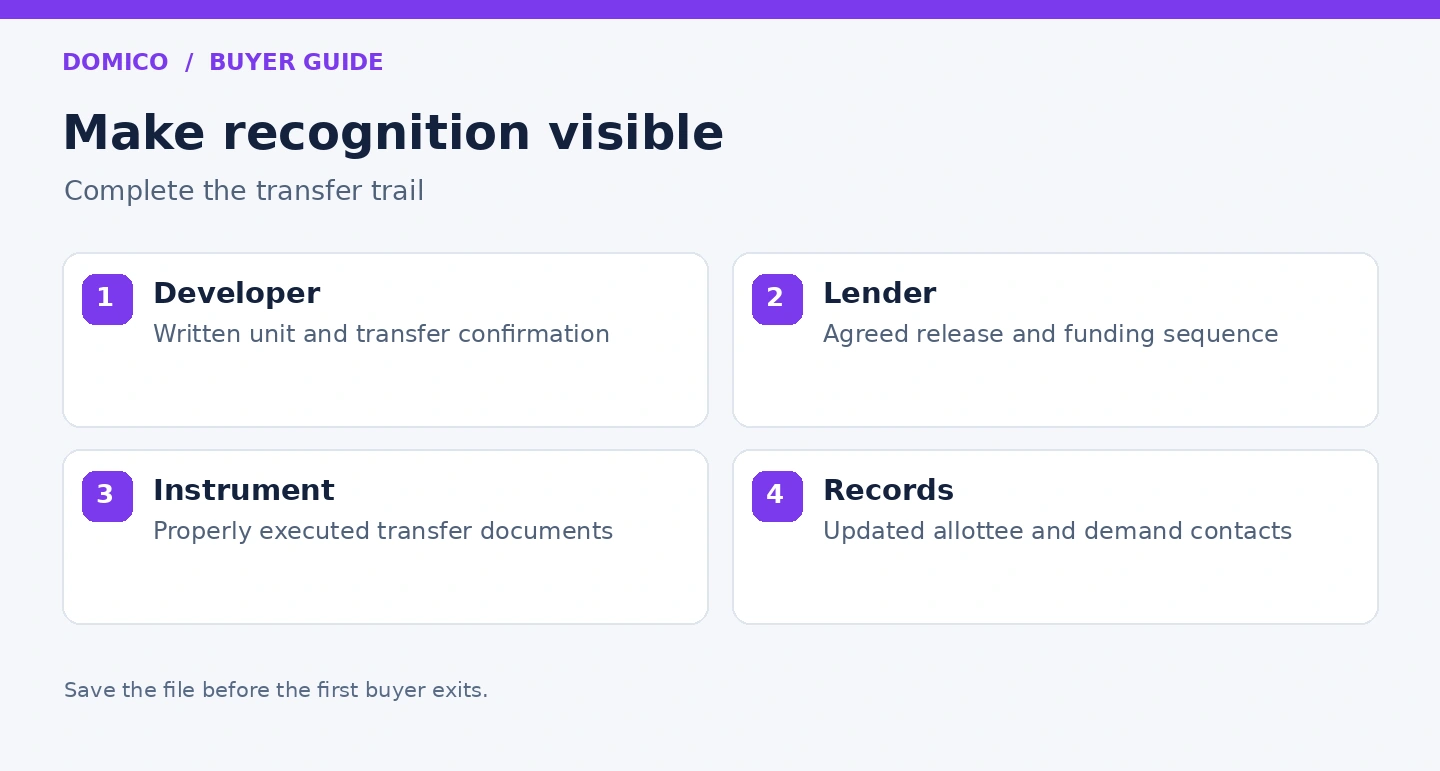
Agree the order of developer confirmation, lender release, execution and registration where required, payments, endorsement and original-document handover. Ask who is responsible for updating the developer's records and future demand communications.
Avoid paying the entire seller amount simply against an informal receipt while the developer still lists only the outgoing allottee. Your lawyer and lenders should settle a sequence appropriate to the transaction and local requirements.
| Completion checkpoint | Evidence to retain |
|---|---|
| Unit and allottee confirmed | Developer's current written confirmation |
| Payments reconciled | Receipts and final statement to the agreed date |
| Security addressed | Lender release and document-delivery record |
| Transfer executed | Properly executed instrument and applicable registration |
| Buyer recognised | Developer endorsement or updated allottee record |
| Future payments organised | New demand contact and verified account instructions |
Before signing, ask for the latest demand history and check whether the developer has changed the payment account or collection instructions. Confirm any change directly with its authorised team. The incoming buyer should receive future notices at a verified contact address, with the original buyer’s forwarding role ended only after the record update is complete.
Questions buyers often ask
Is this the same as buying a completed resale flat?
Not necessarily. You may be taking over an allotment and ongoing construction obligations. The documents must identify the interest transferred and the process for future conveyance and possession.
Can the developer refuse to recognise the transfer?
That depends on the contract, applicable law and transaction circumstances. Obtain its written position before committing significant funds and have your lawyer assess any restriction or demand.
Does the premium have to be paid in cash?
Do not accept that as a normal requirement. The agreed consideration should be documented accurately and paid through lawful, traceable channels, with tax treatment checked for the actual transaction.
Who pays the next construction instalment?
Set a clear cut-off date and allocation in the agreement. An instalment falling between signing and completion can cause a dispute unless the parties define responsibility in advance.
Will I inherit the first buyer's delay claim?
Do not assume so. Review the claim, any earlier settlement and the proposed assignment wording. Your lawyer should specify how existing rights and liabilities are treated.
The file should survive the seller's exit
Before completion, make sure you can independently establish your unit, contractual rights, past payments, remaining obligations, lender position and developer recognition. That is what turns a promising resale offer into a transaction you can actually manage.
Sources and further reading
- Government publication: Real Estate (Regulation and Development) Act.
- Madhya Pradesh RERA.
- HDFC Bank: home-loan process.
Printable buyer worksheet
Download the topic-specific review checklist. Use it to record evidence, unanswered questions and follow-up actions for the exact property.
- buyer-guide-100
- homebuyers
- under-construction-resale
- indore
Planning to buy or rent in Indore? Browse verified properties in Indore or read more Indore guides.



