Buying Guide
PMAY-Urban 2.0: Eligibility and Buyer Application Guide
Check PMAY-Urban 2.0 routes, ISS screening limits, required records and application stages before including housing assistance in your buying budget.
Updated 8 min read

Buying Guide
Check PMAY-Urban 2.0 routes, ISS screening limits, required records and application stages before including housing assistance in your buying budget.
Check the scheme before counting the subsidy in your down payment.
For a first-time homebuyer, a housing subsidy can make a meaningful difference. It can also create confusion when an old scheme article, a builder advertisement and a bank conversation describe different benefits. The safest starting point is the current official programme and the route that actually fits your household.
PMAY-Urban 2.0 is not a promise that every affordable home receives the same amount. Household eligibility, the chosen component, property conditions, loan terms, verification and the release process all matter. An application is the start of that assessment, not confirmation that assistance has been approved.
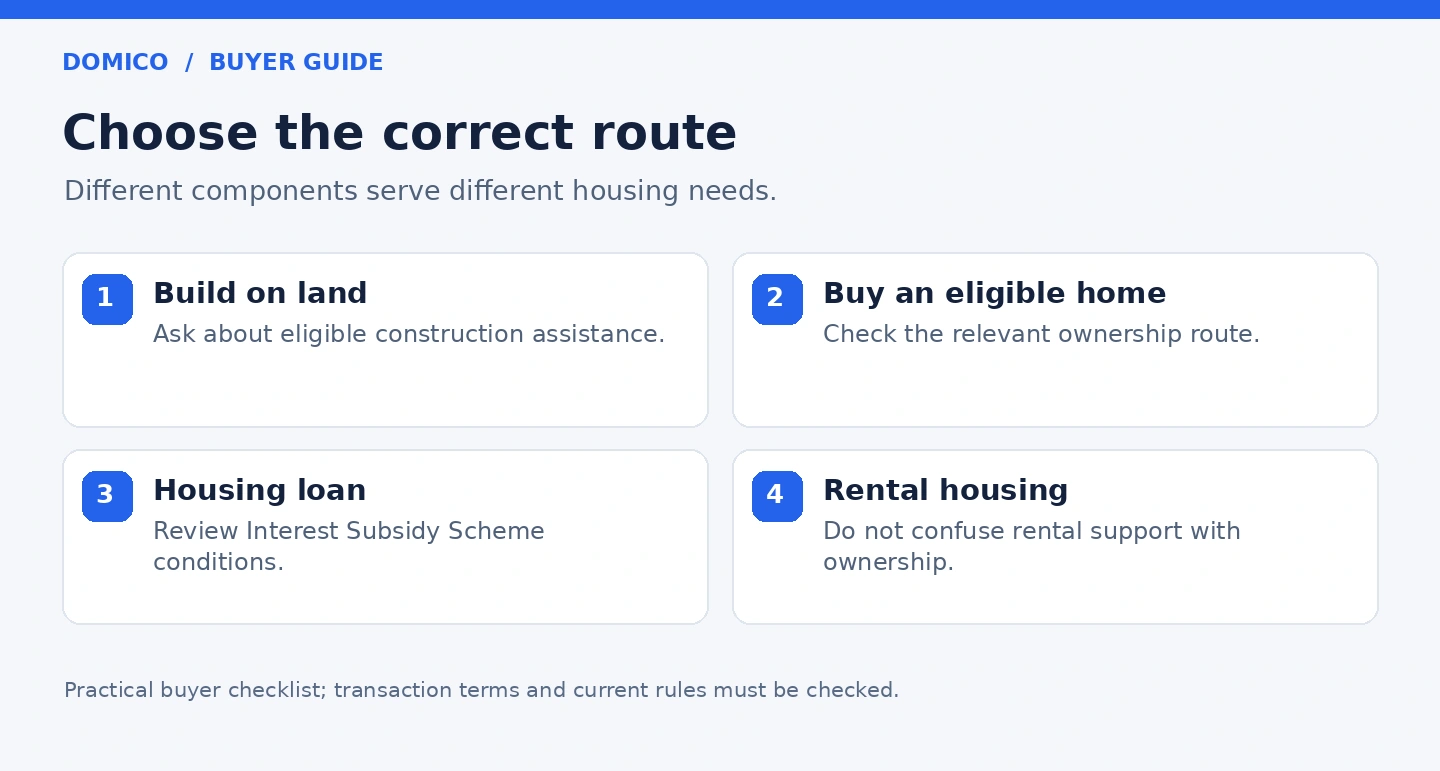
The programme includes different components for construction, purchase and rental housing. A buyer taking a home loan should examine the Interest Subsidy Scheme, or ISS, where applicable. A household building on its own eligible land may need a different route. Rental assistance should not be confused with an ownership subsidy.
Use the official PMAY-Urban 2.0 guidelines and the relevant urban local body or participating lender. Avoid transferring figures from an older CLSS article into a new ISS application without checking whether they belong to the current scheme.
| Route | Basic purpose | First contact to clarify |
|---|---|---|
| Beneficiary-Led Construction | Eligible household construction on its land | Urban local body or implementing agency |
| Affordable Housing in Partnership | Eligible ownership through approved arrangements | Implementing agency or local body |
| Interest Subsidy Scheme | Assistance linked to qualifying housing loans | Participating lender and official portal |
| Affordable Rental Housing | Rental-housing provision | Relevant programme or implementing agency |
This table is an orientation tool. The actual eligibility and assistance differ by component. Ask which one the seller or lender is discussing and request the official basis for the quoted benefit.
The scheme's family and existing-house conditions need to be examined together. Information about family members, pucca-house ownership and previous housing assistance can affect eligibility. A buyer should not assume that applying in a different spouse's name removes a household-level restriction.
Prepare a truthful household history before selecting a property on the strength of a subsidy. Include previous government housing benefits and any property interests that may need disclosure. If the status is uncertain, ask the implementing agency for the required interpretation and supporting documents.
A false declaration can create more than a rejected application. It can complicate the loan and the purchase already committed. Do the eligibility check early enough that the household can still choose a different budget.
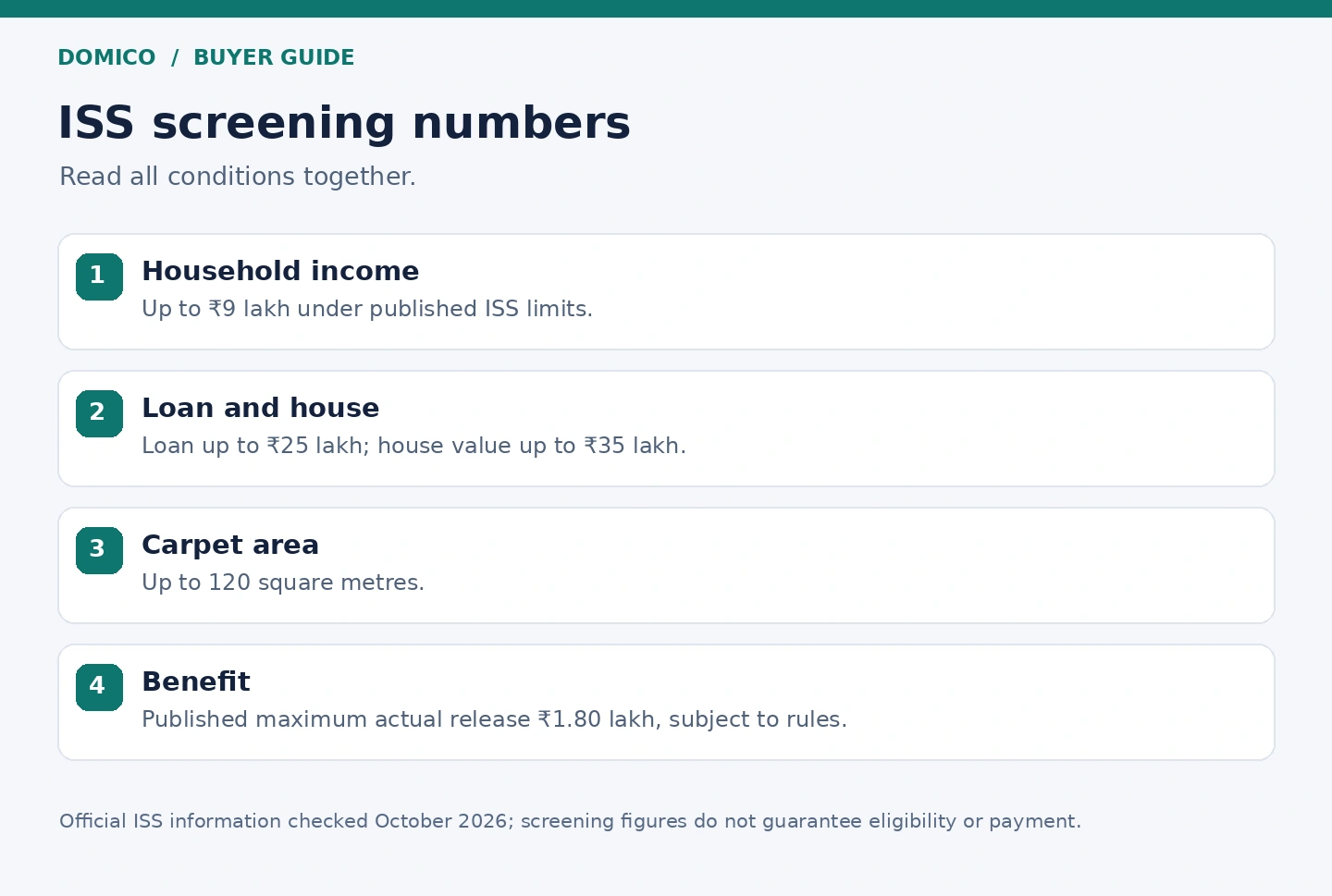
The current official ISS information page describes limits including household income up to ₹9 lakh, loan value up to ₹25 lakh, house value up to ₹35 lakh and carpet area up to 120 square metres. It describes a 4% subsidy on the first ₹8 lakh for a period up to 12 years, with a maximum actual release of ₹1.80 lakh subject to the scheme's conditions.
These numbers must be read together. A loan below the limit does not by itself establish eligibility if another condition fails. Nor does the 4% figure mean the lender simply replaces your entire home-loan rate with 4%.
| ISS screening item | What to confirm | Why it matters |
|---|---|---|
| Household income | All required sources and members | Individual salary alone may be incomplete |
| Loan amount | Actual eligible sanctioned/disbursed structure | A larger loan can fall outside the limit |
| House value | Value assessed under the scheme | A quoted discount may not settle eligibility |
| Carpet area | Correct documented measurement | Do not substitute super built-up area |
| Existing house and past assistance | Household declarations and verification | Avoid duplicate or ineligible claims |
| Ownership and other conditions | Current component rules and exceptions | Match the registered arrangement |
Consider a hypothetical home priced at ₹32 lakh, with ₹2.50 lakh of transaction and essential initial costs assumed purely for planning. If the lender approves ₹24 lakh, the household needs ₹10.50 lakh from other genuine sources for the ₹34.50 lakh total.
Even if the household appears to meet the ISS screening limits, do not subtract the maximum possible subsidy from the immediate cash requirement. Verification and release follow the scheme's process, and the final benefit may differ from the maximum.
| Illustrative household budget | Amount |
|---|---|
| Property price | ₹32,00,000 |
| Assumed transaction and essential initial costs | ₹2,50,000 |
| Total planned outflow | ₹34,50,000 |
| Approved loan assumed | ₹24,00,000 |
| Cash required before any confirmed assistance | ₹10,50,000 |
The ₹2.50 lakh cost allowance is not an official Indore charge calculation. Replace it with current duty, fees, taxes and actual quotations. This example demonstrates funding discipline, not eligibility or a guaranteed assistance amount.
Ask the official portal, urban local body or lender for the current document checklist. It can include identity and family information, income evidence, bank details, property and loan records, and required declarations. The exact set depends on the component and applicant.
Check consistency before submitting. Names, dates, income totals and property details should agree across forms and supporting records. A spelling mismatch or an omitted income source can lead to queries that are easier to prevent than resolve after a booking deadline.
Keep copies securely. Submit sensitive documents only through the official process or verified institution. A broker offering guaranteed approval in exchange for an unexplained fee should not be treated as the scheme authority.
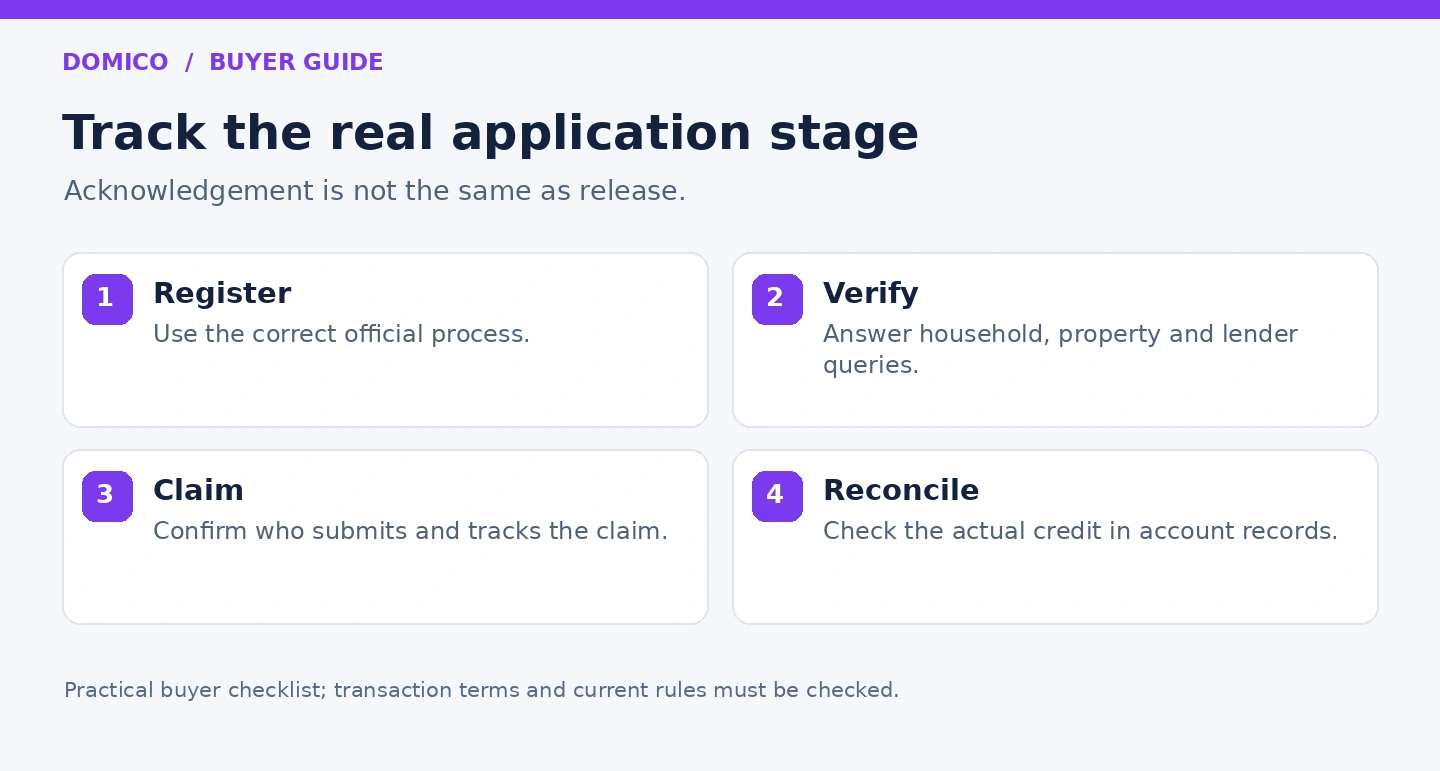
Separate registration, preliminary screening, lender assessment, verification, claim processing and actual release. A portal acknowledgement confirms receipt of an application; it does not necessarily confirm the household's eligibility or money credited to the loan.
Record the application reference and the responsible office or lender contact. Ask how to check status and what happens if a query is raised. Respond with the requested evidence and retain the reply rather than submitting inconsistent duplicate applications.
The official scheme describes staged release under ISS. Ask the participating lender how this interacts with your account, what conditions must continue to be satisfied and how the credited amount will appear. Monitor the statement so an expected benefit does not remain only a verbal assurance.
A loan or subsidy application does not remove title, approval, access and building checks. Verify the exact property and the seller's authority independently. A home can fit an affordability limit and still have documents that need investigation.
Ask whether the project and unit are acceptable to the lender and the relevant scheme route. Keep the buyer's own legal review distinct from administrative eligibility. Assistance is valuable only when the household also receives a usable, properly documented home.
For Indore, confirm the relevant urban jurisdiction. A property marketed as near Indore may fall under a different local body or land-use context. Use the actual address and records in the application rather than the nearest popular locality name.
Ask the lender to identify the scheme, component, basic eligibility result and outstanding conditions. Find out whether the property and loan have been checked, which documents remain and who submits the claim. Ask what changes could affect assistance, including a transfer, refinance or change in loan structure.
Build the affordability decision around the EMI you are contractually required to pay. If assistance arrives as approved, update the plan. If the purchase works only when the maximum subsidy arrives immediately, the budget needs revision before the token is paid.
A household can satisfy a scheme's income screening and still struggle with the proposed EMI. Conversely, a lender may approve a loan while the household does not qualify for the assistance component. Ask for separate conclusions and do not use one as proof of the other.
Write a normal monthly budget without an immediate subsidy credit. Include recurring building charges, travel from the selected location and essential family commitments. If the home is under construction, add rent overlap and a delay allowance. The scheme should support a workable purchase, not conceal a cash-flow gap.
Before signing, ask how the lender will communicate a rejected or delayed subsidy claim and what amount you remain required to pay. Retain that answer with the application reference. It helps the family understand its contractual responsibility even when the public assistance process takes longer than expected.
Download the topic-specific review checklist. Use it to record evidence, unanswered questions and follow-up actions for the exact property.
No. First-home status is only part of the screening. Household, income, property, past-benefit and component-specific conditions must be verified through the official process.
No. The current ISS describes assistance on a specified portion and period under its rules. Your lender's contracted rate and the scheme calculation are different things.
Do not count unconfirmed future assistance as cash already available. Prepare the purchase budget and payment deadlines using funds you can actually access.
Approval belongs to the relevant official and participating-institution process. Ask for the application and verification position rather than relying on a promoter's guarantee.
Use the official PMAY-Urban portal and clarify the route with the participating lender or the relevant urban local body. Confirm the property's actual jurisdiction and keep the application reference.
Planning to buy or rent in Indore? Browse verified properties in Indore or read more Indore guides.
Check who owes the lender, how builder-paid interest works, when support ends and whether you can carry the loan if payments stop.



