News
Indore Swamitva Update: Property Papers for 2,148
Indore Swamitva update: 167 documents prepared. Understand the latest figures, property-record checks and practical next steps for rural homeowners.
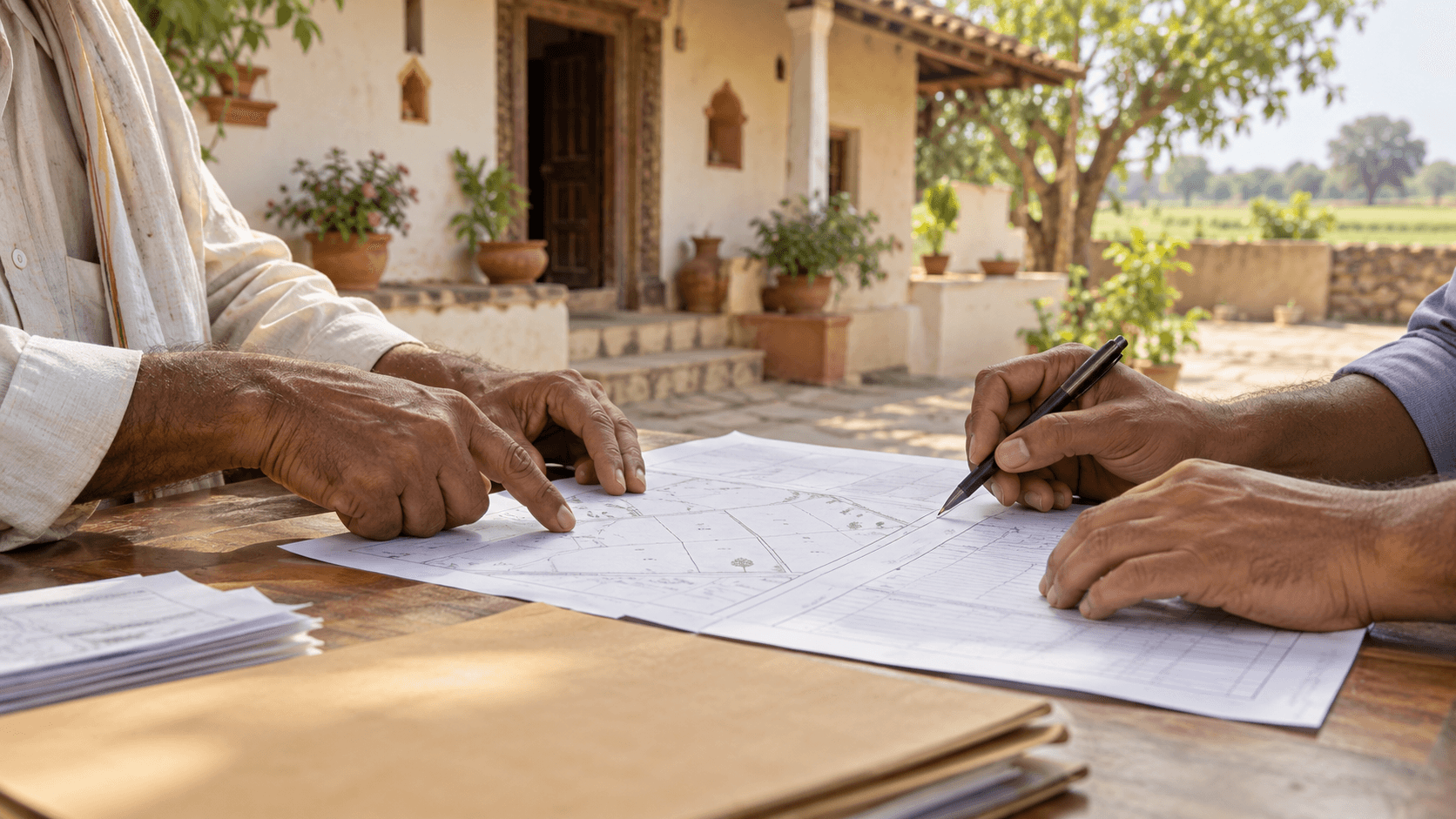
Table of contents
Reviewed on 18 October 2026. Cover image is an illustration of a generic rural setting.
A home holds memories. A clear property record helps protect its future.
Indore's latest Swamitva update is a useful reminder to rural homeowners: receiving a property document is an important moment, and checking its details deserves equal attention.
Free Press Journal's report, updated on 17 October 2026, describes document preparation and distribution in the district. Here is the reported position, followed by a practical guide to understanding your own property record.
Indore Swamitva update at a glance
| Reported item | Position in the report |
|---|---|
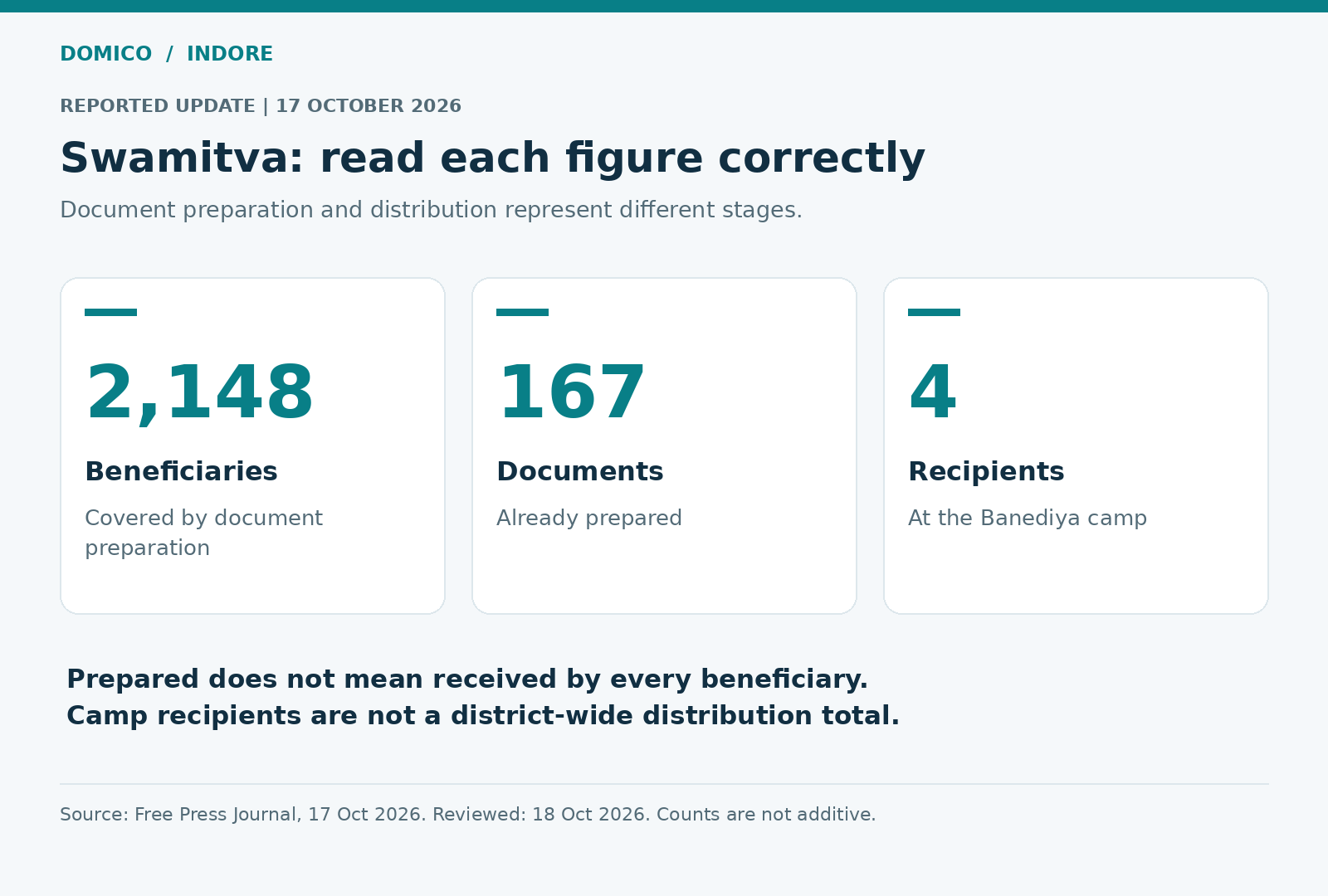
| Beneficiaries covered by document preparation | 2,148 |
| Documents already prepared | 167 |
| Recipients at the Banediya camp, Depalpur | Four |
| Officer who handed over documents at the camp | Collector Shivam Verma |
The camp was held under the Mukhyamantri Jan-Vishwas Abhiyan. These figures describe different stages and scopes. Prepared documents should not be counted as documents already received by every beneficiary. The camp figure is not a district-wide distribution total.
What is Swamitva Yojana?
SVAMITVA is a Ministry of Panchayati Raj scheme focused on recording property rights in rural inhabited areas, commonly called abadi. Its official portal describes the use of drone mapping to identify land parcels and support property records for village households.
Put simply, the objective is to connect a property on the ground with an identifiable record. A map helps show where the parcel lies. The related ownership information helps show whose rights have been recorded. The scheme involves the Survey of India and relevant state departments.
The Ministry's explanation also includes ground verification and consideration of objections or disputes by competent state authorities before property cards are issued. A drone image is therefore one part of a wider process. People, records and boundary checks still matter.
For an individual homeowner, the useful question is: does the final record describe the right person, the right property and the right boundary? That is a more practical starting point than treating every new document as a formality.
First, confirm that the update applies to your property
An announcement covering a district does not identify the status of every household. Before travelling to an office or camp, ask the relevant Gram Panchayat or revenue office whether your village and property are included in the current process.
Keep the enquiry specific. Mention the village, tehsil, property reference if you have one, and the stage you want to confirm. Ask whether a survey record exists, whether any correction is pending and whether a final document is available for collection. These are suggested questions, not a new application procedure announced for Indore.
It also helps to distinguish a rural abadi property from other kinds of property. A city apartment, an agricultural holding and a village home can involve different records and permissions. Do not assume that a Swamitva news headline settles the documentation of every land category.
If you are unsure which record applies, take your existing papers to the competent local office and ask for the property to be identified first. A clear identification can prevent repeated visits with the wrong set of documents.
The first ten minutes after receiving a property document
Find a quiet place and read the document from beginning to end. A small spelling error can be easy to miss during a busy distribution event. Take enough time to compare the details with the records you already hold.
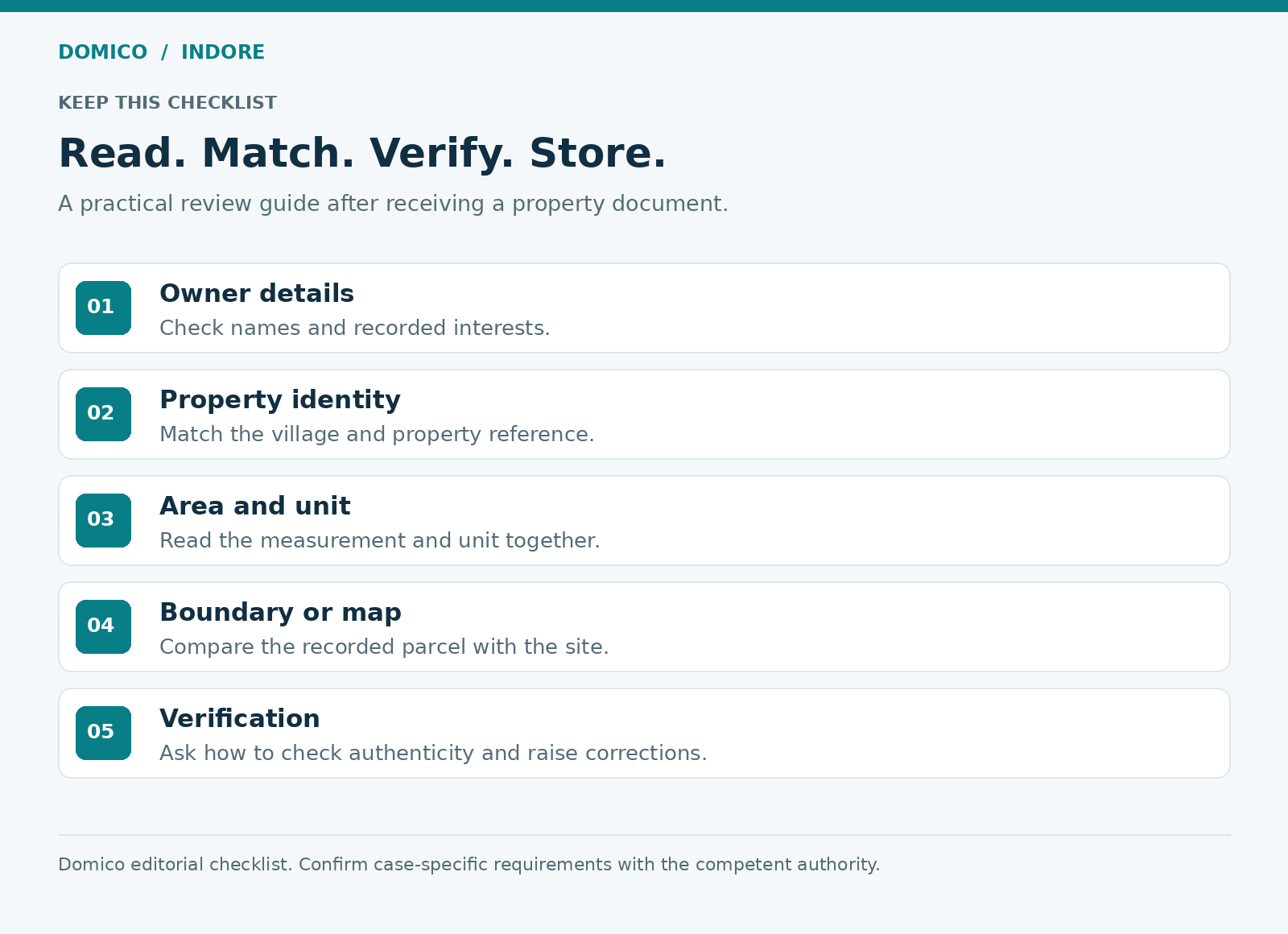
Start with the owner's name. Check spelling, the way a parent or spouse is identified where shown, and whether every person whose interest is recorded appears correctly. Next, check the village and property reference. Similar names or nearby parcels can cause confusion when a family owns more than one property.
Then look at the area, its unit and the boundary description or attached map, where available. A number is meaningful only when you know whether it represents square metres, square feet or another unit. Avoid converting an area mentally and assuming a mismatch; compare the stated units carefully.
Finally, check the issuing details and any method offered for verification. If something appears wrong, make a written note of the exact entry. Keep the document intact and ask the issuing authority how to request a correction.
| Detail to review | A useful personal check |
|---|---|
| Owner information | Compare spellings and recorded interests with existing papers |
| Property identity | Match the village and reference with the intended home |
| Area | Read the number together with its unit |
| Boundary or map | Compare the recorded parcel with the property on the ground |
| Issuing information | Ask how the record's authenticity and latest status can be verified |
| Corrections | Keep a dated copy of any written request and acknowledgement |
This checklist is Domico's editorial guidance. The competent authority decides which entries and supporting papers are required in a particular case.
Build one organised property folder
A good record becomes much easier to use when related papers are kept together. Create a folder for this property rather than mixing it with electricity bills, loan advertisements and papers for another house.
As a practical starting point, gather the new document, earlier ownership-related papers you possess, any survey reference or map supplied to you, and copies of correspondence about the property. Add identity papers only when needed for an authorised process, and keep them protected. This is a suggested home filing system, not a mandatory government document list.
Label each item with a simple description and date. For digital copies, choose filenames such as “property-record-final” and “correction-request-date” so family members can recognise the latest version. Keep older versions in a separate section instead of silently replacing them.
Photograph or scan both sides where information appears on both sides. Make sure the corners, page numbers and small print are visible. Store a backup somewhere you can access if the phone is lost. Share copies selectively; a property paper can contain personal details that do not belong in an open social media group.
If a name, area or boundary looks wrong
Begin with the specific discrepancy. “The owner's name is misspelt in this entry” is easier to act on than “the entire record is wrong”. Similarly, note the area and unit printed in the document before raising an area-related concern.
Ask the issuing office which correction or objection route applies, which evidence is relevant and how you will receive an acknowledgement. Keep a copy of what you submit. If you visit again, carry that acknowledgement so the next discussion begins with a reference rather than the whole story being retold.
Where a boundary affects a neighbour, avoid moving markers or changing a wall merely because one paper appears to support your understanding. Ask how the recorded boundary should be checked through the proper process. A calm, documented enquiry is more useful than a disagreement based on a mobile photograph.
For a contested ownership or inheritance issue, get advice from a qualified local professional who can examine the actual records. A general blog cannot determine competing rights from a short description. The aim is to understand the issue and use the correct process before making a major decision.
What the property card can mean for a bank enquiry
The Ministry of Panchayati Raj said in its 4 August 2026 release that some banks have begun lending against Swamitva property cards, while authorities are working towards wider acceptance. That is useful background for a homeowner considering a formal credit enquiry.
Begin by asking a bank whether it accepts the relevant property record for the proposed loan. Request its current checklist and have the branch explain how it verifies the property. A discussion at the branch should address your actual document, the proposed borrowing and the bank's requirements.
The scheme's expert committee report makes a careful distinction: a property card records evidence of rights; it does not itself transfer title. Its legal use must be understood with the applicable state framework and the transaction being considered. Avoid describing it as an automatic loan sanction or a replacement for every other property paper.
For your own planning, write down the purpose of borrowing, the amount you need and a repayment amount your household can manage. Ask for the applicable costs and conditions in writing before accepting an offer. Those are sensible preparation steps for a lender conversation, not an assurance of approval or a recommendation to borrow.
A buyer should read the property, not just the headline
If you are considering a village home or a property on Indore's rural edge, a documentation update may be a reason to ask better questions. It should not become a reason to skip verification.
Ask the seller to identify the exact parcel and explain the papers supporting the proposed sale. Make sure the property being shown is the same property described in those papers. If a family member, representative or agent is speaking for the owner, ask how that person's authority will be established.
Use the table below to prepare a professional review. It is a discussion guide, not a substitute for checking the applicable law or obtaining the documents needed for a particular transaction.
| Question for a property visit | Evidence or explanation to request |
|---|---|
| Which exact property is offered? | A consistent reference across the papers and site identification |
| Who can enter into the transaction? | Records and authority that a local professional can verify |
| Are interests shared? | An explanation of co-ownership or other recorded claims |
| Is the access clear? | A check of the route used to reach the property |
| Does the proposed use match the records? | Review of the relevant land-use and permission position |
| Is an issue still unresolved? | Written details of a correction, objection or dispute, if any |
Keep promises about future documentation separate from documents already available for inspection. If someone says a missing paper will arrive soon, record exactly what is pending and have the implications reviewed before making a commitment.
A practical example: the value of checking early
Imagine a household receiving a property record and noticing that the name is correct but the area unit is unfamiliar. The family plans to show the document during a future bank enquiry. Instead of guessing what the number means, they ask the issuing office for an explanation and keep the reply with the record.
That small step gives the next conversation a firmer starting point. The family can explain what the document says, which property it describes and how an apparent concern was clarified. This is an illustrative example, not a reported beneficiary's experience.
The same habit helps with a sale, inheritance discussion or ordinary family record-keeping: resolve a question while the relevant papers are together, rather than leaving it for a stressful deadline later.
Questions homeowners often ask
How do I check my individual status?
Ask the relevant Gram Panchayat or revenue office about your village, property reference and current stage. Keep the response or acknowledgement with your papers. A district-level news update cannot confirm an individual household's status.
Should I carry every original document to an enquiry?
Ask the office what is needed before travelling. Keep originals secure and carry suitable copies when requested. If an original must be submitted for a particular process, understand the procedure and obtain an acknowledgement.
Does a property card resolve every possible disagreement?
Read the actual record and any pending issue carefully. Questions about competing claims, inheritance or boundaries need the applicable procedure and, where necessary, professional review. Do not assume that one document answers a different dispute.
Is there one universal document checklist?
This article does not prescribe one. Requirements can depend on the property, stage and purpose of the enquiry. Get the current checklist from the competent office or institution handling your case.
What should I do after filing a correction request?
Keep a dated copy, the acknowledgement and the next step explained by the office. Follow up using that reference. Save any revised record alongside the earlier version so the change remains understandable.
Turn a new document into a useful family record
The most useful next step is simple: read the paper, match it to the property, clarify doubtful entries and store it safely. A document that the family understands is easier to present, maintain and review when a real need arises.
Clear details today can prevent difficult questions tomorrow.
Sources and editorial note
- Free Press Journal: Indore Swamitva document preparation and Banediya distribution camp, updated 17 October 2026.
- Ministry of Panchayati Raj: official SVAMITVA scheme portal, scheme scope and purpose.
- PIB: survey, ground verification and objection resolution, 21 July 2026. The release concerns Uttar Pradesh; only its general description of the scheme is used here.
- PIB: Swamitva property cards and bank acceptance, 4 August 2026.
- SVAMITVA expert committee report, explanation of property cards and evidence of rights.
The opening update is attributed to local reporting. The checklists, example and practical suggestions are original Domico editorial guidance. They do not announce a new eligibility rule, fee, application deadline or guaranteed financial benefit. Illustrative photography does not depict the Banediya camp or an identified beneficiary.
- indore
- swamitva-yojana
- property-documents
- rural-property
- property-records
Planning to buy or rent in Indore? Browse verified properties in Indore or read more Indore guides.



