Buying Guide
Buying Near a Highway or Railway: Home Noise Checks
Assess traffic and railway noise in the exact flat using timed visits, window tests, professional measurements and realistic improvement budgets.
Updated 8 min read

Buying Guide
Assess traffic and railway noise in the exact flat using timed visits, window tests, professional measurements and realistic improvement budgets.
Good connectivity should shorten your journey, not follow you into the bedroom all night.
A home near a highway, railway or major road can be convenient. It can also expose the rooms to sound that is difficult to judge during a quick visit. A flat may feel quiet between train movements, or a balcony may seem comfortable before evening traffic builds.
The buyer needs a repeatable method: identify the source, observe the actual rooms at relevant times, understand the limits of simple measurements and price only credible improvements. Distance on a map is a starting point, not a guarantee of indoor comfort.
Road noise includes more than a steady stream of cars. Horns, heavy vehicles, acceleration near a junction, braking, service roads and late-night deliveries can produce different experiences. A railway may bring intermittent pass-bys, horns, station announcements or activity around a crossing.
List the relevant sources before the visit. Ask existing residents about the hours and rooms most affected. Request examples rather than a yes-or-no answer about whether it is noisy.
Also identify building sources: generators, pumps, exhaust fans, lift equipment and clubhouse sound. A road-facing label can distract you from a generator beneath the unit or a function area across the courtyard.
| Sound type | What to observe | Why a short visit can miss it |
|---|---|---|
| Continuous traffic | Steady background in occupied rooms | Traffic volume changes through the day |
| Horns and braking | Sudden events and repetition | A quiet interval may feel misleading |
| Railway movements | Pass-by peaks, horns and vibration reports | Trains do not pass continuously |
| Building equipment | Start-stop cycles and operating hours | Equipment may be idle during the visit |
| Neighbourhood activity | Deliveries, markets and events | Weekday and weekend patterns differ |
A model flat facing an internal garden cannot establish the conditions of a road-facing bedroom. Visit the actual unit and identify which rooms face the source. Note balconies, projecting walls and other buildings that might change the sound path.
A higher floor is not automatically quieter. A barrier that shields lower rooms may not shield upper ones. Equally, an internal-facing unit can have a different experience from an outward-facing apartment at the same distance.
Ask where you would sleep, work and take calls. The relevant observation is inside those rooms, with the furniture and window arrangement as close to intended use as practical.
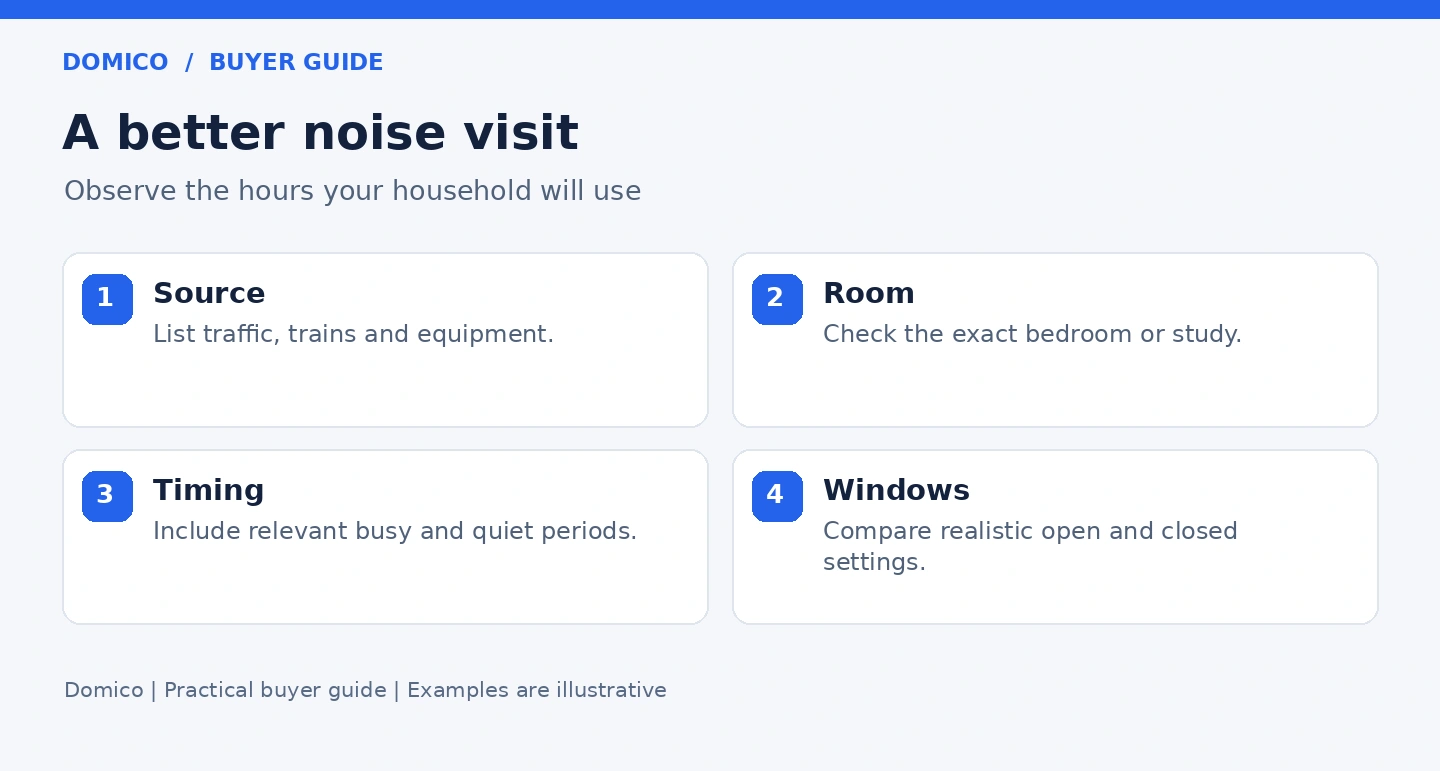
Plan at least two relevant observations if access permits. One could coincide with busy road conditions; another with the time you normally sleep or work. Ask about night-time goods traffic or train activity rather than assuming the daytime pattern continues.
Keep a simple log with date, start time, room, window position and noticeable events. Record whether an event interrupted conversation, a call or quiet reading. Personal acceptability is part of the decision, even where formal legal compliance requires a different assessment.
If a visit cannot cover the relevant period, write down that limitation. Consider a professional assessment or additional access before paying for a home whose main uncertainty is sound.
Listen first in the arrangement you prefer for daily living. If you usually sleep with windows open, do not assess only a fully sealed room with air-conditioning running. Then close the windows and note the change.
Inspect seals, frame condition and the way shutters close. Sound can travel through gaps, doors, ventilators and service openings as well as glass. A double-glazing label alone does not predict the performance of the complete installed window.
The National Building Code overview includes acoustics, sound insulation and noise control as a specialist topic. Where the decision depends on performance, ask an acoustic professional to evaluate the actual construction and feasible treatment.
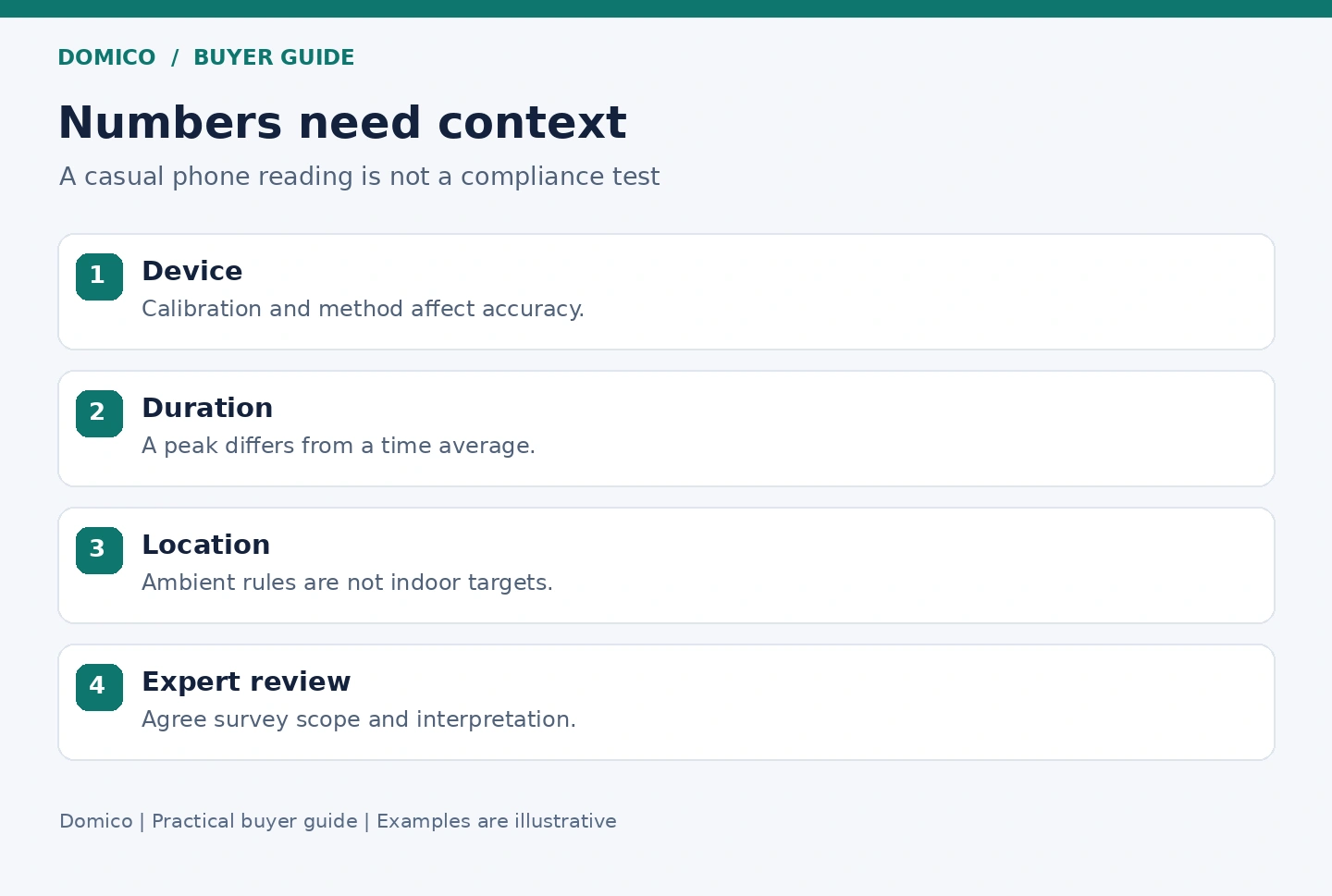
India's Noise Pollution (Regulation and Control) Rules set ambient standards by area category. The residential schedule states 55 dB(A) Leq for daytime and 45 for night-time; the Rules define the applicable periods and categorisation.
Those figures are not a universal indoor-bedroom target, and a phone's instantaneous reading does not establish a violation. Classification, location, duration and the measurement method matter. A qualified assessment and the competent authority are relevant where a legal complaint is being considered.
For a buyer, keep regulatory compliance and personal comfort as separate questions. A household can find a sound disruptive without being able to prove a breach from a casual site visit.
A phone app may help you record relative impressions with the same device, but its microphone and calibration can limit accuracy. Do not compare readings from two phones as if they were laboratory instruments.
If commissioning a survey, agree on the rooms, periods, window positions and metrics. Ask how intermittent peaks and any suspected vibration will be assessed. The report should explain the context, not just provide a single number.
Never create a noise event or approach a railway, highway edge or equipment area unsafely to test the source. Observe from authorised property access and let qualified professionals plan any necessary technical work.
If residents report vibration during train or heavy-vehicle movements, ask for a specialist assessment. Sound and vibration are related experiences but are not the same measurement. A quiet closed window does not settle a vibration concern.
Note when the sensation occurs and where it is noticed, without diagnosing structural significance yourself. A vibrating object can have different causes. If there are cracks or other building concerns, involve the appropriate structural professional as well.
Ask the seller and association whether previous reports exist. Review their scope and whether recommended work was completed. Do not rely solely on the fact that residents have “got used to it.”
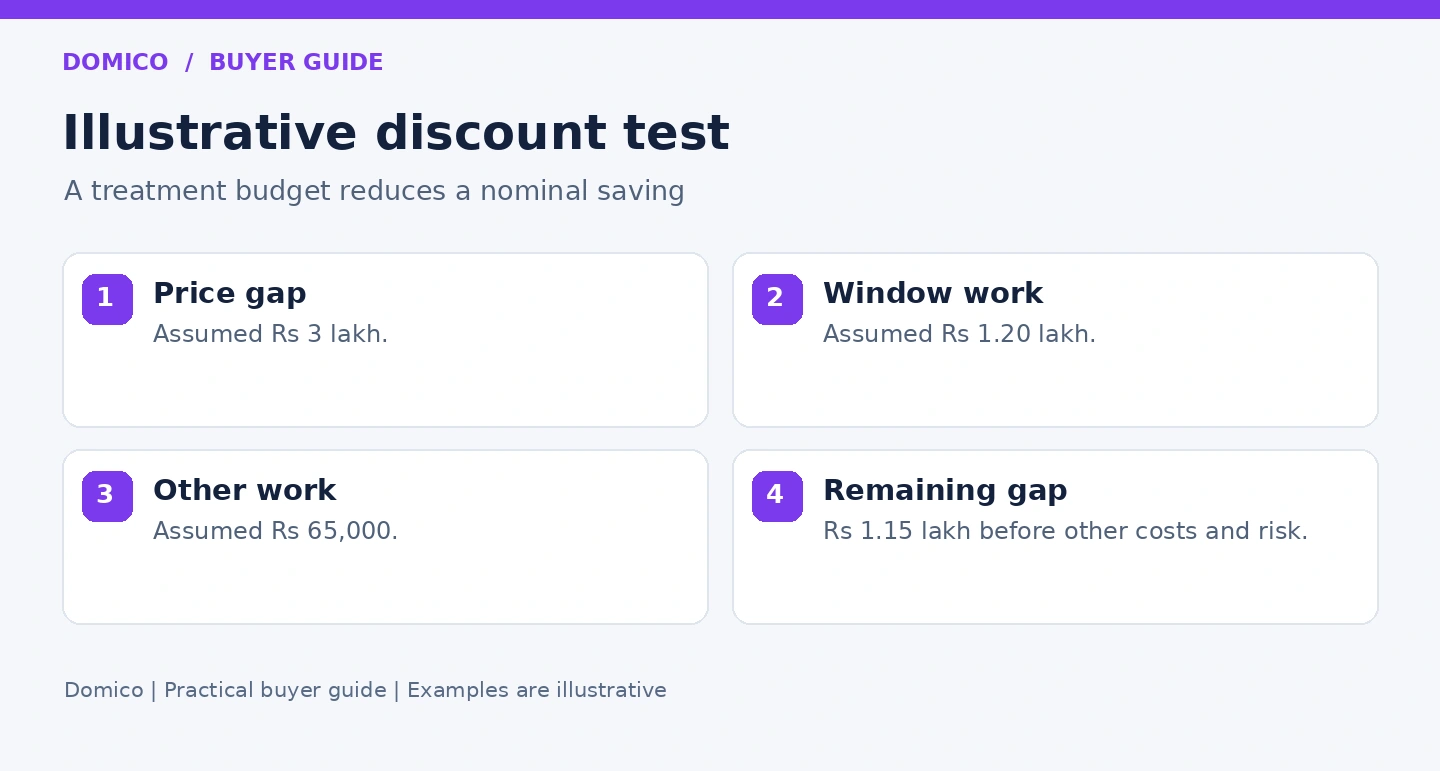
Suppose a hypothetical buyer is comparing a quieter internal unit priced at Rs 63 lakh with a road-facing unit at Rs 60 lakh. The difference is Rs 3 lakh. Before calling that a saving, obtain a realistic treatment proposal.
| Illustrative extra item | Assumed amount | What to confirm |
|---|---|---|
| Professionally specified window work | Rs 1,20,000 | Complete installed system and permissions |
| Suitable ventilation provision | Rs 45,000 | Design, service access and running cost |
| Interior restoration | Rs 20,000 | Scope following the work |
| Example subtotal | Rs 1,85,000 | No promise of a particular acoustic outcome |
These invented amounts illustrate cost categories, not quotations. The nominal Rs 3 lakh price difference would reduce to Rs 1.15 lakh before finance, other costs and any unresolved performance risk. Treatment might be unsuitable, more expensive or unable to deliver your preferred open-window lifestyle.
Avoid accepting a fixed decibel reduction promised without reference to the actual building and installation. Ask how performance will be verified and what the contract covers.
| Household need | Evidence worth collecting | Decision implication |
|---|---|---|
| Night-shift sleep | Relevant daytime bedroom observation | Road pattern may matter more than night quiet |
| Home-office calls | Actual desk-position listening test | Check interruption and closed-window practicality |
| Elderly residents | Their own visit where practical | Do not substitute someone else's tolerance |
| Open-window living | Noise and ventilation assessed together | Treatment may require a lifestyle change |
| Rental investment | Local tenant feedback and comparable letting evidence | Connectivity may not offset every sound concern |
A discounted price can make sense where the household accepts the measured conditions. It is a poor bargain when the buyer depends on an unverified promise that the road will become quiet or a future barrier will be installed.
Ask which fixtures are included in the sale. If the current resident uses specially specified windows or secondary glazing, confirm that they remain and obtain any available specification. Equally, inspect whether ventilation openings or doors have been temporarily sealed for the visit. The conditions you evaluate should represent a lawful, practical arrangement you can continue after completion.
No. Source activity, barriers, height, orientation and the building's envelope affect the indoor result. Inspect the exact rooms rather than applying a distance rule.
No universal claim is justified. The specification, installation, seals and other sound paths matter. Ask for a professional proposal and verification method.
A casual reading is not adequate proof of a regulatory breach. Formal assessment needs appropriate equipment, methods and context under the relevant requirements.
Evaluate the actual pattern and your own household's use. Some buyers accept the conditions; others do not. Establish the evidence before judging the price.
Verify the official project status and scope, and keep your purchase decision workable without an uncertain future improvement. A sales assurance alone should not carry the decision.
Choose connectivity with your ears as well as your map. The best route home should lead to rooms you can comfortably use.
Download the topic-specific review checklist. Use it to record evidence, unanswered questions and follow-up actions for the exact property.
Planning to buy or rent in Indore? Browse verified properties in Indore or read more Indore guides.
Check who owes the lender, how builder-paid interest works, when support ends and whether you can carry the loan if payments stop.



