Buying Guide
High-Rise Fire Safety: What Homebuyers Should Verify
Review high-rise fire approvals, exit routes, maintenance records, emergency access, staff responsibilities and household assistance before buying.
Updated 8 min read
Buying Guide
Review high-rise fire approvals, exit routes, maintenance records, emergency access, staff responsibilities and household assistance before buying.
Fire safety is an operating system, not a photograph of an extinguisher.
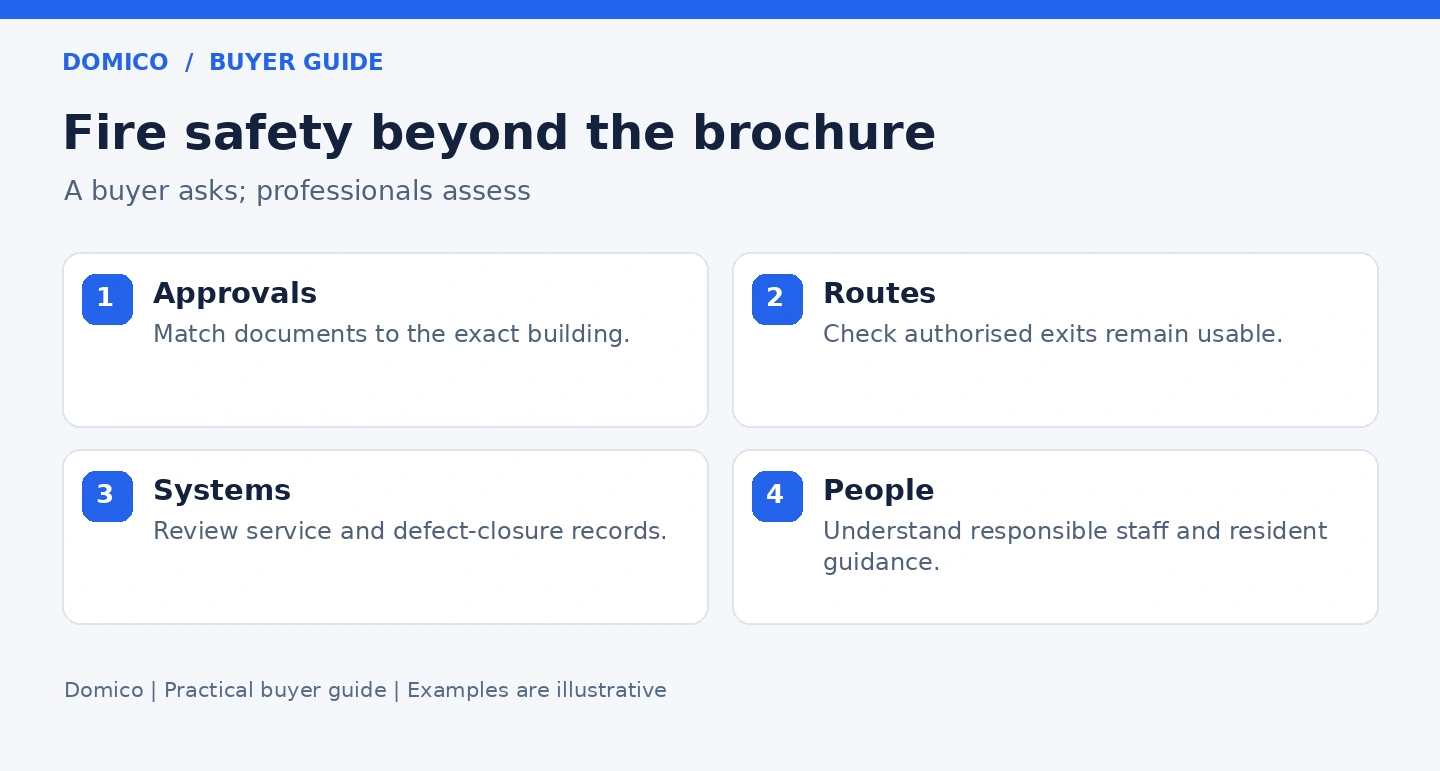
A high-rise brochure may show alarms, hydrants and a fire-service access road. Those features matter, but a buyer also needs evidence that the approved arrangements exist, remain accessible and are maintained by people who understand their responsibilities.
The purpose of a buyer's review is to identify documents, management practices and visible concerns that need professional attention. It is not to certify the building or conduct a fire drill independently. For an emergency, follow the building's authorised plan and the instructions of emergency responders.
Request the relevant fire-safety approval or NOC, the approved plan reference and any renewal or compliance records applicable under local requirements. Match the building, phase, height and occupancy described in the document to the property you are buying.
A certificate for another tower or an earlier project configuration may not answer the question. Ask a competent professional to interpret validity, conditions and any outstanding items. A buyer should not guess approval requirements from a general height threshold found online.
The Directorate General Fire Services explains the role of the National Building Code's fire and life-safety provisions and their incorporation into local building rules. The applicable local framework and approved building arrangements need to be checked for the specific property.
| Evidence area | What to request | Why it matters |
|---|---|---|
| Approval | Relevant certificate, plan and conditions | Establishes what applies to the exact building |
| Maintenance | Inspection and service records | Shows whether equipment is being looked after |
| Access | Approved routes and current condition | Fire response needs usable access |
| Management | Named responsible staff and procedures | Systems need people who can operate and maintain them |
| Residents | Emergency information and drills | Occupants need to understand the authorised plan |
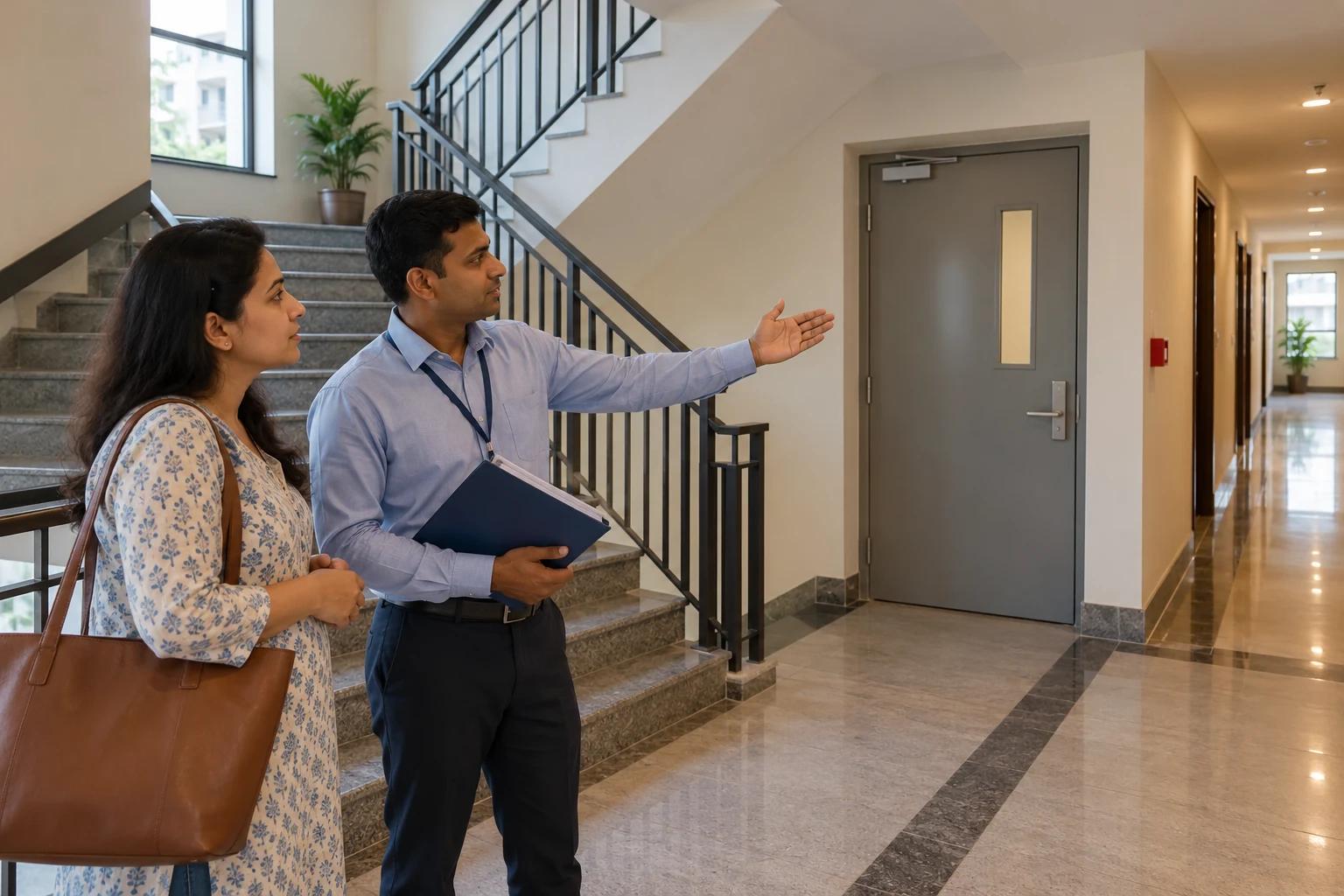
Ask the manager to show the route from the unit to the designated exit areas under the building's plan. Look for stored goods, locked or obstructed doors, missing signs or other visible concerns. Report questions to the responsible manager rather than moving equipment or changing controls yourself.
A staircase used as storage is a management issue even if the building once received approval. Ask how inspections prevent obstructions and how residents report them. A clear route on a plan should correspond to a usable route in daily operation.
Do not open restricted plant rooms, enter a smoke-affected space or perform an emergency simulation. A routine visit can identify concerns, but trained professionals should assess technical suitability and conduct authorised tests.
Ask for maintenance records for the systems required in that building. Depending on the approved design, these may include alarms, detectors, pumps, firefighting water arrangements, emergency lighting and other measures. The precise set should come from the approved documents and professional review.
Ask when the latest planned test occurred, who carried it out and whether defects were closed. A file showing an unresolved fault should prompt a question about completion, not merely acceptance that testing happens regularly.
Do not press an alarm button, discharge an extinguisher or operate a hydrant as a buyer's experiment. Such actions can create harm and disrupt residents. An authorised demonstration should be organised by the responsible staff under the appropriate procedure.
Ask where emergency vehicles are intended to enter and move. Observe whether parking, landscaping, gates or temporary construction obstruct that route. A wide-looking road in a rendering cannot prove the usable dimensions and turning arrangements on site.
For a township with later phases under construction, ask whether temporary works affect access to occupied buildings. Request the current authorised plan and who is responsible for keeping routes available. Future completion should not be used to excuse an unclear present arrangement.
A buyer should not determine appliance access compliance by eye. If the route is important to the decision or visibly constrained, obtain a competent professional's review of the actual situation.
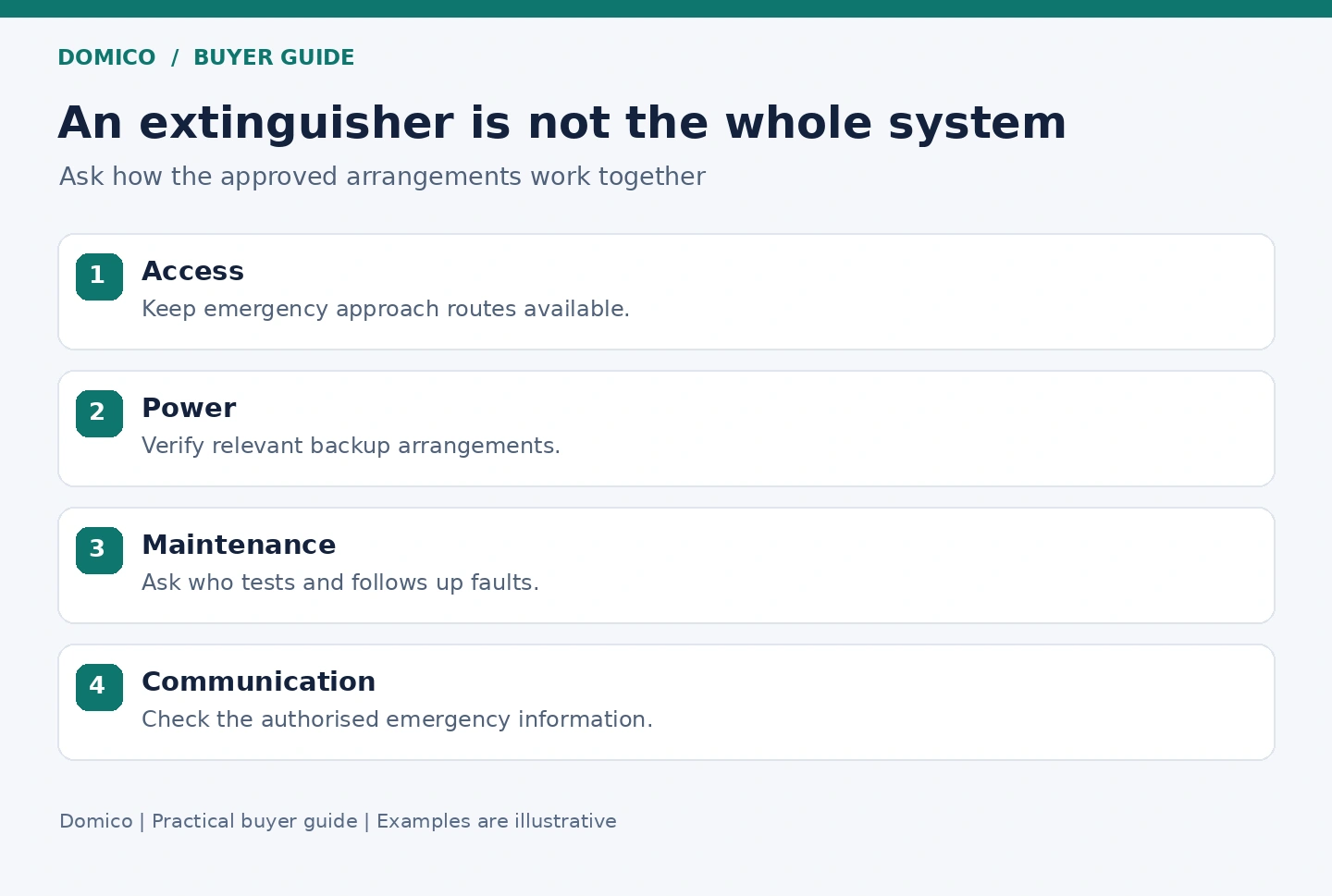
Ask which safety systems have the required backup arrangements and how those are tested. A generator that powers selected apartment sockets is not evidence that every relevant safety function is supported appropriately.
Similarly, an automatic rescue device in a lift is not the same as a firefighting lift or a full emergency operation plan. Have the manager explain the actual system in plain language and provide the relevant records.
The BIS National Building Code overview places fire safety, electrical installations and lifts in connected technical disciplines. Their operation should be reviewed as a coordinated arrangement by competent people, not assessed independently through sales claims.
If a family member cannot use stairs independently, discuss the building's authorised assistance and evacuation arrangements with the manager and a qualified safety professional. Do not accept “security will carry them” as a complete plan.
Consider how residents contact assistance, how information is communicated and whether staff understand their roles. A plan should reflect actual household needs without exposing private medical details unnecessarily.
General high-rise fire-safety material published by Municipal Corporation Chandigarh is useful background, but local arrangements and responder instructions take priority for the specific building. Buyers should not improvise an evacuation strategy from an article.
Request the emergency information supplied to occupants. Does it identify the building, contact process and relevant instructions clearly? Ask when the latest authorised drill or briefing occurred and how lessons were addressed.
A drill attendance sheet alone does not establish that every resident understands the plan. Ask how new tenants, domestic workers and newly arrived owners receive information. A building changes occupants over time; communication should not stop after the first handover.
For a resale purchase, speak to existing residents about how concerns are reported and resolved. Specific examples of blocked exits being cleared or defects repaired give more useful evidence than a general claim of “excellent security.”
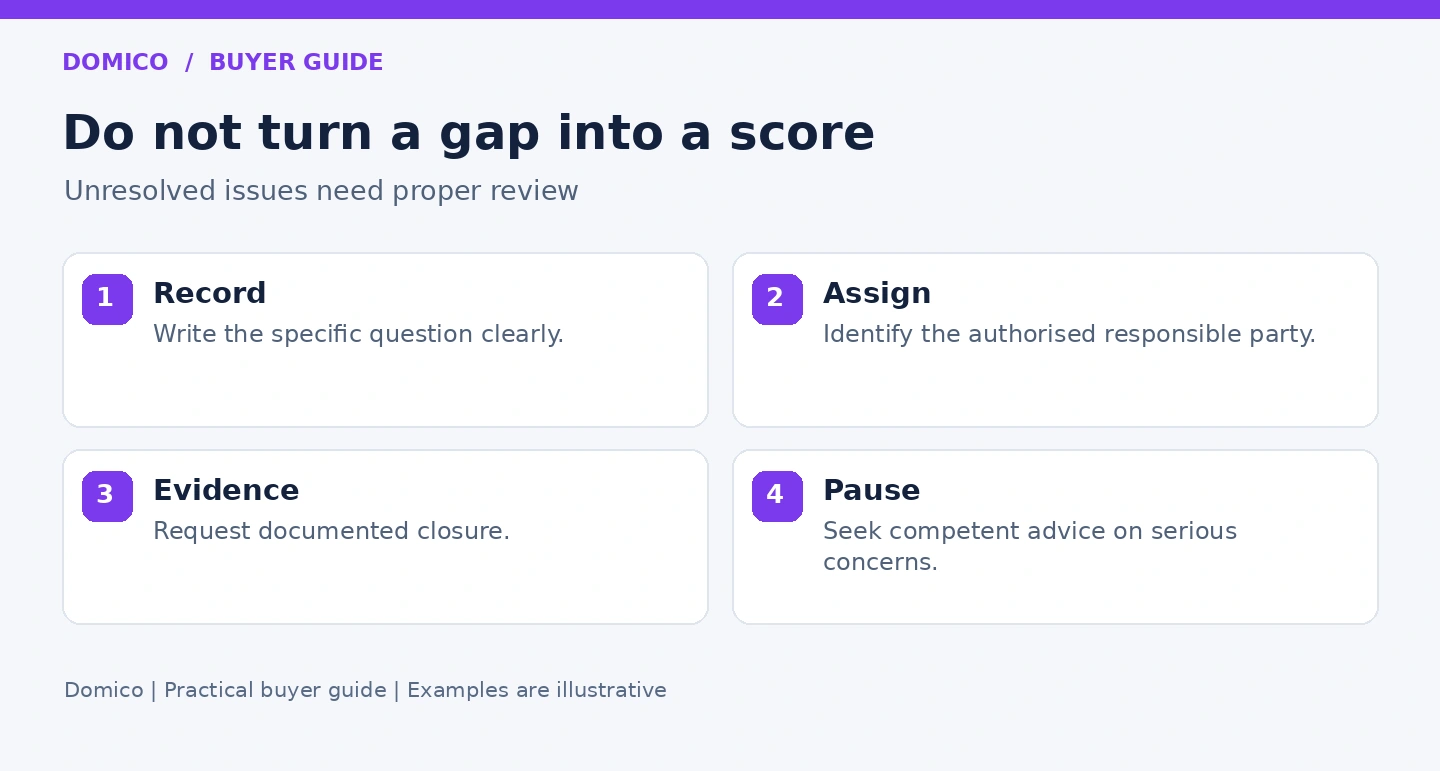
Imagine a buyer finding four unresolved questions during an authorised review. This hypothetical tracker illustrates the process; it is not an audit of any named building or a way to certify safety.
| Illustrative gap | Responsible follow-up | Evidence before closing the question |
|---|---|---|
| Certificate scope unclear | Manager and competent professional | Correct building reference and interpretation |
| Exit route partly obstructed | Authorised building management | Obstruction addressed and prevention process explained |
| Service record missing | Maintenance contractor through manager | Relevant inspection and defect-closure record |
| Assistance plan unclear | Manager and qualified safety adviser | Household-relevant authorised arrangement |
Do not average these into a reassuring score. Some gaps may be critical and require a pause regardless of how many other boxes are complete. A competent professional should advise on significance and immediate action.
Ask whether required servicing, replacements and staff training are included in the operating budget. An expensive installation can become unreliable if routine upkeep is repeatedly deferred.
For a newly occupied project, clarify who manages systems before and after association handover. Obtain the relevant responsibilities and records. The date of handover should not create a period in which nobody can explain who maintains the equipment.
If the seller promises that an outstanding safety issue will be resolved before completion, have your lawyer and technical adviser define the evidence required. A verbal assurance is a poor basis for a consequential purchase decision.
When reviewing a certificate, read any attached conditions and correspondence rather than keeping only its front page. Ask who monitors each continuing obligation and how the association is informed of overdue work. If a professional identifies an unresolved serious issue, seek a clear action plan and competent advice before allowing the purchase timetable to dictate the decision.
No. Review its scope and conditions, the applicable local requirements and ongoing maintenance. The current operating condition matters alongside the original approval.
Only through an authorised, properly managed procedure. Do not activate safety equipment independently. Ask for records or an organised demonstration by responsible personnel.
No. Every occupied floor depends on suitable access, exits and management. Assess the building rather than treating the floor number as a safety certificate.
Do not assume ordinary passenger lifts are safe for evacuation. Follow the building's authorised emergency plan and responder instructions. Any special lift arrangement needs to be understood through qualified guidance.
Unresolved approval questions, obstructed routes, missing maintenance evidence or a competent professional's serious concern should be addressed before you rely on assurances. The significance of a gap needs proper assessment.
A credible fire-safety system can be explained, evidenced and maintained. Ask for that operating reality before buying the brochure's promise.
Download the topic-specific review checklist. Use it to record evidence, unanswered questions and follow-up actions for the exact property.
Planning to buy or rent in Indore? Browse verified properties in Indore or read more Indore guides.
Check who owes the lender, how builder-paid interest works, when support ends and whether you can carry the loan if payments stop.



