Buying Guide
East-Facing vs West-Facing Homes: Practical Buyer Guide
Compare east- and west-facing homes through room orientation, sunlight, shading, glare, ventilation and household routines before paying a premium.
Updated 8 min read
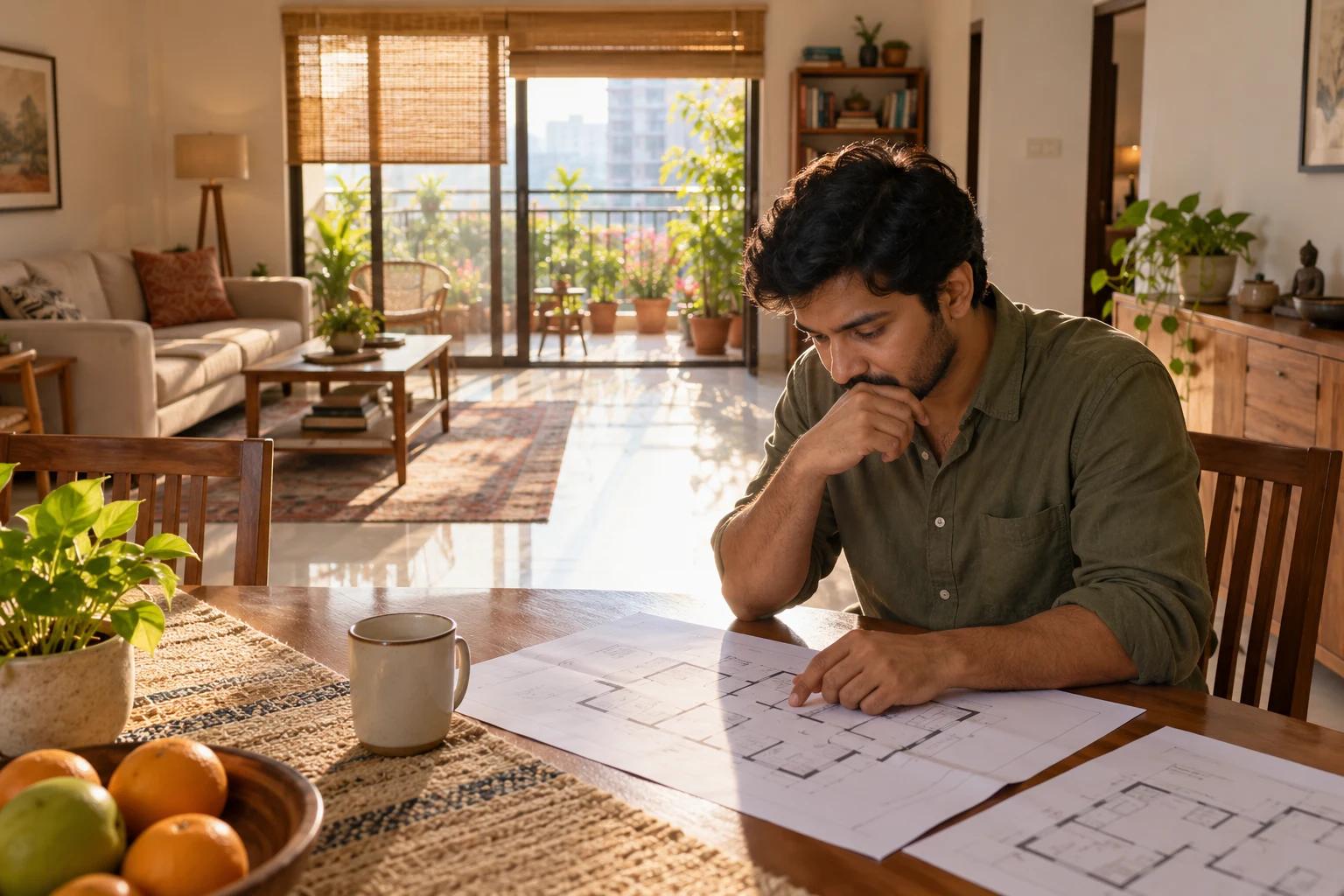
Buying Guide
Compare east- and west-facing homes through room orientation, sunlight, shading, glare, ventilation and household routines before paying a premium.
A compass tells you direction. It does not tell you whether the bedroom feels comfortable at 4 p.m.
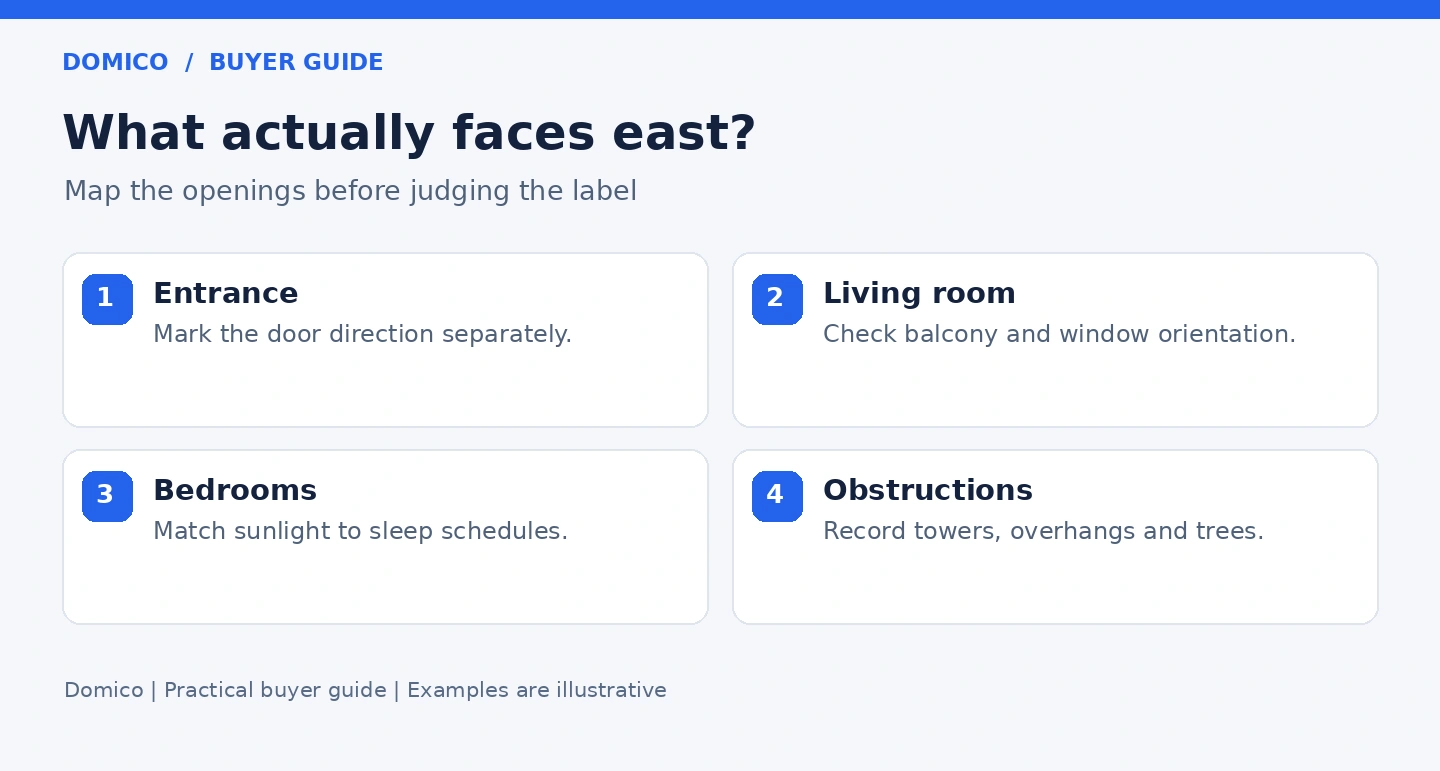
East-facing and west-facing homes attract strong opinions, but the description is often incomplete. Does “east-facing” refer to the entrance door, the balcony, the living-room windows or the front of the building? Those can point in different directions in the same apartment.
A useful comparison starts by mapping the rooms and windows. Then examine shading, neighbouring buildings, roof exposure and your family's daily schedule. This approach helps an Indore buyer choose a comfortable home without assuming that one direction guarantees lower electricity bills or a higher resale price.
Ask the seller to mark north on the floor plan and identify the main external openings. Check the orientation on site using a reliable map and a compass away from obvious magnetic interference. A phone reading beside metal railings or equipment can be misleading.
Record the direction of the living room, each bedroom and the kitchen separately. An east-facing entrance may lead to a west-facing bedroom. If you work from that bedroom in the afternoon, the entrance label is not the information you need.
The Bureau of Energy Efficiency's residential building resources encourage attention to the building envelope and energy-conscious design. For buyers, the practical implication is to evaluate windows, walls and shading together rather than select a home on orientation alone.
| Description you hear | What to ask next | Why it matters |
|---|---|---|
| East-facing flat | Which door or window faces east? | The label may describe only the entrance |
| West-facing balcony | Which rooms open onto it? | Exposure affects the rooms you actually occupy |
| North-open unit | What stands outside the openings? | An obstructed opening may offer little usable light |
| Naturally cool home | Under what season and occupancy conditions? | A winter visit cannot establish summer performance |
In general, east-facing openings receive morning sun and west-facing openings receive afternoon sun, subject to season and obstruction. The intensity and duration experienced inside depend on geometry, shading and glazing. Avoid turning this simple observation into a precise temperature or electricity claim without measurements.
Morning light can suit an early-rising household, a breakfast area or a space used before work. It can also disturb someone sleeping after a night shift. Afternoon exposure can create glare for a screen or raise comfort concerns in a room occupied late in the day, while a well-shaded balcony may make it manageable.
Your objective is not to eliminate sunlight. It is to receive useful light while controlling unwanted heat and glare. A deep overhang, external screen or neighbouring building changes the experience. So does the distance between the window and the seating area.
Curtains can control glare and privacy, but they should not be your only answer to a poorly understood room. Start outside the glass. Examine balconies, chajjas, fins, trees and other permanent shading features. Ask which features are approved, maintained and expected to remain.
Look at the exact window height and width. A large unshaded pane can behave differently from a smaller opening behind a balcony. Check whether the opening is operable and whether shutters can be used safely. Marketing photographs often show curtains open under artificial lighting, which can hide practical trade-offs.
Ask the architect or a qualified building professional to explain the glazing and wall specification in plain language. If someone claims an energy-saving percentage, request the underlying test or model and its assumptions. A product name without performance details is not a building-wide prediction.
For an east-oriented bedroom, arrange a morning visit if that is when sunlight may affect sleep. For a west-oriented study, visit during the afternoon. Use the room as you intend to: sit where the desk would stand and look at the likely screen position.
Switch off decorative lighting with permission. Check whether you can read ordinary print comfortably at the intended work surface, while recognising that this is a personal screening observation rather than a code-compliance measurement. Notice glare, reflections and dark interior zones.
Return in another season if the purchase timetable allows. If not, ask a professional to review the sun path and obstructions, and document the limits of what you could observe. A seller's assurance that “winter sun is different” is not a substitute for explaining the design.
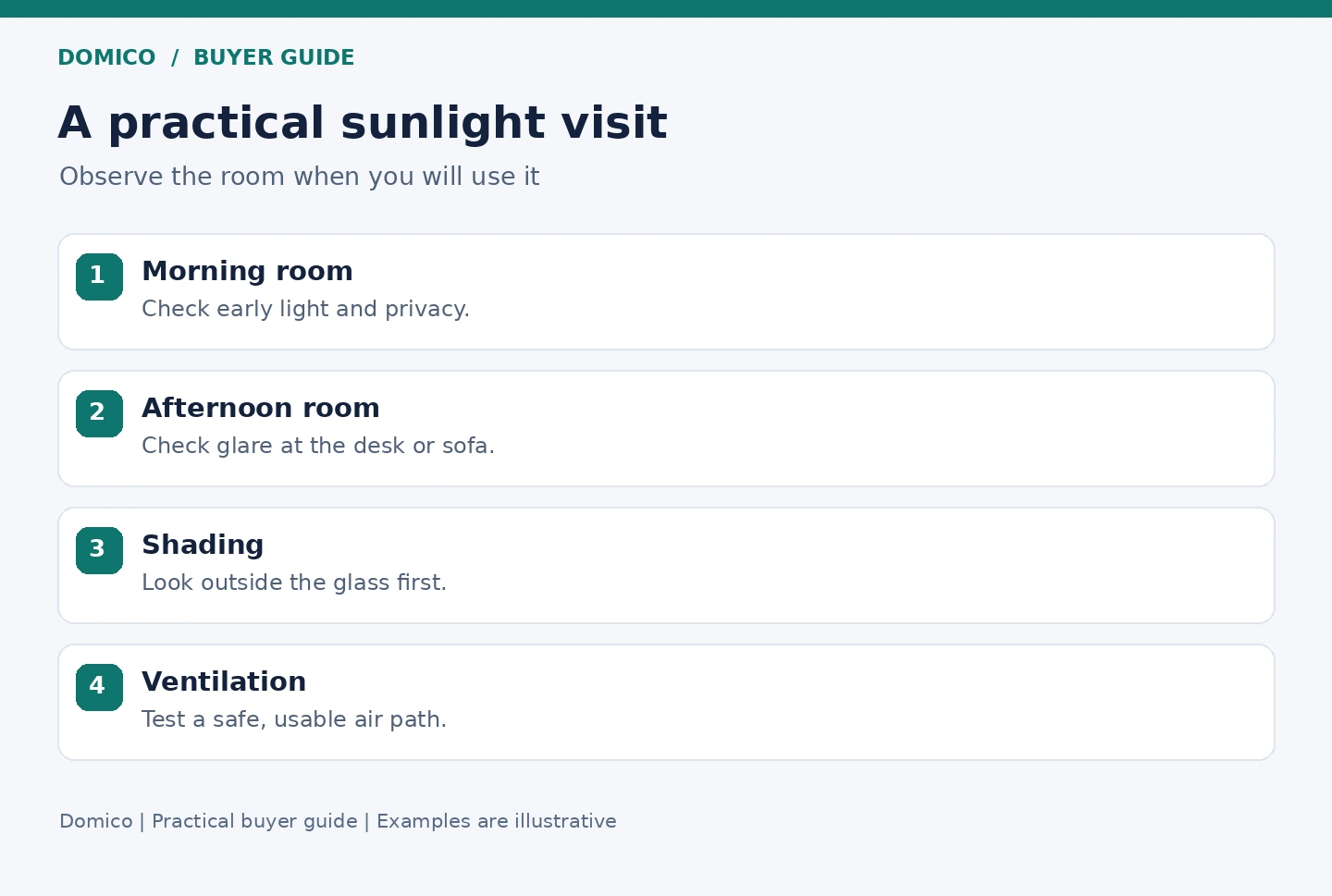
Cross-ventilation needs a usable air path and suitable outdoor conditions. Two windows on one wall may not perform like openings on different sides, and a closed bedroom door can interrupt the path through the home. Nearby buildings can shelter or channel wind.
Stand inside with the relevant windows open only where safe. Observe whether privacy, traffic noise or dust would make you close them during daily use. A flat that feels breezy for a short visit may depend on an entrance door that you would not leave open.
Security grilles, insect screens and future furniture can also affect how an opening is used. The National Building Code's contents identify lighting and ventilation as building-service topics; ask for professional review where compliance or technical performance is uncertain.
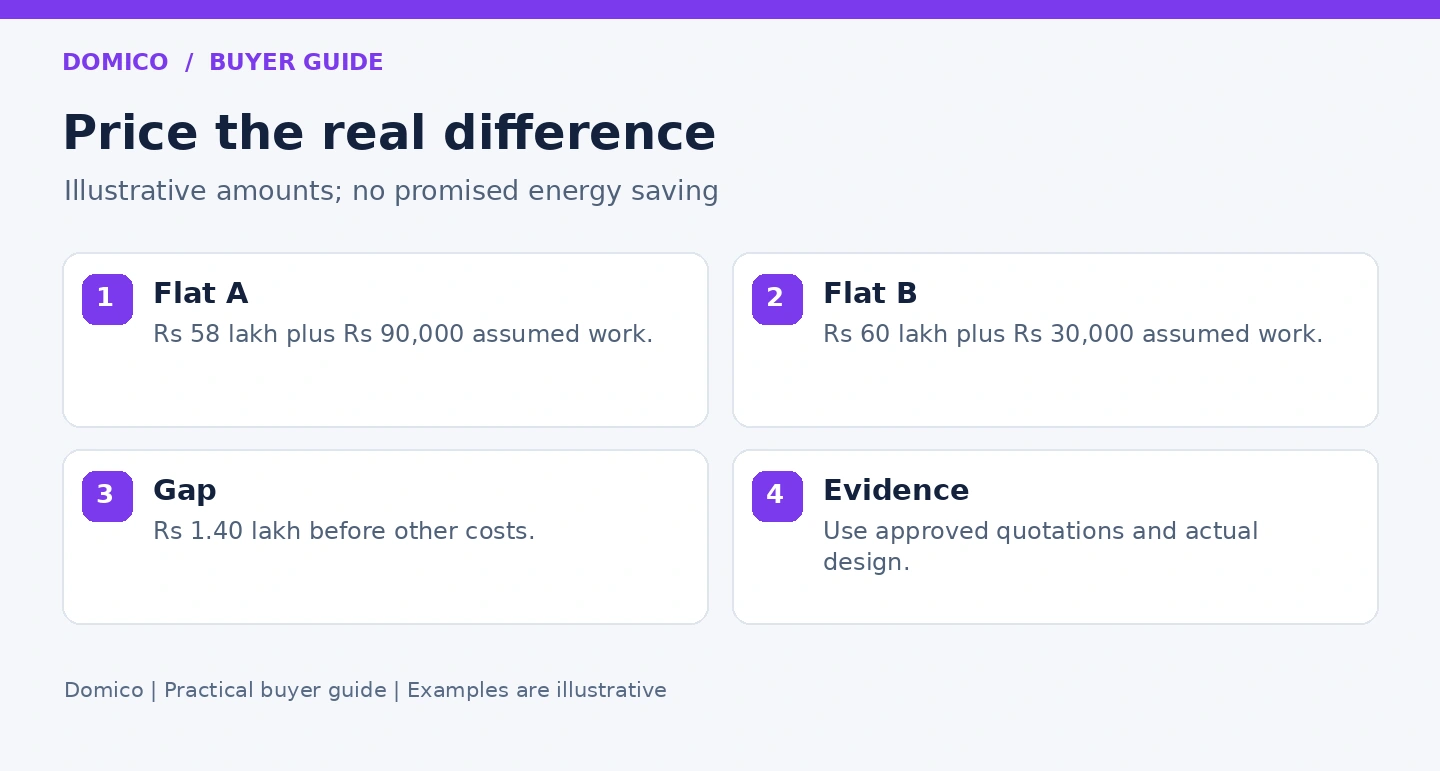
Consider a hypothetical household choosing between two flats. Both have the same usable area. One has unshaded west-facing bedroom glazing; the other has morning-oriented openings and a deeper balcony. This example illustrates a budgeting method, not a claim that the second design will save a particular amount.
| Comparison item | Flat A | Flat B |
|---|---|---|
| Purchase price | Rs 58,00,000 | Rs 60,00,000 |
| Immediate shading/glare budget assumed by buyer | Rs 90,000 | Rs 30,000 |
| Combined amount before other costs | Rs 58,90,000 | Rs 60,30,000 |
| Remaining price difference | Baseline | Rs 1,40,000 more |
Request quotations for approved changes and verify what the society permits. If a shading solution is prohibited or technically unsuitable, it should not appear as an easy fix in your comparison.
For operating costs, use actual bills where available and adjust your interpretation for occupancy and appliance use. Do not multiply a promised monthly saving over ten years as though the climate, tariffs and household behaviour will remain constant.
Some households place a strong value on an east-facing entrance for personal or cultural reasons. That preference can be part of the decision. Keep it distinct from measurable claims about daylight, safety or energy use.
If the family would reject a west-facing entrance regardless of building performance, establish that early. It saves time and avoids stretching the budget late in the negotiation. If the preference is flexible, compare the real advantages and compromises rather than accepting a universal resale claim.
A future buyer may value different features. Orientation can influence demand in a particular market, but it does not guarantee appreciation or faster resale. Inspect comparable transactions where reliable data is available.
| Room | When it will be occupied | Observation to record |
|---|---|---|
| Main bedroom | Sleeping and early morning | Direct light, privacy and blackout needs |
| Study or work corner | Working hours | Screen glare and comfortable daylight |
| Living room | Afternoon and evening | Shading, heat exposure and usable balcony |
| Kitchen | Cooking periods | Exhaust route and safe ventilation |
| Child's room | Study and sleep | Light distribution and practical furniture placement |
Write “not checked” when something remains unknown. That is more useful than awarding an optimistic score because the direction sounds desirable. Compare the evidence sheet alongside price, approvals and maintenance.
For a resale inspection, ask which curtains and external shades will remain after the sale. A removed awning or changed balcony screen can alter the conditions you observed. Record included fixtures in the transaction documents, and check that the shading feature itself is authorised before giving it value.
There can be significant afternoon exposure, but the actual result depends on shading, materials, glass, roof conditions and ventilation. Inspect the specific rooms and ask for a professional explanation before judging the entire home.
No. The entrance may be internal, while the windows face another direction. Map the external openings and their obstructions. That tells you far more about usable daylight.
Obtain technical and society approval before assuming a change is suitable. Different glazing affects daylight, appearance and performance differently. Compare an appropriate specification with external shading and furniture placement.
A reliable estimate needs the building design, local weather, equipment and usage assumptions. Avoid accepting a percentage that comes without a calculation or test basis.
Pay only after comparing the practical benefit and your household's preference against the full price difference. A direction premium should fit your budget without depending on an unverified promise of future resale value.
Buy the daylight you can use, the shade you need and the layout you will live in. The compass is the beginning of that assessment.
Download the topic-specific review checklist. Use it to record evidence, unanswered questions and follow-up actions for the exact property.
Planning to buy or rent in Indore? Browse verified properties in Indore or read more Indore guides.
Check who owes the lender, how builder-paid interest works, when support ends and whether you can carry the loan if payments stop.



